




Will Strategy Sell Coins in the Future? What Is the Future Price Trend of Bitcoin?
TradingKey - On June 1, rumors circulated in the market that the largest holder of Bitcoin ( BTC ), MicroStrategy ( MSTR ), has shattered the "buy only, never sell" myth. The company's sale of Bitcoin triggered market panic and a stampede, causing Bitcoin's price to fall continuously and lose the $70,000 level. The market is now engulfed in endless panic and anxiety: Will MicroStrategy continue to sell off Bitcoin? How much further will Bitcoin's price drop? When will it stop falling and rebound?
Exactly how much Bitcoin does Strategy hold?
According to Coinglass data shows that as of June 3, Strategy held 843,706 Bitcoins. Excluding the 32 coins sold between May 26 and May 31, it still holds 843,674 BTC, representing 4% of the total supply and maintaining its number one position in global rankings. This fact alone is not what is daunting; what is truly impressive is that its holdings far exceed those of the second and third-ranked entities.
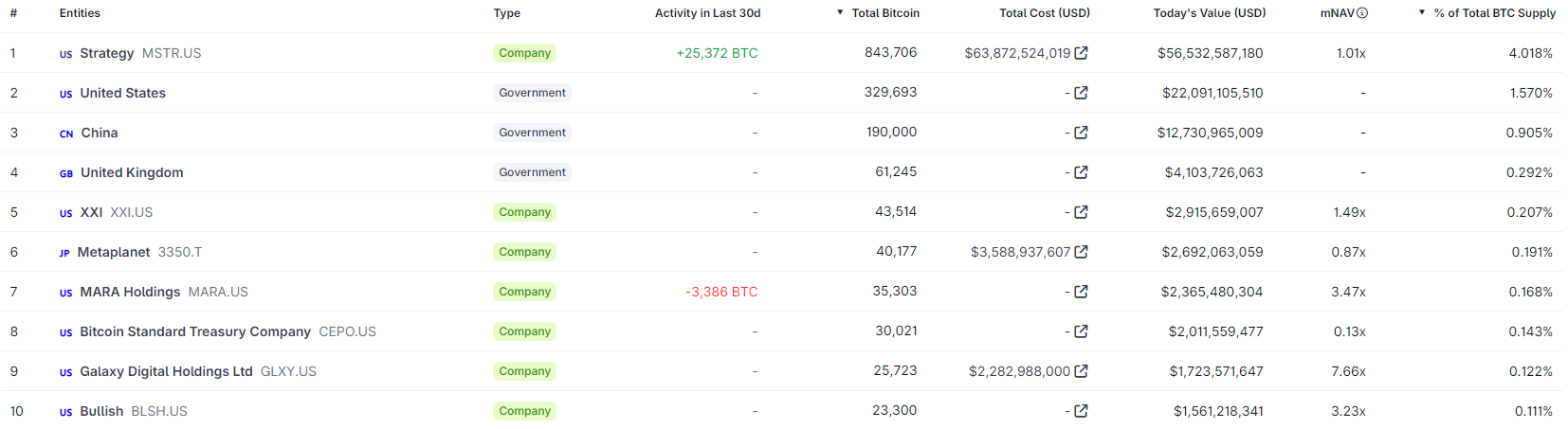 Top ten entities by Bitcoin holdings, Source: Coinglass
As the chart above indicates, Strategy's holdings are nearly equal to the combined holdings of all other countries and companies. Given this massive disparity, if Strategy were to sell off Bitcoin on a large scale, not only would retail investors follow suit, but even institutional investors and DAT companies would be unsettled. Therefore, the potential consequences for the crypto market if Strategy continues to sell BTC are unimaginable. Will the company, then, continue to sell its Bitcoin?
Will Strategy sell more Bitcoin in the future?
According to filings submitted by Strategy to the U.S. SEC, this sale of coins was conducted to pay cash dividends on its preferred stock. Based on Strategy's asset structure, dividend payments are a necessary expenditure for the company; however, revenue from its traditional enterprise software business can hardly cover the interest on the preferred stock. Furthermore, the balance of the "USD Reserve" account dedicated to interest payments is only $900 million, which is insufficient to cover its annual cash dividends of approximately $1.6 billion. Therefore, selling Bitcoin is necessary to bridge this gap.
To attract capital from major traditional Wall Street institutions, Strategy has issued several series of preferred stock, as detailed below:
Ticker | Current Annualized Interest Rate | Dividend Size (Annual) | Payment Form | Dividend Frequency |
STRC | 11.50% (Floating) | Approx. $1.206 billion | Fiat Cash (USD) | Monthly |
STRF | 10.00% (Fixed) | Approx. $128 million | Fiat Cash (USD) | Quarterly |
STRE | 10.00% (Fixed) | Approx. $100 million | Fiat Cash (EUR) | Quarterly |
STRK | 8.00% (Fixed) | Approx. $112 million | Fiat Cash (USD) | Quarterly |
STRD | 10.00% (Fixed) | Approx. $133 million | Fiat Cash (USD) | Quarterly |
Will Strategy engage in a wholesale liquidation sell-off?
The panic triggered by Strategy selling only 32 BTC is rooted in historical context. In 2022, the de-pegging of Luna’s algorithmic stablecoin (UST) caused its ecosystem token, LUNA, to plummet nearly 100% to zero within days, sparking a market-wide sell-off that resulted in the liquidation and bankruptcy of Three Arrows Capital as it failed to meet margin calls.
Compared to Three Arrows Capital, Strategy’s structural design is relatively safer, primarily due to two factors: First, its debt lacks a mandatory liquidation threshold; its preferred shares have no maturity date, and most of its long-term convertible notes mature between 2028 and 2032, meaning creditors have no right to force a liquidation of its Bitcoin holdings before then. Second, the company still has an equity issuance capacity of $26.1 billion, allowing it to raise fiat currency by issuing new shares on the U.S. market at any time to aggressively buy the dip and support Bitcoin prices.
What is the future price outlook for Bitcoin?
As Bitcoin broke below the $70,000 mark and began seeking support, the market structure is undergoing a qualitative shift. Short-term bulls are experiencing a painful deleveraging, but the logic for a mid-to-long-term bull market remains intact.
Over the past two weeks, U.S. spot Bitcoin ETFs have seen significant net outflows—the most notable since 2026—indicating that Wall Street capital is withdrawing for short-term risk aversion amid geopolitical tensions and inflation concerns. Under these adverse conditions, market panic could force prices toward $60,000 to fully liquidate high-leverage long positions.
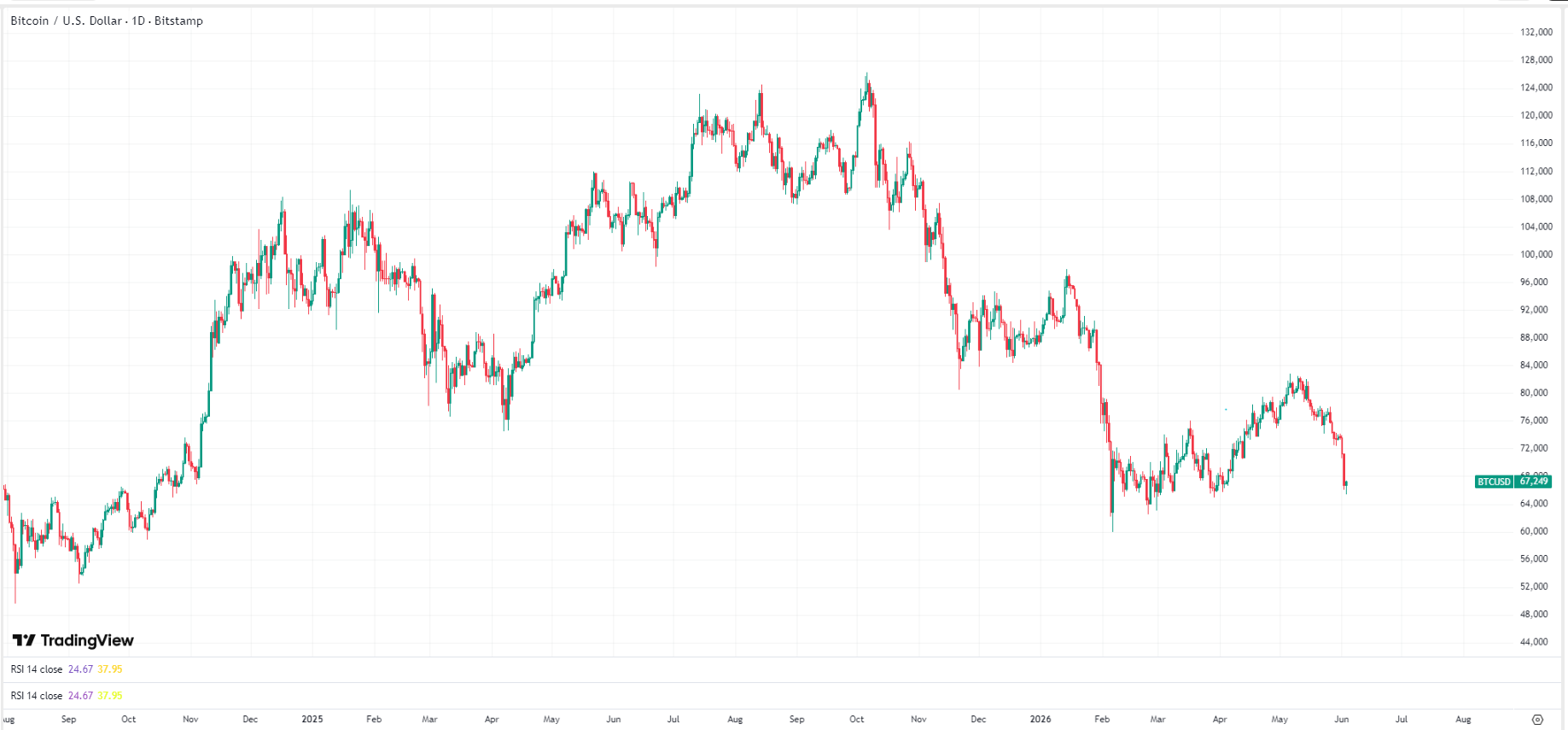
Bitcoin price chart, Source: TradingView
Despite persistent short-term downward pressure, the macro fundamentals supporting a resurgence in the second half of the year remain robust. The Trump administration's continued emphasis on deregulating digital assets, the move to grant the CFTC regulatory authority over prediction markets, and the ongoing 'Clarity Act' are all significant long-term buffers, still poised to push Bitcoin prices above $80,000.
Recommended Articles


