




Nakamoto, Inc. puts its BTC treasury to work with a derivative trading strategy
Nakamoto, Inc. (Nasdaq:NAKA) announced an active management approach to its treasury. The company has been running the hedging and derivative strategy for a while, only now making it public.
Nakamoto retains 5,058 BTC, ranked 20th among public companies with BTC holdings. The coins were idle until recently, but will be used in an active management strategy to boost earnings, while minimizing risk. Nakamoto’s approach could signal a way forward for other treasury companies, which now let their BTC sit idle.
Recently, Nakamoto sold 284 BTC at $70,400 per BTC, below its cost basis. Going forward, the company aims to preserve its treasury while using it in an active management derivative strategy.
Nakamoto uses Kraken for a derivative strategy
Nakamoto has partnered with Bitwise as its strategy manager through a dedicated account. Kraken will provide custody and the execution of trades.
This also means Nakamoto may move some of its assets to new addresses. As of April 24, the known wallet of Nakamoto held 3,988 BTC, less than the previously stated treasury.
Some of the coins were already used in the program, which operated throughout Q1. Nakamoto uses a smaller share of its treasury as collateral for its strategies.
Nakamoto will trade BTC implied volatility
Nakamoto will establish a separate vehicle to generate regular inflows, based on trading BTC implied volatility. This strategy diverges from other approaches, like active acquisitions and counting only unrealized gains in reports. Nakamoto may improve its cash flow and have more leeway to make its playbook more viable.
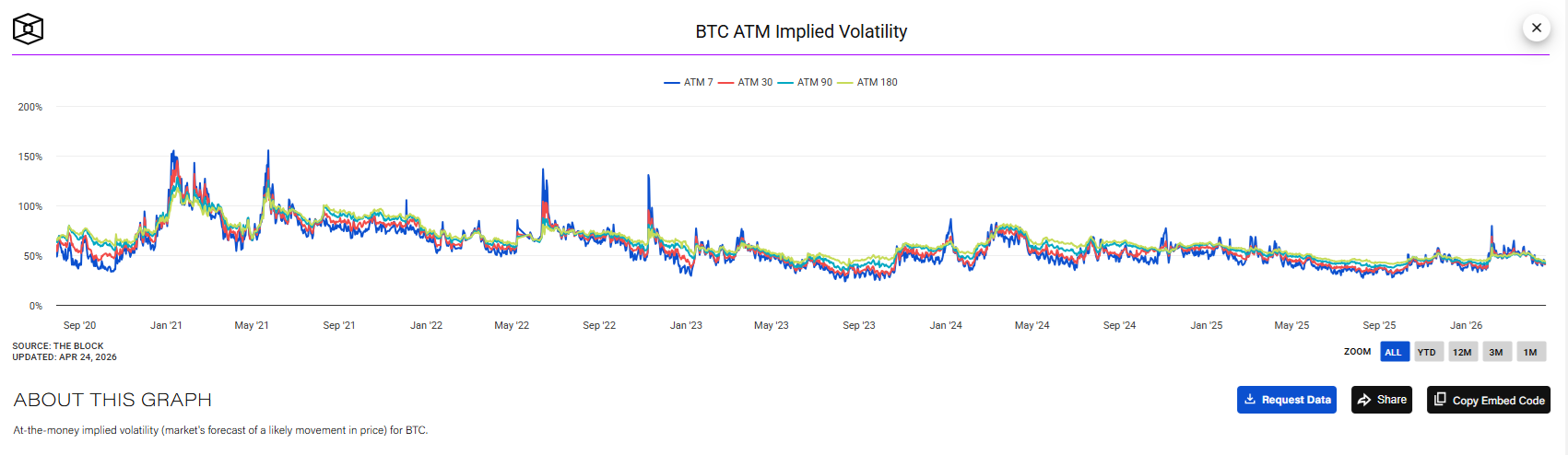
Since BTC cannot offer yield, the active management approach is the only way to secure returns. BTC treasury companies rarely resort to decentralized approaches to avoid risking the loss of their coins. BTC staking is limited to several fully Web3 startups, but is not used by treasury companies. Staking is usually the main approach for ETH and SOL treasury holders.
The implied volatility metric is a forward-looking indicator based on options market prices, representing the BTC fluctuations in a future time frame. The graph measures expected, not historical volatility, and Nakamoto can use the metric to estimate option premiums, measure risk, and sentiment.
Nakamoto will buy protective put options and put spreads to protect against the BTC downside, and will also gain funding from selling call options. The strategy should yield a directional gain in both BTC and dollars.
The company will use the income to buy more BTC, cover operating costs, or as working capital. The main goal of Nakamoto would be to generate more income without selling the BTC, keeping its position as a DAT company.
As Cryptopolitan reported earlier, some companies gave up on their BTC holdings, as in the case of Satsuma, pressured to sell its treasury. Other legacy miner treasuries were sold to pivot to AI.
Nakamoto is the only playbook company to sell BTC from its treasury and attempt to rearrange its financials to remain viable. The company’s mNAV metric is at 0.24, the lowest among playbook companies.
NAKA is down by 99% since its peak in May 2025, when the stock closed at $22.60. Currently, NAKA trades around $0.21, with slower trading and relatively low short open interest. If Nakamoto succeeds, its derivative strategy may boost options for other playbook holders to improve their balance without selling BTC.
Still letting the bank keep the best part? Watch our free video on being your own bank.
Recommended Articles


