




5 On-Chain Signals Suggest Bitcoin’s War-Driven Dip Masks a Quiet Wealth Transfer
Bitcoin’s (BTC) price dropped nearly 3% since the weekend after US-Iran ceasefire talks failed in Islamabad.
The largest cryptocurrency slipped below $71,000 today. It was trading at roughly $70,960 at press time.
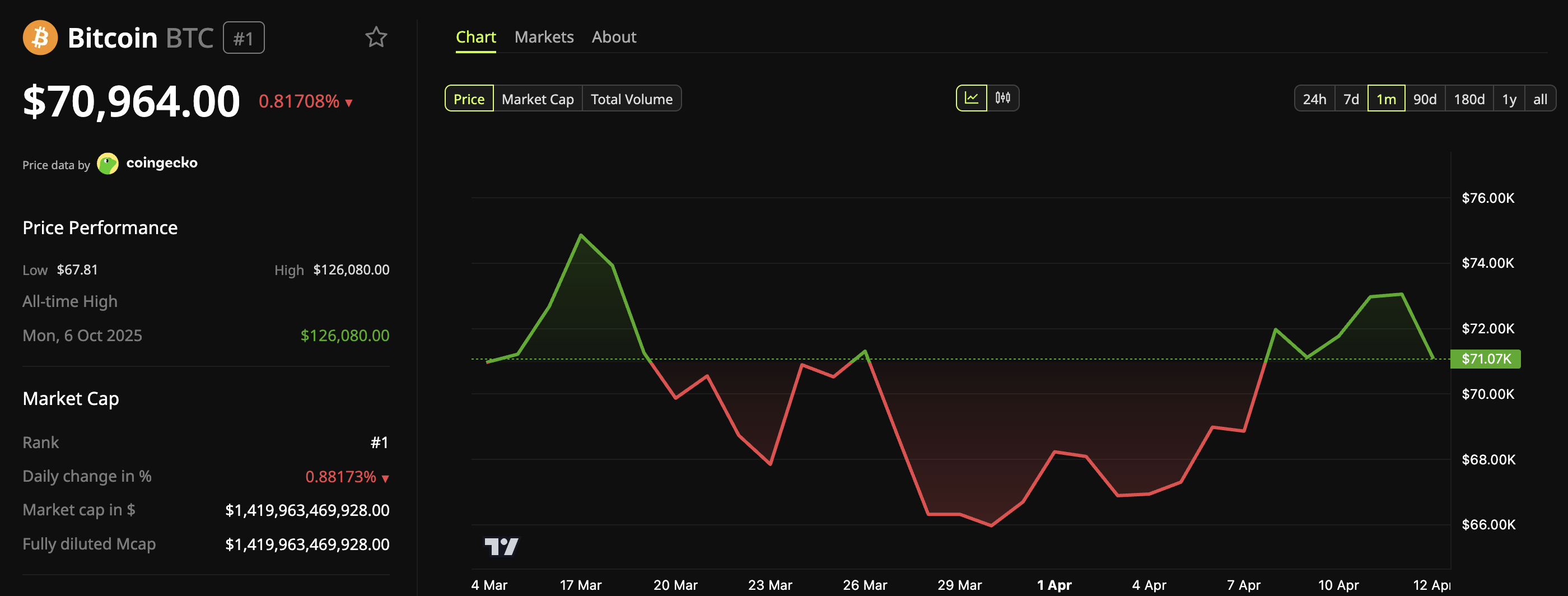 Bitcoin (BTC) Price Performance. Source: BeInCrypto Markets
On-Chain Data Reveals a Wealth Transfer as Bitcoin Drops on US-Iran News
However, on-chain data tells a different story beneath the surface-level panic. According to an analyst, the military tension spooked retail investors, but institutional capital kept buying. Five key metrics support this thesis.
First, Bitcoin’s Total Netflow on Binance (SMA-30) registered an average of roughly -1,350 BTC, worth about $96 million. Negative netflow indicates coins leaving Binance at an aggressive pace.
Follow us on X to get the latest news as it happens
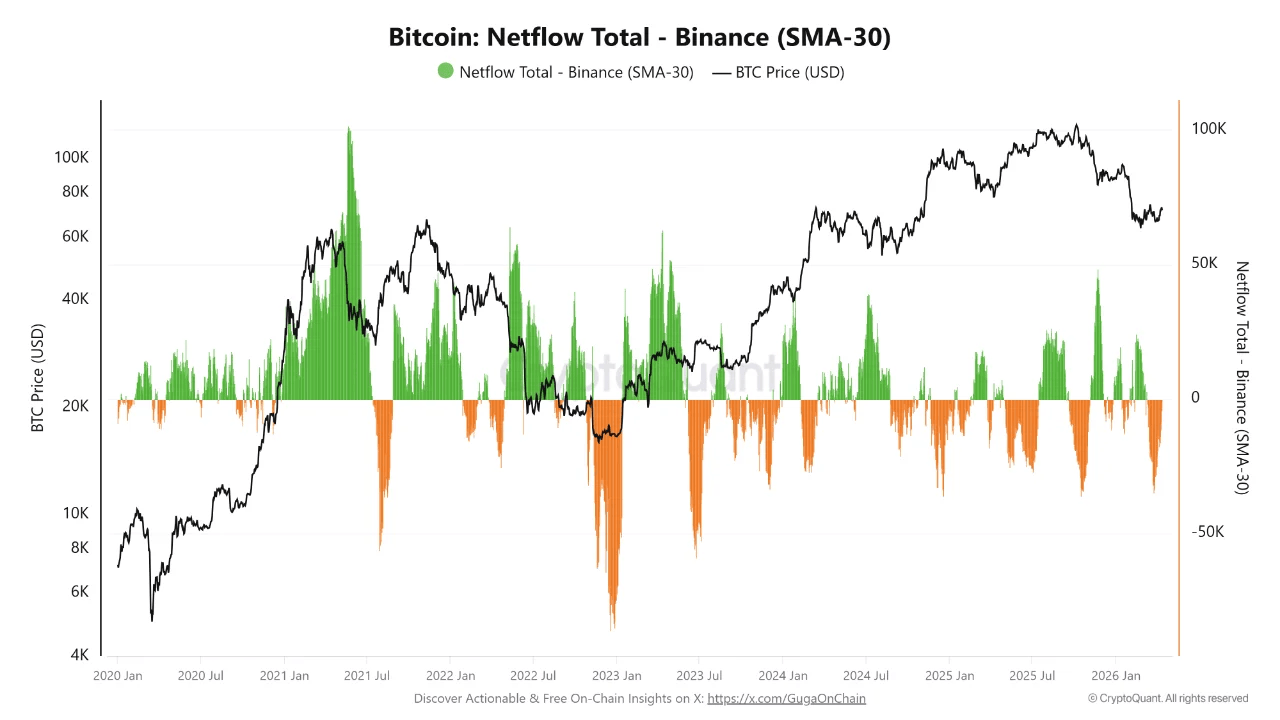 Bitcoin Netflow on Binance. Source: CryptoQuant
Second, the Short-Term Holder Spent Output Profit Ratio (SOPR) across all exchanges sits at 1.0018.
“The mathematical verdict is irrefutable: realizing losses predominated over the last 182 days, of which 148 (81.32%) were below 1.00. Today, these investors liquidate their positions practically at ‘breakeven’ to escape the volatility, delivering cheap liquidity into the hands of those who dictate the rules of the game,” the analyst wrote.
Third, global exchange reserves fell to about 2.69 million BTC, sitting below the seven-day moving average. That gap represents roughly 4,500 BTC, about $316 million, withdrawn to cold storage during peak geopolitical uncertainty.
“The scenario proves that today’s drop is not a trend reversal, but a brutal wealth transfer disguised as macroeconomic panic. The data shows that betting against the market in the face of this structural liquidity drought is putting yourself in front of an institutional steamroller,” the post added.
Bitcoin Whale Behavior Confirms the Shift
A separate analysis by Amr Taha reinforced this reading. The 30-day whale inflow to Binance fell to $2.96 billion. The inflow fell below $3 billion for the first time since June 2025.
Declining whale inflows suggest large holders have stopped sending BTC to exchanges for potential sale.
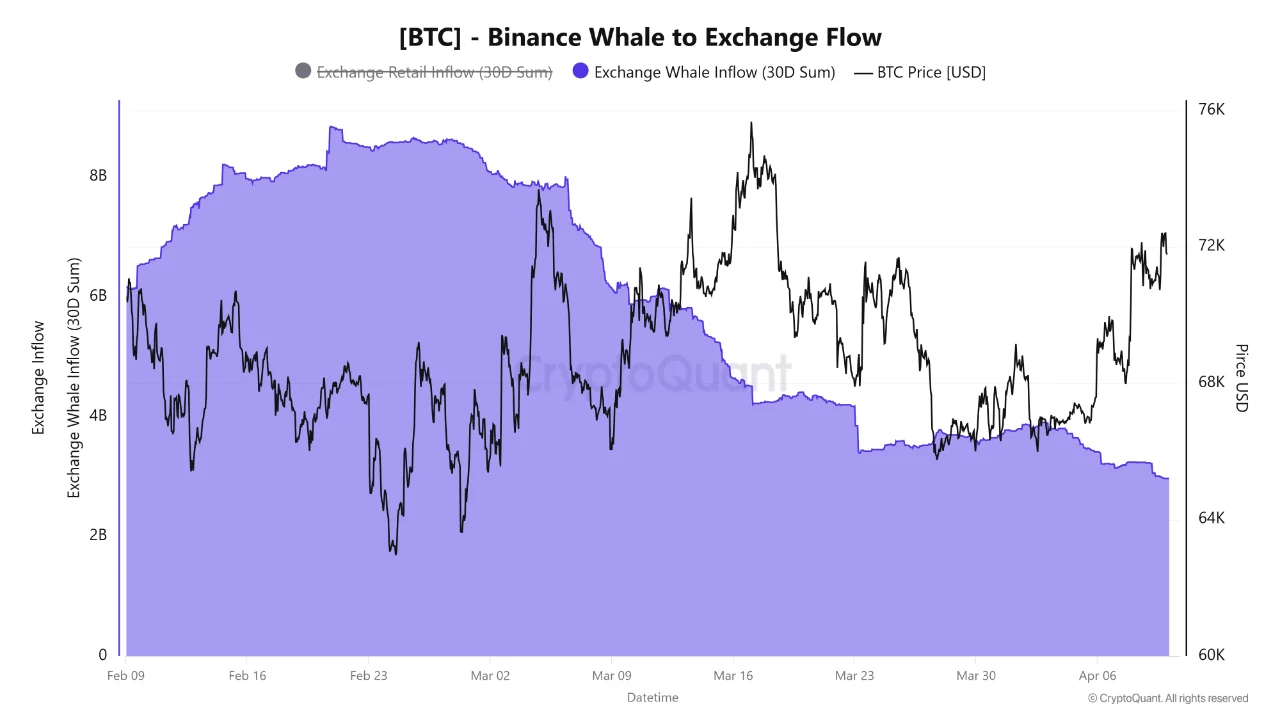 Bitcoin Whale Activity. Source: CryptoQuant
At the same time, Long-Term Holder (LTH) Realized Cap Change over 30 days rose to $49 billion on April 9. That marked its second return to that level since March 26.
Meanwhile, Short-Term Holder (STH) Realized Cap Change fell to -$54 billion, its third drop below -$50 billion since early March. According to the analyst, weaker holders distribute while long-term holders absorb available supply.
Whether this accumulation translates into a price recovery will depend on whether the US-Iran stalemate escalates further or yields a diplomatic breakthrough in the days ahead.
Subscribe to our YouTube channel to watch leaders and journalists provide expert insights
Recommended Articles


