




How a Potential Russia–Ukraine Ceasefire Could Impact Crypto Markets
Diplomatic efforts to end the Russia–Ukraine war gained visible momentum on Monday, as US, Ukrainian, and European officials outlined the foundations of a possible ceasefire and post-war security framework.
The developments mark one of the most substantive diplomatic advances since the conflict began. The positive signs are already prompting investors to reassess geopolitical risk across global markets, including cryptocurrencies.
For crypto, which has recently suffered sharp declines tied to global risk-off dynamics, a ceasefire could alter sentiment, but not without important caveats.
Diplomatic Momentum Builds For Russian-Ukraine Ceasefire
Negotiators from Ukraine, the US, and key European allies met in Berlin this week for an intensive round of talks focused on ending hostilities and preventing renewed conflict.
Officials involved in the discussions described progress as significant, with alignment reached on most elements of a proposed framework.
US officials confirmed that Washington has agreed to support meaningful security guarantees for Ukraine as part of a peace arrangement, addressing Kyiv’s long-standing demand for protection against future aggression.
According to officials familiar with the talks, negotiators are now aligned on roughly 90% of the framework.
However, remaining disagreements centered on territorial questions in eastern Ukraine, particularly in the Donetsk region.
European leaders reinforced the diplomatic push by endorsing plans for a European-led multinational force that would assist in stabilizing Ukraine if a ceasefire holds. The proposal also includes a US-backed monitoring and verification mechanism designed to oversee ceasefire compliance and respond to violations.
Public opinion inside Ukraine continues to act as a constraint on negotiations. Polling cited by Reuters shows that most Ukrainians oppose major territorial concessions or limits on the country’s military capabilities unless backed by firm and enforceable security commitments.
Fighting Continues Despite Negotiations
Even as diplomacy advances, military operations have not paused. On Monday, Ukrainian forces carried out additional long-range drone strikes against Russian oil infrastructure in the Caspian Sea, disrupting production at key platforms for the third time in recent days.
The attacks highlight Kyiv’s strategy of applying economic pressure on Russia’s energy revenues while negotiations remain unresolved.
Ukraine also claimed it struck a Russian Kilo-class submarine in the port of Novorossiysk using underwater drones.
If confirmed, would underscore the growing sophistication of Ukraine’s asymmetric naval capabilities. Independent verification of the claim remains limited, and Russian officials have denied damage.
What a Ceasefire Could Mean for Crypto Markets
1. Reduced Safe-Haven Demand, Improved Risk Appetite
A credible ceasefire would remove one of the largest sources of global tail risk. In markets where risk sentiment is a major driver, such a de-escalation can:
- Boost risk assets broadly, reducing demand for traditional safe havens like the US Treasuries and the US dollar.
- Support assets like Bitcoin and major altcoins as investors rotate back toward higher-beta investments.
- Lower implied volatility across equity and digital asset markets.
The mechanics are straightforward: with reduced geopolitical risk, funds that fled to safety may redeploy into risk assets, potentially lifting Bitcoin and Ethereum prices. A stronger risk appetite could also benefit altcoins, which tend to outperform in relief rallies.
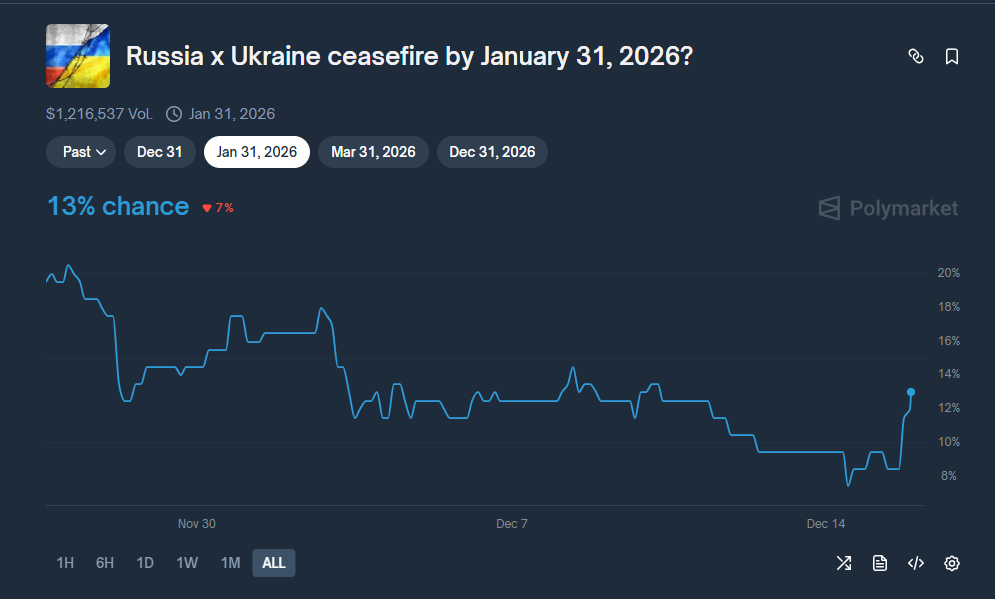 Polymarket Odds On Russia-Ukraine Ceasefire By Early 2026 Have Increased. Source: Polymarket
2. Energy and Inflation Narrative
A sustained ceasefire could also affect commodity markets, especially if it lessens pressure on energy prices. Lower or stabilized global energy prices could:
- Dampen inflation expectations in Europe and elsewhere.
- Reduce pressure on central banks to maintain restrictive policy settings.
- Allow liquidity conditions to ease further, which historically has supported higher valuations in risk assets such as cryptocurrencies.
However, this transmission is neither direct nor immediate. It depends on how quickly markets perceive structural changes in energy markets and central bank policy trajectories.
What Might Limit the Crypto Recovery
While a ceasefire can reduce geopolitical risk, it cannot fully offset macro headwinds that influenced crypto markets over the past months:
- Persisting central bank uncertainty: If the Bank of Japan proceeds with tightening and the US data continues to suggest sticky inflation, liquidity could remain constrained, muting upside in risk assets.
- Derivative market positioning: Leverage has been a significant catalyst of past crypto declines. Relief rallies can trigger fresh positioning and high funding rates, only to be reversed if macro forces reassert.
- Liquidity conditions: A ceasefire is good news, but sustained asset price rallies require ample liquidity. Without clearer signals of easing financial conditions, crypto assets may see only transient relief moves.
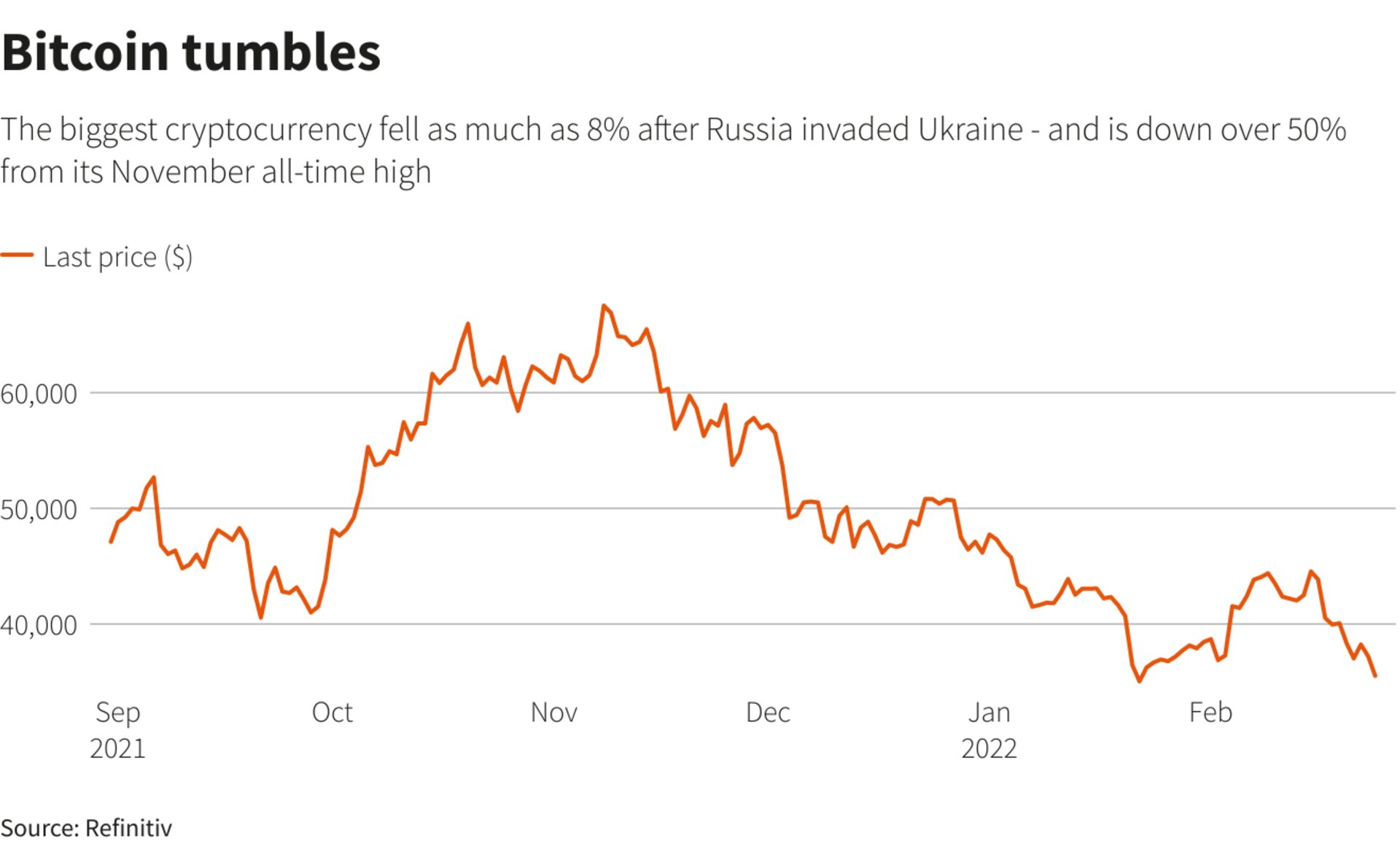 Bitcoin Dip When Russia Invaded Ukraine in 2022. Source: Reuters
A Ceasefire Would Be Positive, But Not Sufficient
An agreed ceasefire between Russia and Ukraine would mark a monumental shift in geopolitics and initially bolster risk assets, including cryptocurrencies.
However, the broader impact on crypto markets will depend heavily on how the ceasefire intersects with liquidity conditions, central bank policy expectations, and global risk appetite.
In the short term, crypto could see a meaningful relief rally, driven by sentiment and risk reallocation.
Over the medium term, the trend will likely hinge on whether ceasefire outcomes tangibly ease inflation and liquidity pressures — the primary macro drivers that have influenced digital assets in recent months.
Recommended Articles


