




XRP Whales Now Hold 83.7% of All Supply – What’s Next For Price?


XRP price continues to trade under a prolonged downtrend that has limited sustained upside for months. The altcoin has repeatedly failed to reclaim key resistance levels. While short-term sentiment shows mild improvement, the broader macro structure remains tilted toward caution.
Recent on-chain developments introduce a complex dynamic. Whale accumulation suggests confidence in a rebound. At the same time, profit-taking activity and weakening network growth highlight structural risks that could cap recovery attempts.
XRP Whales Are Buying
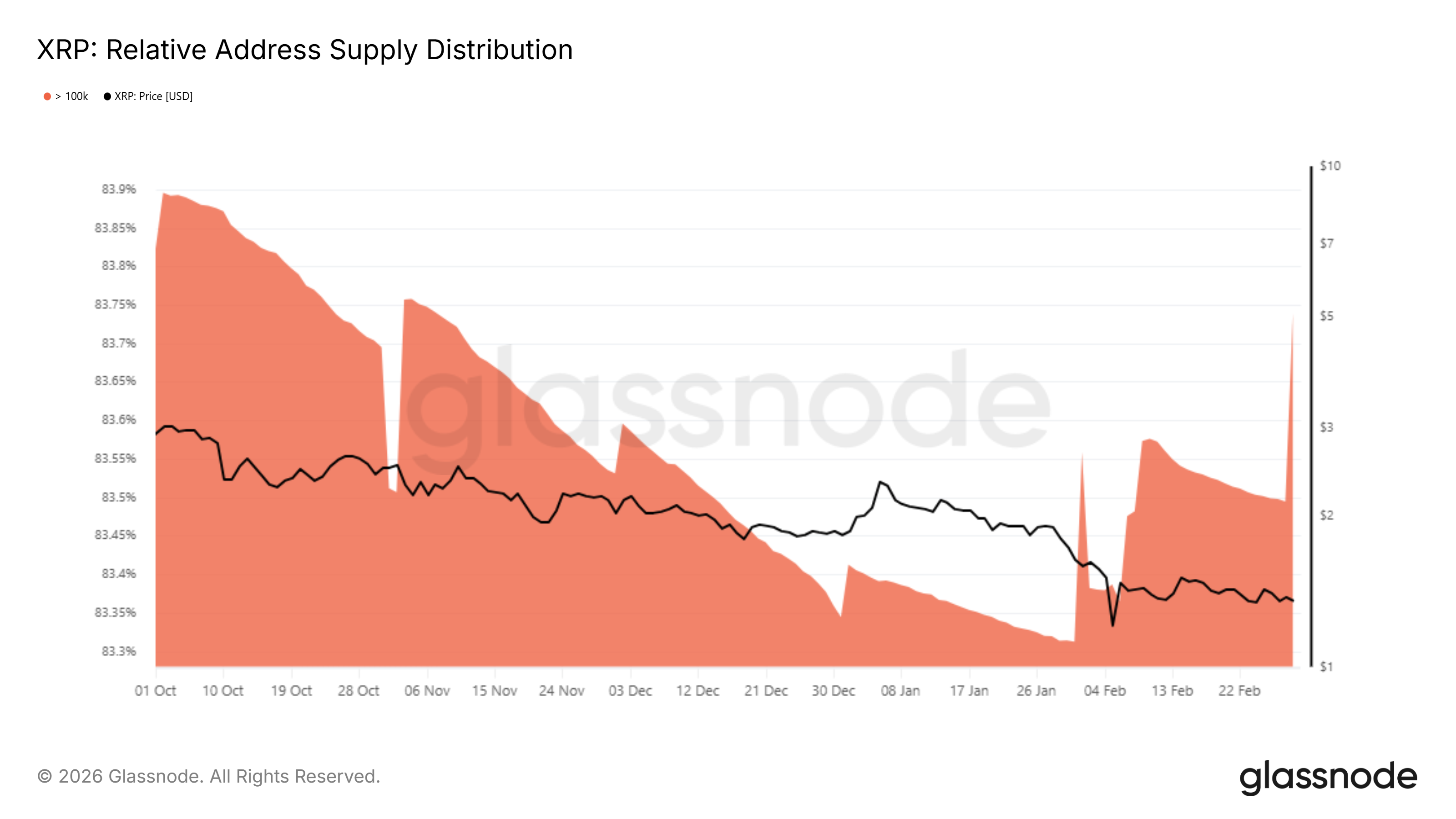
Large XRP holders appear committed to accumulation despite challenging market conditions. Throughout February, addresses holding more than 100,000 XRP increased their collective ownership. These wallets now control 83.7% of the total XRP supply.
This concentration indicates strong conviction among high-capital participants. Whales often accumulate during consolidation phases to position for future upside. Their buying suggests expectations of price recovery rather than imminent distribution. Sustained accumulation can reduce circulating supply and stabilize volatility.
Want more token insights like this? Sign up for Editor Harsh Notariya’s Daily Crypto Newsletter here.
Bearish Signals Appear
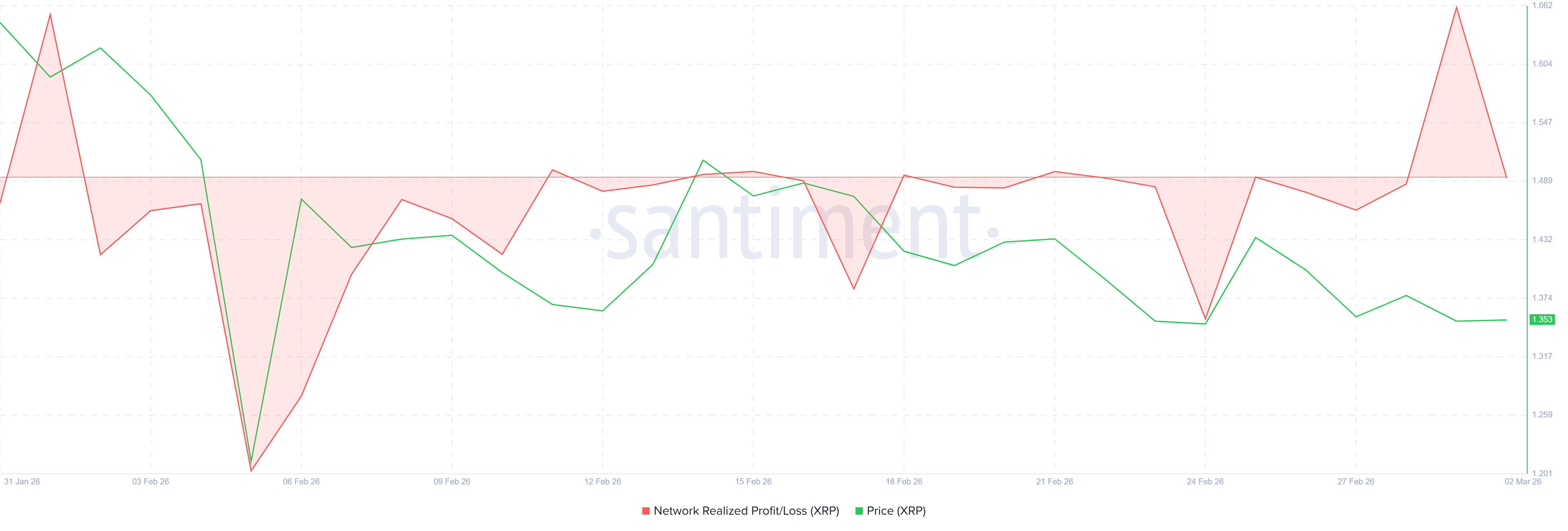
However, early signs of profit-taking are emerging on-chain. The network realized a profit and loss metric surged to $207 million over the past 24 hours. This marks the first significant wave of profit booking in nearly a month.
While moderate profit realization is healthy for market structure, accelerated selling could undermine bullish setups. If short-term gains motivate broader distribution, XRP’s recovery may stall. Monitoring realized profit trends will be critical for assessing sustained upside potential.
New address momentum paints a more cautious macro picture. This indicator compares monthly (red) new address growth against yearly (blue) trends. When monthly growth falls below yearly averages, it signals contraction in network activity.
Since early December 2025, XRP’s monthly new address growth has remained below yearly levels. This divergence reflects declining on-chain engagement and reduced network utilization. Weak onboarding often correlates with slower capital inflows.
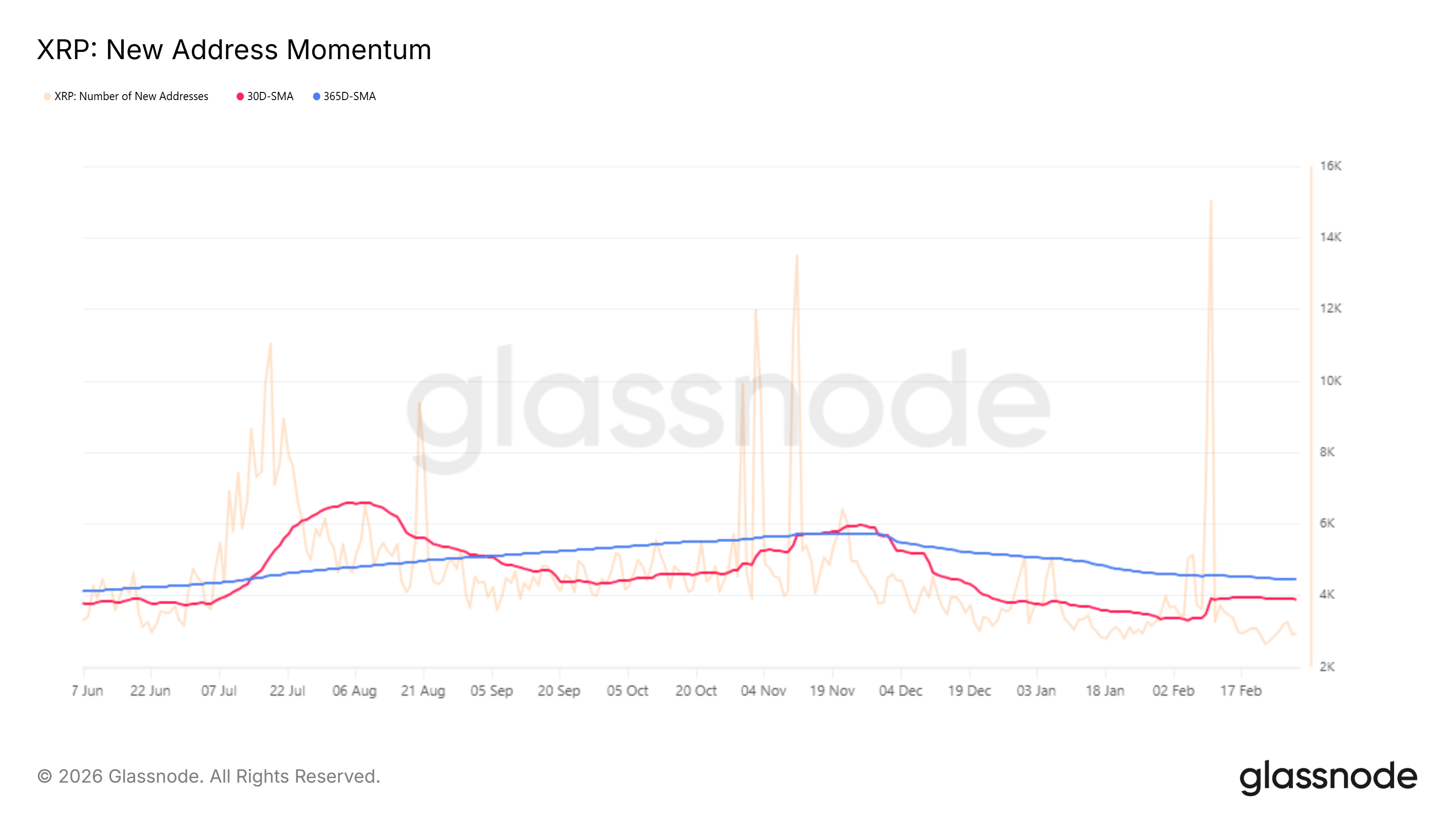
Persistent contraction limits organic demand. Without consistent expansion in active addresses, price recovery becomes dependent on existing holders rather than new participants. Historical data show that prolonged divergence can suppress rallies until growth normalizes.
Reversal of this trend would signal improving fundamentals. A rise in monthly new addresses above yearly averages would indicate renewed adoption. Until that shift occurs, macro fundamentals remain fragile despite whale optimism.
XRP Price Downtrend Persists
XRP is trading at $1.34 at the time of writing, hovering directly above critical support at the same level. The altcoin remains capped below $1.47 resistance. A descending trendline active since early 2026 continues to restrict upward movement.
If bearish momentum strengthens, XRP could lose the $1.34 support. Combined with increasing profit-taking, such a breakdown may push the price toward $1.28. Further weakness could extend losses to $1.21, reinforcing the prevailing downtrend structure.
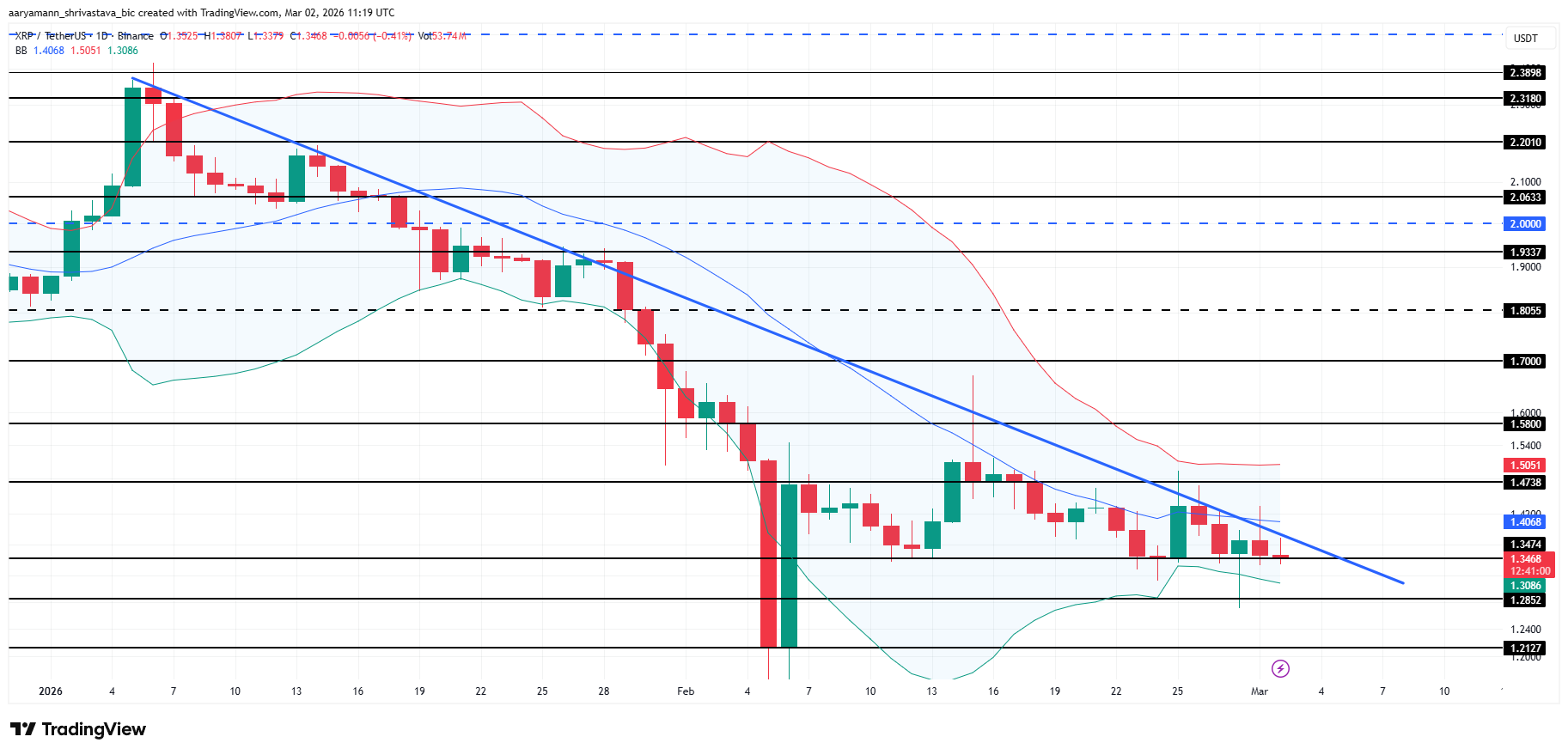
Conversely, stabilization in realized profits would support consolidation above $1.34. Holding this level may weaken the descending resistance line. A decisive breakout above $1.47 would invalidate the bearish thesis. Sustained momentum could then propel XRP toward $1.58, marking a structural shift in market sentiment.
* The content presented above, whether from a third party or not, is considered as general advice only. This article should not be construed as containing investment advice, investment recommendations, an offer of or solicitation for any transactions in financial instruments.


