




WTI (USOIL) Surges on Aug 9: Key Factors to Watch
WTI (USOIL) is up 2.60% at Aug 9 18:20(ET), now at $77.985, with a 7-day down of 9.25%.
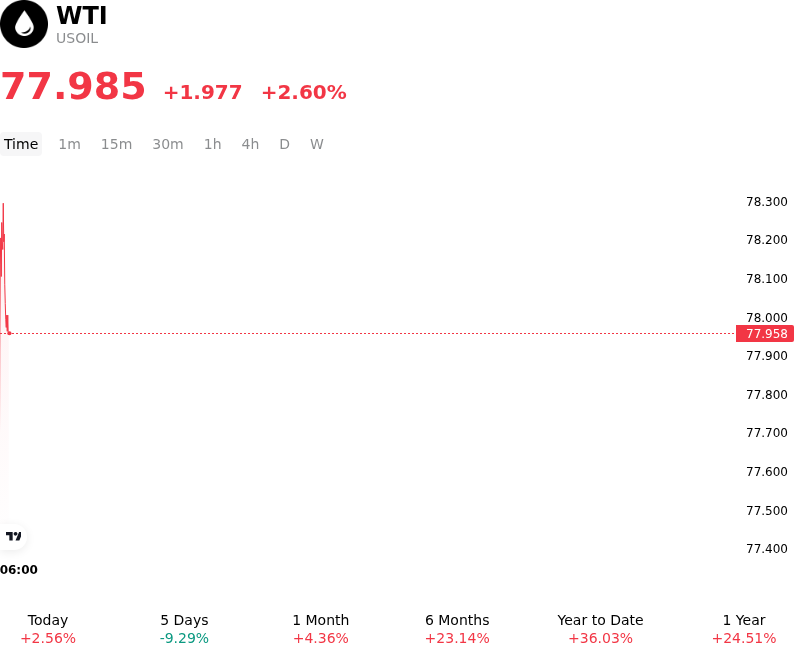
What is driving WTI (USOIL)’s stock price up today?
The advance in US crude oil prices is primarily driven by an escalation in geopolitical tensions in the Middle East, which has reignited concerns over potential supply disruptions along critical maritime trade routes. Reports of increased friction near the Strait of Hormuz have prompted institutional investors to re-establish risk premiums, as the threat to physical flows outweighs recent concerns regarding global demand softening. This supply-side anxiety is further compounded by unconfirmed reports of unplanned production outages in North African fields, tightening the immediate physical market balance for light sweet grades.
From a domestic perspective, the market is reacting to a shift in expectations for U.S. shale production growth. Recent data suggests that the pace of completions in the Permian Basin is slowing more rapidly than previously forecasted, leading to a downward revision in year-end production targets. This supply constraint coincides with a larger-than-anticipated draw in commercial crude inventories at the Cushing delivery hub, which has reached a seasonal low, creating upward pressure on the front-month contract as storage levels approach operational minimums.
Macroeconomic tailwinds are also providing significant support for dollar-denominated commodities. The U.S. Dollar Index has retreated following a series of softer labor market prints, which have reinforced expectations that the Federal Reserve will adopt a more accommodative monetary policy stance in the coming quarter. A weaker greenback has increased the purchasing power of non-dollar buyers, particularly in emerging markets, while lower interest rate expectations reduce the cost of carry for holding physical inventories, encouraging restocking activity among industrial end-users.
While the current price action is largely event-driven, it reflects a broader structural fragility in the global energy balance. The market remains highly sensitive to any developments that threaten the narrow margin of spare capacity maintained by OPEC+ members. As long as geopolitical uncertainty persists and U.S. production growth remains tempered by capital discipline, the bias for oil prices remains skewed to the upside, despite persistent long-term concerns regarding a transition-led peak in oil demand. Investors are now closely monitoring the next round of refinery utilization data to gauge whether the current strength in crude can be sustained by downstream product demand.
Technical Analysis of WTI (USOIL)
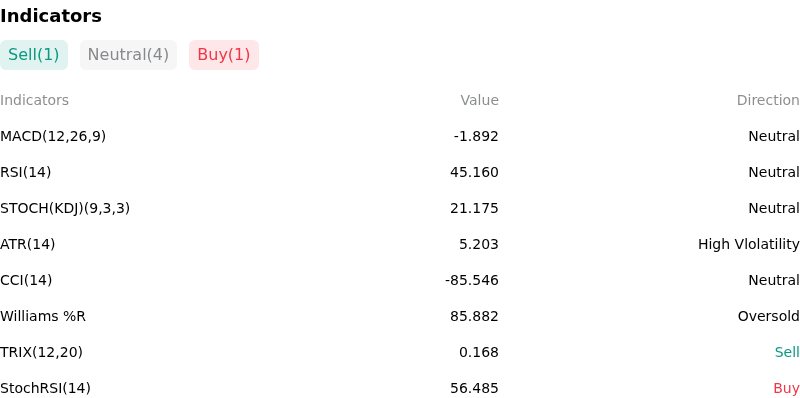
Technically, WTI (USOIL) shows a MACD (12,26,9) value of -1.892, indicating a neutral signal. The RSI at 45.160 suggests neutral condition and the Williams %R at 85.882 suggests oversold condition. Please monitor closely.
More details about WTI (USOIL)
Recent Events and Risks:
- Unexpected Inventory Accumulation: Recent EIA data revealed a surprise build in U.S. commercial crude oil inventories by approximately 2.1 million barrels, contrary to analyst expectations of a draw, suggesting a near-term supply overhang at the Cushing storage hub.
- Erosion of Geopolitical Risk Premium: Renewed momentum in ceasefire negotiations between Israel and Hamas has led to a sharp reduction in the "war premium," as traders lower the probability of immediate conflict-related supply disruptions in the Middle East.
- Deteriorating Chinese Demand Indicators: Continued weakness in Chinese industrial output and refinery run rates, underscored by recent underwhelming PMI data, has intensified market fears regarding a structural slowdown in consumption from the world’s largest oil importer.
- Bearish Seasonal Gasoline Demand: Despite the peak summer driving season, a significant increase in gasoline stocks and stagnant product implied demand have signaled that refined product consumption is failing to keep pace with historical averages, putting downward pressure on crack spreads and WTI prices.
Recommended Articles


