




Brent (UKOIL) Is up by 2.87% on Aug 9: Is the Demand Outlook Changing?
Brent (UKOIL) is up 2.87% at Aug 9 18:15(ET), now at $83.67, with a 7-day down of 6.76%.
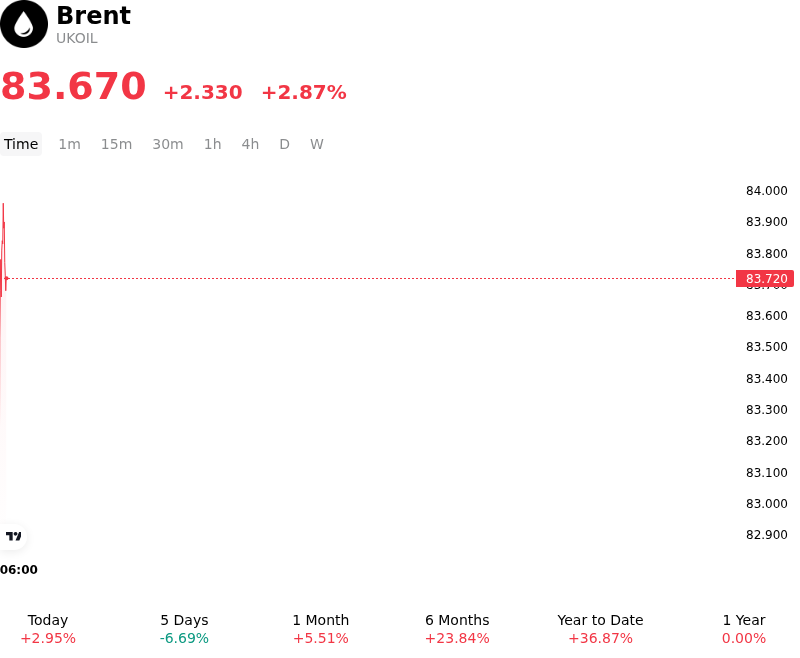
What is driving Brent (UKOIL)’s stock price up today?
The upward momentum in Brent crude reflects a sharp repricing of the geopolitical risk premium following an escalation of tensions in the Middle East over the weekend. Reports of renewed threats to maritime traffic in critical chokepoints have heightened fears regarding the stability of global supply chains. Institutional investors are pricing in a higher probability of prolonged transit delays, which effectively tightens the immediate availability of barrels in the Atlantic Basin and increases the cost of delivery for Asian refiners.
Simultaneously, supply-side concerns are being exacerbated by a significant weather system intensifying in the Gulf of Mexico. The threat of localized production shut-ins and the potential for prolonged refinery outages along the U.S. Gulf Coast have prompted a defensive repositioning among market participants. As operators begin precautionary evacuations of offshore platforms, the market is discounting a temporary but meaningful reduction in crude output, putting additional upward pressure on the global benchmark.
On the demand side, recent manufacturing data from major emerging economies suggests a more resilient consumption profile than previously anticipated. This coincides with a period of seasonal strength in global transport fuel demand, which is currently testing the limits of global inventory levels. The perception of a tightening physical market is supported by recent industry data showing a consistent drawdown in commercial stockpiles, leaving little margin for error in the event of further supply shocks.
From a macroeconomic standpoint, shifts in interest rate expectations are also playing a secondary role. Signs of a stabilizing inflationary environment have led to a moderation in the US dollar, making dollar-denominated commodities more attractive to international buyers. The convergence of a weaker currency and heightening supply risks has triggered a wave of short-covering and institutional capital inflows, pushing prices through key technical resistance levels.
While the current advance is driven largely by immediate event-driven catalysts, the underlying structural tightness remains a focal point for institutional strategists. The limited spare capacity within the OPEC+ alliance and the ongoing challenges in scaling non-OPEC production mean that the market remains highly sensitive to any developments that threaten the flow of oil. Market participants continue to monitor the duration of current geopolitical frictions and the ultimate trajectory of weather-related disruptions as the primary indicators for price volatility in the near term.
Technical Analysis of Brent (UKOIL)
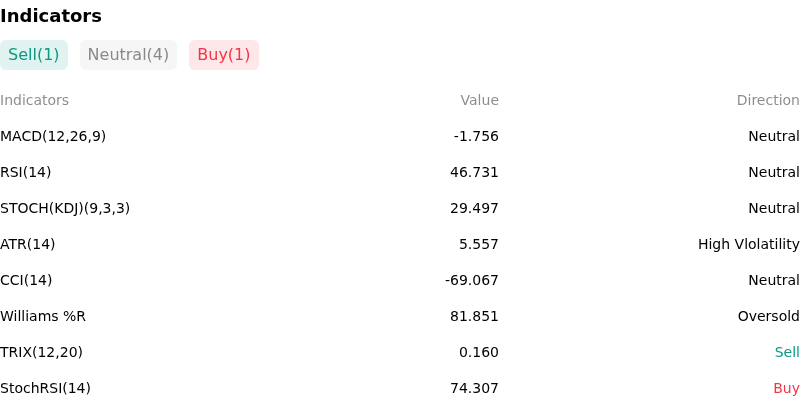
Technically, Brent (UKOIL) shows a MACD (12,26,9) value of -1.756, indicating a neutral signal. The RSI at 46.731 suggests neutral condition and the Williams %R at 81.851 suggests oversold condition. Please monitor closely.
More details about Brent (UKOIL)
Recent Events and Risks:
- China Demand Deterioration: Disappointing recent data showing a contraction in Chinese manufacturing activity and lower refinery run rates has intensified concerns regarding sluggish consumption in the world's largest oil importer.
- Hawkish Monetary Policy Signals: Recent hawkish commentary from central bank officials suggesting "higher for longer" interest rates has strengthened the U.S. Dollar and increased fears of a global economic slowdown, creating significant downside pressure on Brent prices.
- U.S. Crude Inventory Builds: Unexpected builds in U.S. commercial crude and gasoline stocks reported in the latest weekly data suggest a loosening of the physical market and weaker-than-anticipated seasonal demand.
- Geopolitical Risk De-escalation: A reduction in immediate tensions following recent diplomatic efforts in the Middle East has led to the unwinding of the war risk premium, triggering intraday volatility and price retracement.
Recommended Articles


