




Brent Futures (UKOIL-F) Is up 3.77% on Jul 12: What Changed in Supply and Demand?
Brent Futures (UKOIL-F) is up 3.77% at Jul 12 18:10(ET), now at $78.83, with a 7-day up of 9.64%.
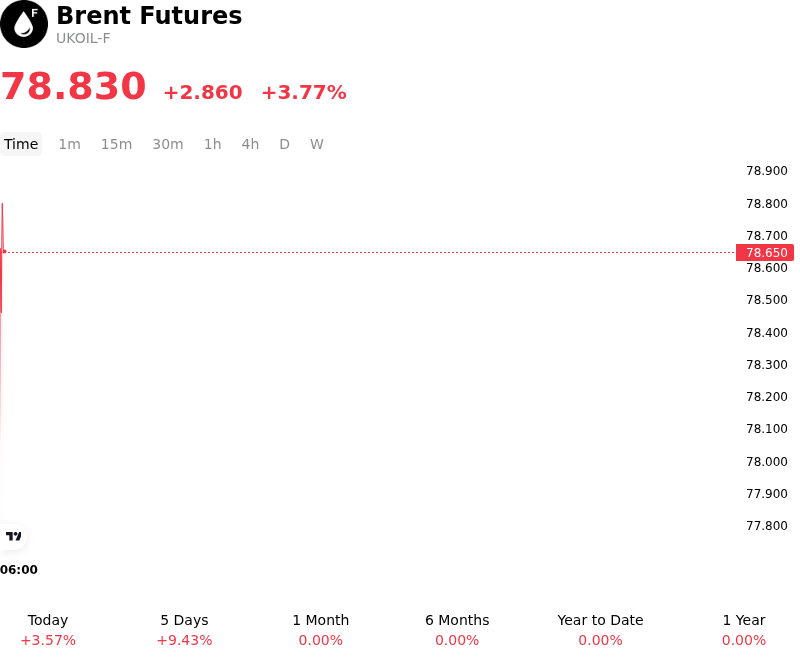
What is driving Brent Futures (UKOIL-F)’s stock price up today?
Brent crude prices advanced sharply as market participants reacted to a convergence of supply-side constraints and a significant revision in global demand outlooks. The primary catalyst for the upward momentum appears to be an escalation in geopolitical tensions within the Middle East, specifically targeting critical maritime corridors. This has led to an immediate increase in the risk premium as traders price in potential disruptions to crude flows through the Strait of Hormuz. Institutional investors are shifting positions to account for a tighter physical market, especially as preliminary export data suggests a notable decline in shipments from major OPEC+ producers.
Compounding the supply concerns is the seasonal peak in Northern Hemisphere demand. Robust gasoline and jet fuel consumption during the summer travel season has resulted in a series of substantial inventory draws, tightening the global market balance more quickly than analysts had previously forecasted. Furthermore, improved manufacturing data from East Asia has signaled a recovery in industrial energy demand, providing a fundamental floor for prices and encouraging long positioning among commodity-focused hedge funds.
Macroeconomic factors have also provided a tailwind for the energy complex. A broader weakening of the US dollar, triggered by cooling inflationary pressures in the United States, has increased the attractiveness of Brent futures for holders of other currencies. With the Federal Reserve signaling a potential shift toward a more accommodative monetary policy, the outlook for global growth has improved, further bolstering the demand narrative. This shift in interest rate expectations has reduced the cost of carry for storing physical oil, incentivizing inventory builds at a time when global spare capacity remains limited.
Technical factors likely exacerbated the intraday volatility, as the breach of key psychological resistance levels triggered automated buy orders and forced the covering of short positions. The move suggests that the market is transitioning from a range-bound environment to a more bullish structural trend, driven by the realization that supply buffers are thinner than anticipated. Investors remain focused on upcoming production guidance from the OPEC+ monitoring committee and any further developments regarding transit security in key energy hubs.
More details about Brent Futures (UKOIL-F)
Recent Events and Risks:
- Unexpected Inventory Accumulation: Latest industry data from the American Petroleum Institute reported a surprise build of approximately 1.6 million barrels in U.S. crude stocks, defying market expectations for a significant draw and signaling a potential short-term glut that weighs on front-month Brent pricing.
- Deteriorating Chinese Refining Demand: Near-term volatility is driven by data showing a sustained contraction in Chinese refinery throughput and weak domestic diesel consumption, raising institutional concerns that the world’s largest importer will not provide the demand floor previously anticipated for the second half of the year.
- Geopolitical Risk Premium Erosion: Renewed diplomatic momentum toward a ceasefire in the Middle East has prompted algorithmic and speculative traders to unwind long positions as the perceived "war premium" diminishes, leaving prices vulnerable to technical breakdowns below key support levels.
- Macroeconomic Risk-Off Sentiment: Recent cooling in global manufacturing indices and hawkish signals from central bank officials have revived fears of a broader economic slowdown, triggering liquidations in commodity-linked instruments as investors rotate toward defensive assets and the U.S. Dollar.
Recommended Articles


