




Gold Price Forecast: Dollar Near Key Support as Gold Reclaims $4,500 — Can XAU/USD Break Higher?

How to Start Trading Gold CFDs in Australia
Gold prices are back in focus after a sharp rebound on Thursday, as a weaker US dollar, falling Treasury yields and reduced expectations for a September Federal Reserve rate hike lifted demand for bullion.
On September 3, spot gold jumped more than 2% and briefly moved back towards the US$4,500 level. Reuters reported that spot gold rose around 2.3% to US$4,488.54, while US gold futures settled at US$4,539.90.
The rebound marks a significant change from the start of the week, when gold fell more than 2% as higher Treasury yields and a stronger US dollar pushed XAU/USD to a two-week low.
The immediate catalyst was Federal Reserve Governor Christopher Waller.
Waller indicated that he could support keeping interest rates unchanged at the September meeting if inflation continues to moderate. His comments pushed the market-implied probability of a September rate hike down from roughly 63% to around 50%.
For gold traders, the next major question is therefore:
Can weaker US rate-hike expectations push XAU/USD firmly back above US$4,500, or will today's US Nonfarm Payrolls report trigger another reversal?
Gold Price Today: XAU/USD Reclaims $4,500 as Fed Rate Hike Bets Ease
Gold's latest rebound demonstrates how sensitive XAU/USD remains to changes in US monetary-policy expectations.
Earlier this week, the combination of higher Treasury yields and a stronger dollar created significant pressure on gold.
But the situation changed rapidly on Thursday.
Waller's comments reduced expectations of an immediate rate hike, while Treasury yields moved lower and the US dollar weakened. This reduced the opportunity cost of holding a non-yielding asset such as gold.
As a result, gold recovered sharply.
For the Australian market, the key relationship to monitor remains:
Fed expectations → US Treasury yields → US dollar → XAU/USD
When the chain moves lower, gold typically receives additional support.
Why Did Gold Rebound Above $4,400?
Three factors are currently supporting the gold price.
1. Fed Rate Hike Expectations Have Fallen
The biggest short-term driver is the repricing of Federal Reserve policy.
Waller said the Fed should avoid raising rates prematurely if disinflation continues. He also highlighted the importance of upcoming inflation data, particularly the August CPI report, before making a final policy decision.
This is important because the market had previously become considerably more hawkish following Kevin Warsh's Jackson Hole comments.
The latest shift means traders are once again considering a scenario in which the Fed leaves rates unchanged in September.
For gold, that is potentially bullish.
2. US Treasury Yields Have Started to Retreat
Treasury yields were one of the biggest obstacles facing gold at the beginning of September.
On September 1, gold dropped more than 2% as elevated Treasury yields and a stronger dollar weighed on bullion.
However, Waller's more cautious comments helped ease pressure in the bond market.
Lower yields reduce the opportunity cost of holding gold and can encourage investors to increase exposure to precious metals.
This is why the relationship between gold and US Treasury yields will remain one of the most important indicators for traders throughout September.
3. The US Dollar Is Losing Momentum
The dollar's recent weakness has provided another tailwind for gold.
Because gold is priced internationally in US dollars, a weaker dollar generally makes bullion cheaper for overseas buyers and can increase demand.
The recent move in USD/JPY is also important.
The Japanese yen strengthened sharply this week as traders increased expectations for a potential Bank of Japan rate hike. Reuters reported that the yen was on track for its strongest weekly performance in more than a month.
If the dollar continues to weaken against major currencies, XAU/USD could receive additional support.
US Nonfarm Payrolls: The Next Big Test for Gold
The most important event for gold traders today is the US August Nonfarm Payrolls report.
Economists expect US employers to have added around 56,000 jobs in August, following a decline of 23,000 in July. The unemployment rate is expected to remain around 4.1%.
However, the headline payroll number is not the only figure traders should watch.
The market will also focus on:
Unemployment rate
Average hourly earnings
Labour-force participation
Previous payroll revisions
Private-sector employment
A weak labour-market report could reinforce the case for the Fed to keep rates unchanged.
That would potentially push Treasury yields and the US dollar lower, creating another bullish catalyst for gold.
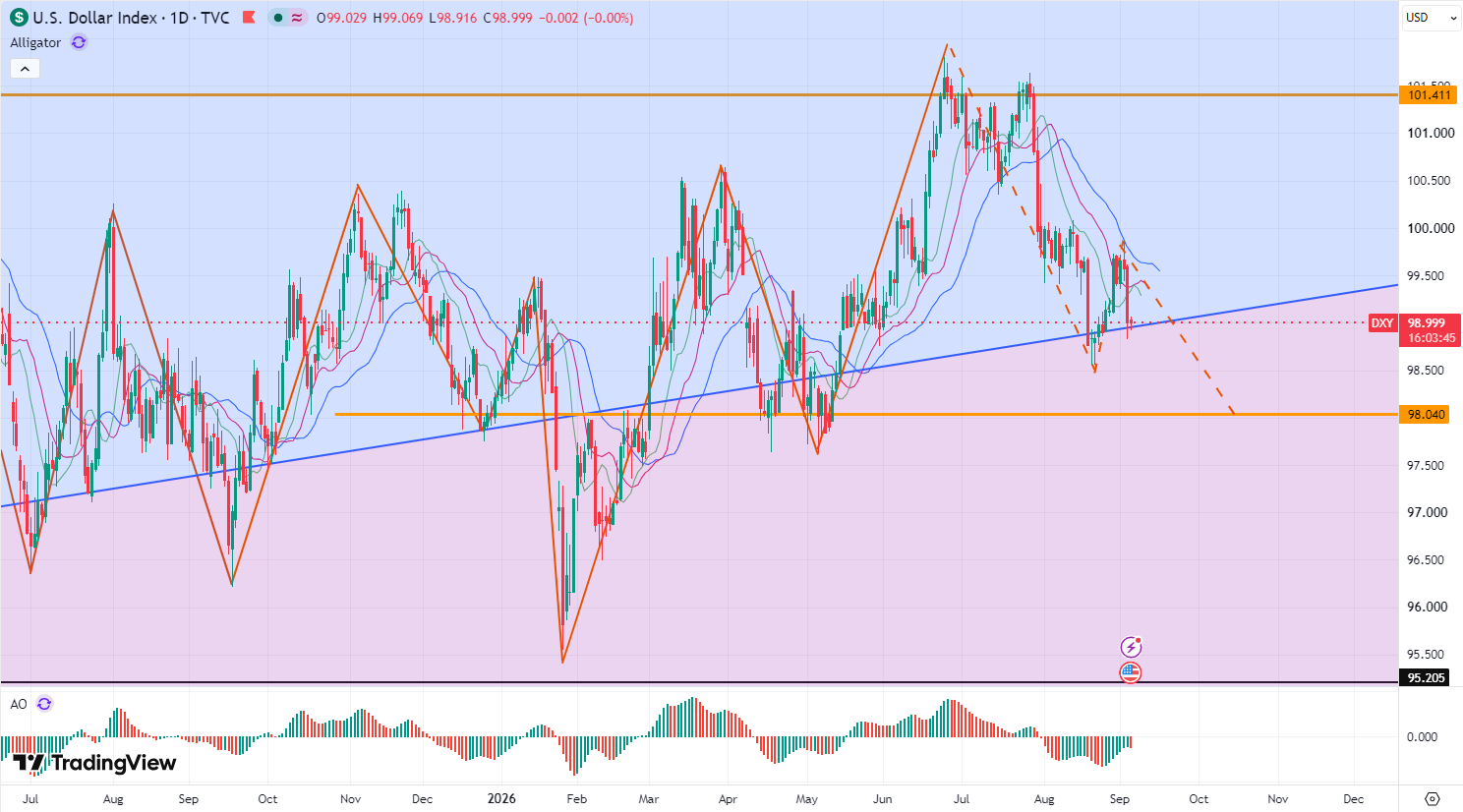
Is the Dollar at a Major Turning Point?
Source: Tradingview
The US Dollar Index is another market worth watching closely.
The dollar has been under pressure as expectations for a Fed rate hike have become less certain, while other major central banks are moving towards tighter policy.
If the Dollar Index breaks below an important technical support area, the resulting dollar weakness could provide another tailwind for gold.
This creates an important potential feedback loop:
DXY falls → Treasury yields fall → Fed hike expectations fall → Gold rises
However, traders should be careful about assuming that a weaker dollar automatically guarantees a gold rally.
If US inflation unexpectedly accelerates, the Fed could quickly return to a more hawkish stance.
Could Higher Oil Prices Still Threaten Gold?
The biggest complication for the gold outlook is energy inflation.
Brent crude remained close to US$95 per barrel on September 4 as tensions surrounding Iran and the Gulf region continued to support oil prices.
Higher oil prices create a difficult situation for the Federal Reserve.
On one hand, weaker employment could argue for lower interest rates.
On the other hand, higher energy prices could push inflation higher.
This creates a policy dilemma:
Weak labour market + high inflation = stagflation risk
If this scenario develops, gold could become increasingly volatile.
Initially, higher inflation could push yields higher and hurt gold.
But if investors become concerned about stagflation and fiscal risks, demand for gold as a hedge could strengthen over the medium term.
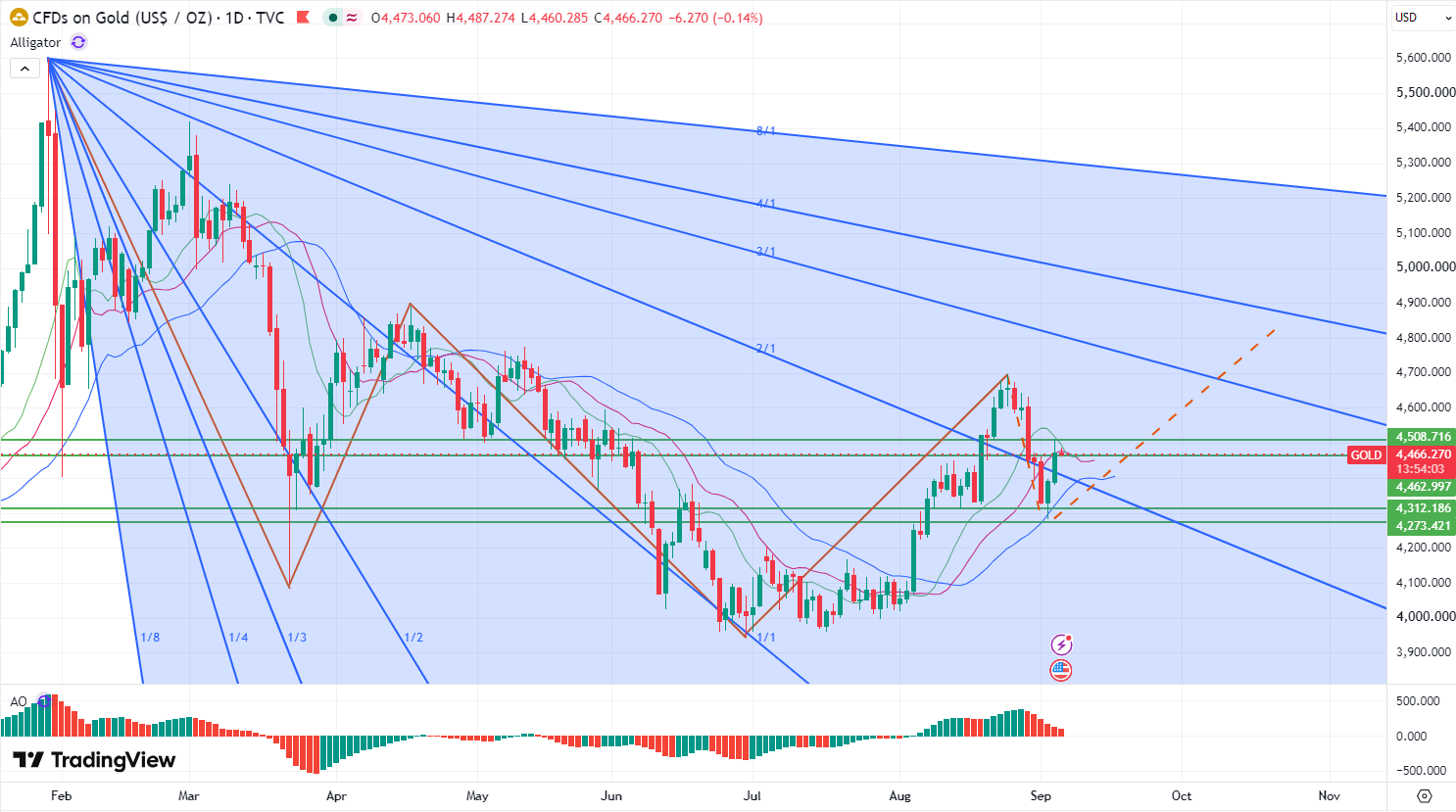
Gold Technical Analysis: $4,500 Is the Immediate Resistance
Source: Tradingview
Key Gold Price Levels
From a technical perspective, US$4,500 is the key near-term resistance, while US$4,400 is the first major support.
A sustained break above US$4,500 could open the door towards US$4,600 and US$4,700.
Conversely, a break below US$4,400 would weaken the recovery and bring US$4,300 into focus.
For Australian CFD traders, the message is clear:
Gold's next major move will likely depend on whether today's US jobs data reinforces or reverses the latest dovish shift in Fed expectations.
The market is no longer simply asking whether gold can recover.
It is now asking whether XAU/USD can turn US$4,500 from resistance into support.
How to Trade Gold CFDs in Australia
For Australian traders who want to speculate on short-term movements in XAU/USD, gold CFDs provide the ability to trade both rising and falling markets without purchasing physical bullion.
For example:
Going long:
A trader could consider a long Gold CFD position if they expect XAU/USD to break above US$4,500.
Going short:
A trader could consider a short position if gold fails to hold US$4,400 and downside momentum accelerates.
This flexibility can be particularly relevant around major market events such as:
US Nonfarm Payrolls
US CPI
Federal Reserve meetings
Fed speeches
Treasury yield movements
Geopolitical developments
However, CFDs are leveraged products, meaning losses can occur rapidly as well as gains.
Trade Gold CFDs with Mitrade
Australian traders looking for leveraged exposure to gold can use Mitrade to trade XAU/USD CFDs and other global markets.

Trade XAU/USD with Tight Spreads
Gold Price Outlook: What Should Australian Traders Watch?
For Australian investors, gold should not be analysed in isolation.
There are several markets that could influence the local gold outlook.
XAU/USD
The primary benchmark for global gold prices.
AUD/USD
This is particularly important for Australian investors.
If the Australian dollar weakens while gold remains stable in US dollars, the Australian-dollar value of gold can rise.
US Treasury Yields
A sustained decline in Treasury yields would generally support gold.
Federal Reserve Expectations
A lower probability of a September rate hike would be positive for XAU/USD.
US Inflation
The August CPI report will be crucial after today's NFP release.
Oil Prices
Brent crude near US$95 creates an additional inflation risk.
This means Australian traders should monitor: Gold + AUD/USD + US yields + DXY + Oil rather than looking at gold prices alone.
You might be interested in…
Disclaimer: The content presented above, whether from a third party or not, is considered as general advice only. CFD trading involves significant risk of loss. Past performance does not guarantee future results. This article serves informational purposes only and does not constitute financial advice. Consider your risk tolerance before trading.


