


Should You Buy SpaceX Stock After Its IPO Pop? History Offers a Clear Answer.
Key Points
The average IPO has underperformed in its first few years of trading, dating back to the 1960s.
Large tech IPOs tend to perform better, though.
A couple of key factors about SpaceX's IPO could be more telling than broader averages.
- 10 stocks we like better than Space Exploration Technologies ›
Space Exploration Technologies (NASDAQ: SPCX), better known as SpaceX, had a successful IPO launch. The stock popped 19% on its debut and has continued to trade even higher since.
Even with SpaceX stock trading substantially above its IPO price as of this writing, many see potential catalysts for it to keep climbing over the long run. It claims to have the largest addressable market in history, thanks in large part to the growing demand for enterprise artificial intelligence (AI) infrastructure and its unique ability to serve that market. CEO Elon Musk even suggested SpaceX's revenue could hit $1 trillion by 2030 in a since-deleted post on X.
Where to invest $1,000 right now? Our analyst team just revealed what they believe are the 10 best stocks to buy right now, when you join Stock Advisor. See the stocks »
So, should you buy the stock even after its strong debut? History provides a clear answer.
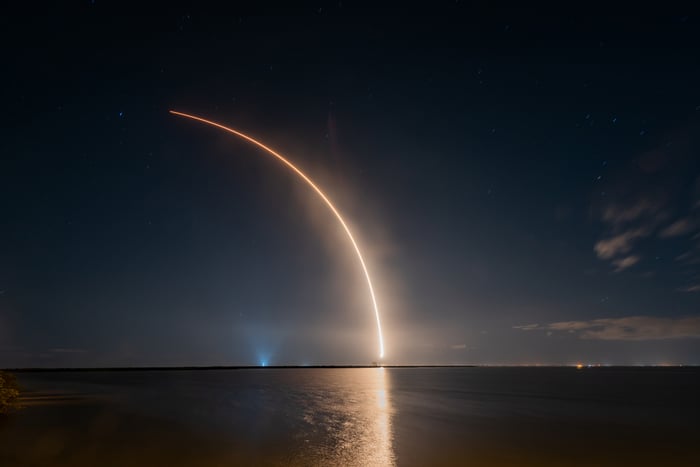
Image source: Getty Images.
The track record for IPOs
SpaceX is unlike any IPO in history. It garnered a massive valuation of $1.77 trillion at its IPO price and raised about $85.7 billion in its offering after underwriters exercised their option to buy more shares.
Both are records. Still, it may be helpful to look at the track record of IPOs in general and of those more similar to SpaceX over the last 65 years.
Professor Jay Ritter has collected data on U.S. IPOs since 1960. The average first-day return is 17.7% through 2025. To that end, SpaceX's 19% first-day return is right in line with the average, although slightly below the average of IPOs since 2010 (22%).
However, the average IPO doesn't fare so well in the long run after that first-day pop. Since 1980, the average one-year return for IPO stocks has been just 5.6%, well below the S&P 500's (SNPINDEX: ^GSPC) average return.
That number has fallen into negative territory in recent years. The average one-year returns for IPOs in 2021 through 2024 ranged from -11.6% to -49.1%. The average since 2011 is -1.7%.
While some volatility is expected in the first year of an IPO, they've still struggled to outperform the market on average within the first three years following their debut. Total returns for IPOs since 1980 over their first three years of trading trail the market by 20.5 percentage points.
Tech companies tend to fare better than non-tech companies, though. The average three-year buy-and-hold return from their first closing price for tech stocks since 1980 only trails the market by 12.7 percentage points.
If you look at tech IPOs with more than $100 million in sales and exclude companies that went public at the height of the dot-com bubble, you finally get some good news. Those issues produced average three-year returns of 53.1% from their first close, beating the market average by 13.7%. For reference, though, SpaceX stock is already up nearly 30% from its first-day close as of this writing, so there's still not that much upside left based on historical averages.
Can SpaceX defy the averages?
SpaceX is far from average, so investors probably shouldn't expect it to behave like the average IPO. Unfortunately, a few other factors are working against the company.
First is its valuation. The stock debuted with a price-to-sales ratio of about 92 and now trades for over 140 times sales. To justify that valuation, SpaceX will have to deliver out-of-this-world top-line growth. And valuation still matters for IPOs. The average IPO with a price-to-sales ratio above 40 produced three-year returns of just 3.1% from its first closing price, well below the average returns of lower-valued IPOs.
The second factor is float. SpaceX issued only about 4% of the company to the public. That leaves a lot of shares locked up with early investors and insiders. That can create significant selling pressure on the stock as lockups expire and existing shareholders have the opportunity to liquidate their equity. The average market-adjusted three-year returns from the first close are far worse for companies with more than $100 million in revenue and issuing less than 10% of shares than for those issuing more than 10% of shares.
There are clear explanations for why those IPOs (highly valued and limited float) underperform over the long run. SpaceX will have a much tougher time bucking those trends than it would the broader historical averages. SpaceX certainly defies the odds, but as an investor, I wouldn't put my money on it.
Should you buy stock in Space Exploration Technologies right now?
Before you buy stock in Space Exploration Technologies, consider this:
The Motley Fool Stock Advisor analyst team just identified what they believe are the 10 best stocks for investors to buy now… and Space Exploration Technologies wasn’t one of them. The 10 stocks that made the cut could produce monster returns in the coming years.
Consider when Netflix made this list on December 17, 2004... if you invested $1,000 at the time of our recommendation, you’d have $415,040!* Or when Nvidia made this list on April 15, 2005... if you invested $1,000 at the time of our recommendation, you’d have $1,256,076!*
Now, it’s worth noting Stock Advisor’s total average return is 920% — a market-crushing outperformance compared to 207% for the S&P 500. Don't miss the latest top 10 list, available with Stock Advisor, and join an investing community built by individual investors for individual investors.
See the 10 stocks »
*Stock Advisor returns as of June 18, 2026.
Adam Levy has no position in any of the stocks mentioned. The Motley Fool has no position in any of the stocks mentioned. The Motley Fool has a disclosure policy.
Recommended Articles


