




Warren Buffett Bought This Magnificent Artificial Intelligence (AI) Stock a Year Ago. Here's Why It's Still a Buy Today.
Key Points
Alphabet's dominant internet business provides billions in advertising revenue every quarter.
The Gemini AI models integrate into Search, Workspace, and other products.
The company's AI opportunities extend beyond computing.
- Motley Fool Issues Rare "Total Conviction" Buy Alert ›
Warren Buffett, the leader of Berkshire Hathaway (NYSE: BRKA) (NYSE: BRKB) for 60 years before his recent retirement, famously avoided technology stocks for much of his investing career. He instead showed a preference for what you may consider to be boring companies -- consumer staples and insurance, in particular -- that didn't blow anyone one away, but still had reliable cash flow, loyal customers, and competitive advantages.
So when Berkshire bought 17.86 million shares of Alphabet (NASDAQ: GOOG) (NASDAQ: GOOGL) in the third quarter of 2025 -- the final year of the Oracle of Omaha's leadership at Berkshire -- it was a significant endorsement of Google's parent company.
Missed AI’s "Act 1"? Act 2 Could Be 15x Bigger. Most investors think they missed the AI boat because they didn't buy Nvidia in 2005. But according to our analysts, we’re only at the end of "Act 1"—the R&D phase. "Act 2" is the global rollout. Continue »
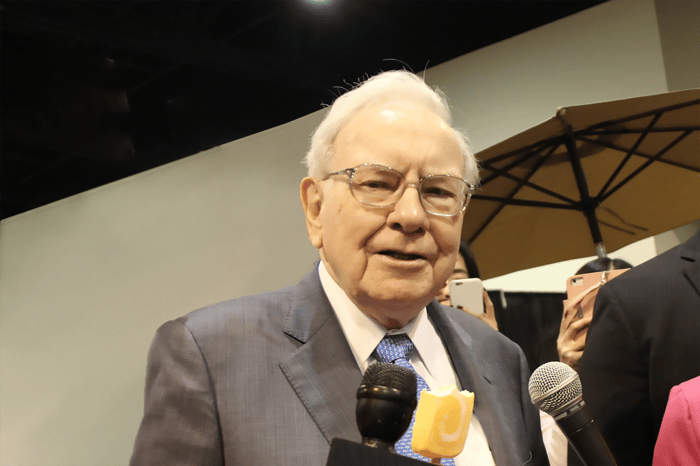
Warren Buffett. Image source: The Motley Fool.
And his successor, Greg Abel, has since doubled down on that technology investment.
Abel purchased an additional 36.4 million shares during the first quarter of 2026 and then committed another $10 billion through a private placement to help finance Alphabet's expansion of artificial intelligence (AI) infrastructure. Berkshire subsequently increased its position again in the second quarter.
Alphabet has quickly become one of Berkshire's largest investments. And I believe there's plenty of reason for individual investors to follow Buffett's lead.
Alphabet has everything an AI investor should want
Alphabet is best known for its dominant internet search engine, its popular Chrome browser, and the YouTube video platform, all of which give the company an enormous audience and a powerful advertising business. That established business provides a competitive advantage as Alphabet invests aggressively in artificial intelligence.
Google's Gemini AI models integrate into Search, Workspace, and other products. Rather than surrendering its dominant search position to emerging AI competitors, Google is incorporating AI directly into the services consumers already use.
Google Cloud is the third-largest cloud computing company in the world by market share (behind only Amazon Web Services and Microsoft Azure), and provides businesses with computing infrastructure and AI tools to develop and deploy their own applications.
Alphabet also designs its own Tensor Processing Units (TPUs), specialized chips that can train and run sophisticated AI models. Not only does that give Alphabet another revenue stream, but it also provides Google with greater control over its computing infrastructure and reduces its dependence on outside semiconductor suppliers.
Alphabet's AI opportunities extend beyond computing. Its Waymo subsidiary is developing and commercializing autonomous driving technology, potentially creating another significant long-term business.
The financial picture
Alphabet is having another solid year -- shares are up 11% so far this year and 42% over the last 12 months. And its quarterly performance shows the company continues to grow rapidly, which is not easy to do with a market cap exceeding $4 trillion.
Revenue in the second quarter was $119.79 billion, up 24% from a year ago. Alphabet increased its operating margin from 32% to 34% and generated a whopping $112.1 billion in net income, up from $28.19 billion a year ago. Much of that was $77 billion in non-operating, unrealized gains in the second quarter from its 14% equity stake in Anthropic. That pushed earnings per share way up to $9.11, versus $2.31 in Q2 2025.
CEO Sundar Pichai called it an "amazing quarter, with Alphabet revenues growing 24% year-over-year and Google Cloud revenues accelerating to 82% growth, driven by demand for AI infrastructure and AI solutions."
Why Alphabet remains a buy
Alphabet combines a dominant existing business with multiple opportunities to monetize artificial intelligence.
That's exactly the kind of durable competitive advantage Buffett has sought throughout his career. And it's why I believe Alphabet remains one of the best long-term AI stocks investors can own.
Should you buy stock in Alphabet right now?
Before you buy stock in Alphabet, consider this:
The Motley Fool Stock Advisor analyst team just identified what they believe are the 10 best stocks for investors to buy now… and Alphabet wasn’t one of them. The 10 stocks that made the cut could produce monster returns in the coming years.
Consider when Netflix made this list on December 17, 2004... if you invested $1,000 at the time of our recommendation, you’d have $379,123!* Or when Nvidia made this list on April 15, 2005... if you invested $1,000 at the time of our recommendation, you’d have $1,408,822!*
Now, it’s worth noting Stock Advisor’s total average return is 950% — a market-crushing outperformance compared to 215% for the S&P 500. Don't miss the latest top 10 list, available with Stock Advisor, and join an investing community built by individual investors for individual investors.
See the 10 stocks »
*Stock Advisor returns as of October 12, 2026.
Patrick Sanders has no position in any of the stocks mentioned. The Motley Fool has positions in and recommends Alphabet, Amazon, Berkshire Hathaway, and Microsoft. The Motley Fool has a disclosure policy.
Recommended Articles


