




Kospi Drops Over 1% in Early Trade, SK Hynix Falls Nearly 3%; Japan Markets Closed
TradingKey - On October 12, South Korean stocks weakened in early trade. The Korea Composite Stock Price Index (KOSPI) opened down 0.72% at 6,578.17 points, and subsequently expanded its decline to 1.35% at 6,536.77 points. Japanese stock markets were closed for a public holiday.
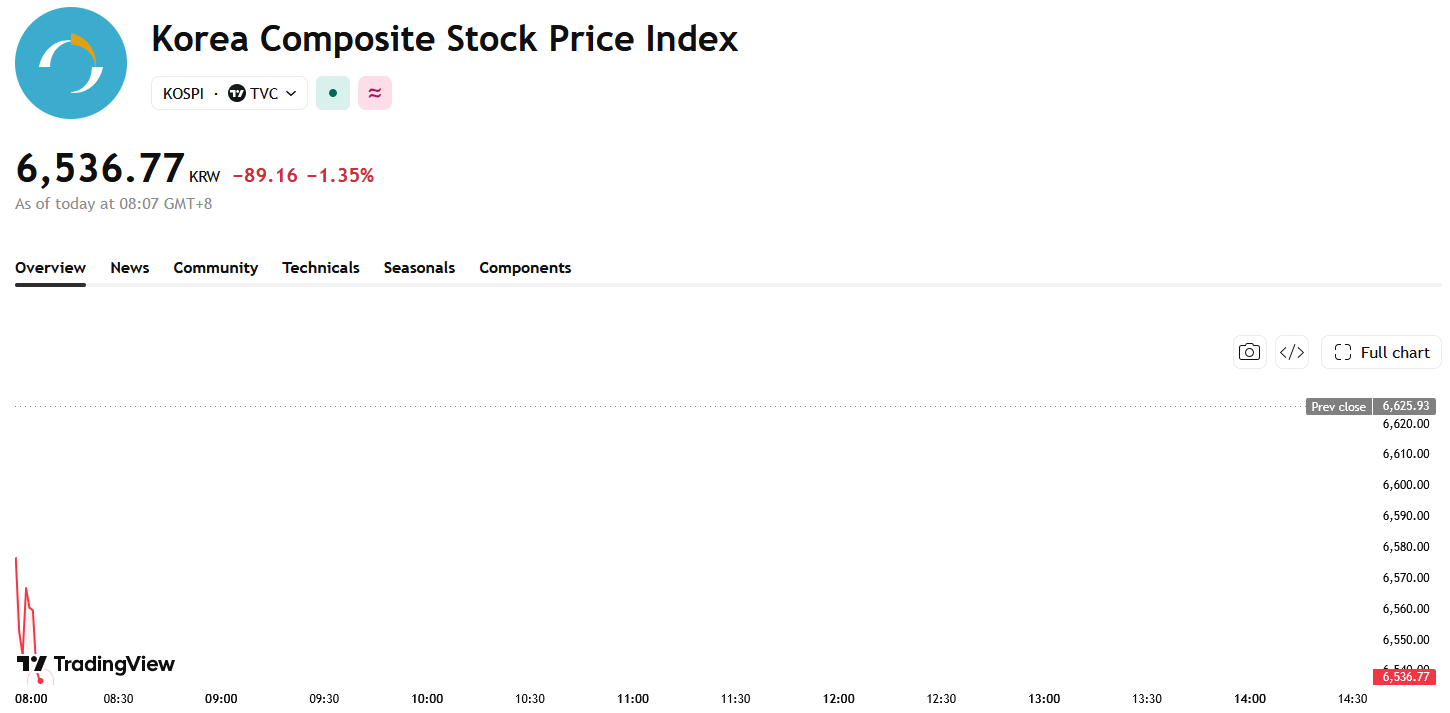
Source: TradingView
South Korean semiconductor leaders were generally under pressure in early trading, with Samsung Electronics falling 1.34% in early trade to 258,500 won (about $193); SK Hynix fell 2.97% to 1.631 million won.
In the first half of this year, driven by the AI frenzy, the South Korean stock market was one of the best-performing major markets globally. However, as investors reassess the growth prospects of the memory chip industry, the market trend has reversed significantly. The KOSPI has fallen by a cumulative total of about 22% in the second half of the year, underperforming other major stock markets.
Shifts in capital flows have further exacerbated market pressure. Daily turnover in the South Korean stock market has fallen by about 70% from its peak in late May, foreign investors' capital outflows rank among the highest in Asian markets, and some South Korean retail investors have also begun to reduce equity investments. The AI trade, which previously drove a massive rally, is now facing a dual challenge of profit-taking and weakening investor confidence.
The South Korean stock market's reliance on the AI rally is also an important backdrop to the current adjustment. As core enterprises in the global memory chip supply chain, Samsung Electronics and SK Hynix hold significant positions in the South Korean stock market, and the stock performance of both companies heavily influences the overall market trajectory. As investors begin to question whether the memory chip industry's boom cycle can be sustained, coupled with intense sell-offs triggered by high-leverage trades over the summer keeping some global funds cautious, the difficulty for the South Korean stock market to re-attract capital inflows has increased.
Recommended Articles


