




US Chip Stocks Tumble Premarket as Apple Price Hikes Spark AI Cost Pass-Through Worries
TradingKey - US semiconductor stocks fell broadly in premarket trading on Friday, with ON Semiconductor ( ON) seeing its premarket loss widen to 13.6% at one point, Micron Technology ( MU) dropping 4.7%, AMD ( AMD) and Intel ( INTC) both falling over 3%.
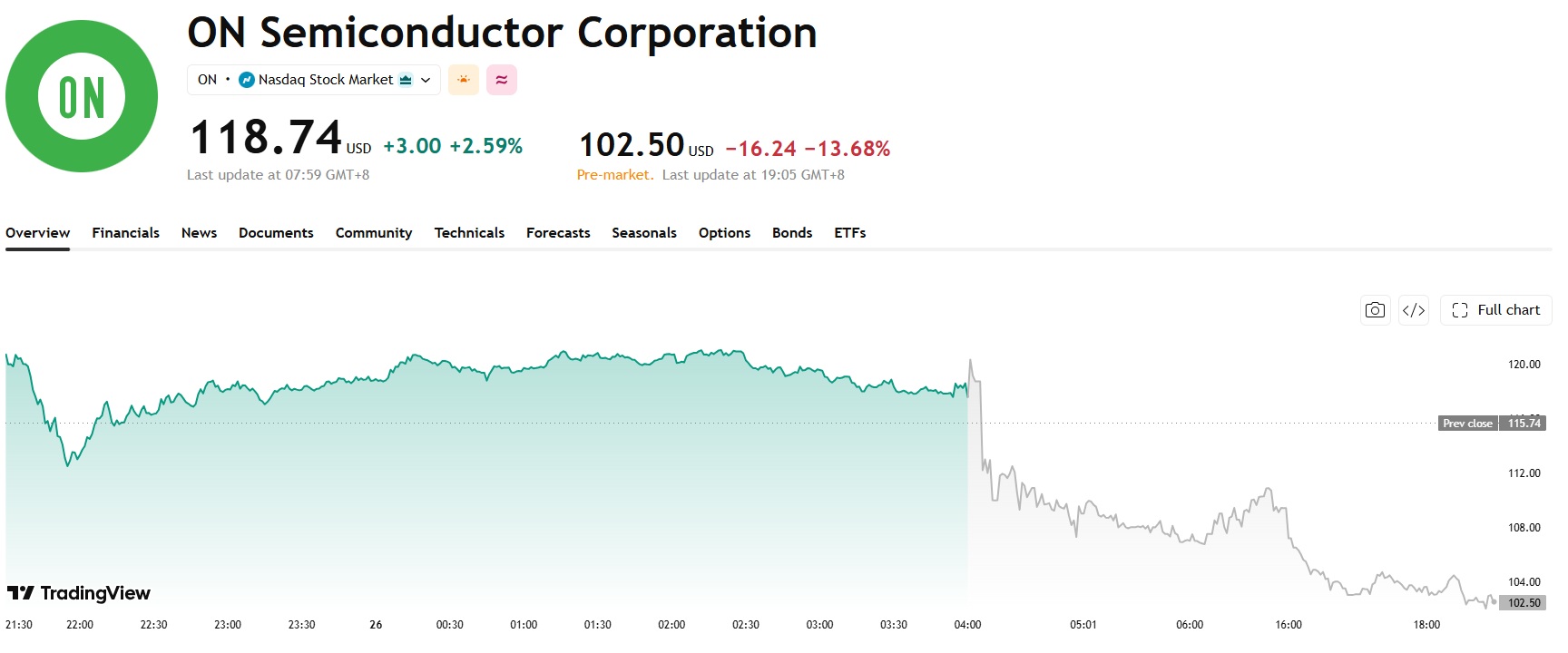
Source: TradingView
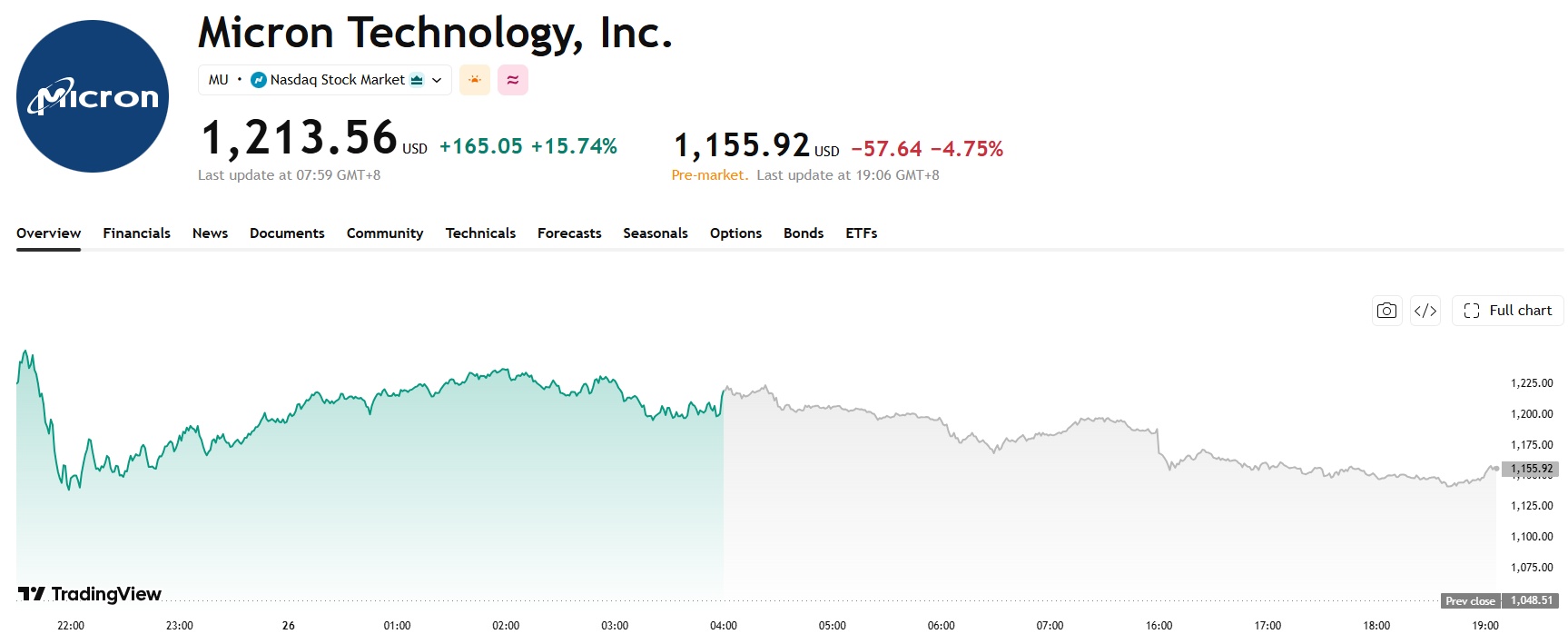
Source: TradingView
The sudden sell-off stemmed from Apple's announcement of product price hikes the previous day. The market worries that soaring memory chip costs will suppress consumer electronics demand and impact the long-term investment logic of the AI industry. Coupled with rumors that OpenAI's IPO might be delayed, market risk appetite cooled further.
On Thursday, Apple temporarily closed its online store before putting it back online, announcing price hikes of 15% to 25% across its entire Mac and iPad lineups. The base MacBook Air price rose from $1,099 to $1,299, while the iPad Pro went from $999 to $1,199. iPhone prices remained unchanged for now, though hints of potential future adjustments were made.
Impacted by this, Apple's stock plunged 6.15% on the day, erasing about $250 billion in market value, which also directly dampened the market's enthusiasm for Micron Technology's stellar earnings report.
In its statement, Apple explicitly blamed the price hikes on "rising costs for memory and storage components," which is driven by the supply-demand imbalance in memory chips triggered by the expansion of AI data centers.
According to industry data, consumer-grade DRAM and NAND prices have surged by over 300% over the past year. Since AI servers require 8 to 10 times more High Bandwidth Memory (HBM) than traditional servers, memory manufacturers have shifted their production capacity toward AI chips, resulting in a severe squeeze in the supply of consumer-grade chips.
Apple had previously absorbed costs through long-term price-lock agreements, but its low-priced inventory was depleted in the second quarter, forcing subsequent purchases to accept high market prices.
Charu Chanana, Chief Investment Strategist at Saxo Bank, pointed out that rising upstream costs have exceeded the absorption capacity of leading companies, and AI costs are beginning to shift from data centers to end consumers, which will pose a potential headwind for the entire tech ecosystem.
In addition to fundamental factors, end-of-month and end-of-quarter portfolio rebalancing also exacerbated volatility. Tech stocks generally performed strongly in the second quarter of this year, and some investors chose to lock in profits at the quarter's end, leading to a collective pullback in the sector. For the AI supply chain, Apple's price hike highlights the strong linkage between the pricing decisions of leading tech giants and the entire semiconductor supply chain. The market is concerned that if end-user demand cools due to price hikes, the high profitability of upstream chipmakers may be unsustainable.
Currently, the high prosperity of memory chip manufacturers continues. Micron's financial report shows that it has signed 16 long-term strategic customer agreements, covering approximately one-fifth of its DRAM capacity and one-third of its NAND capacity, with a total committed value exceeding $22 billion.
Recommended Articles


