




Should Investors Sell Tesla Stock to Buy SpaceX?
Key Points
For years, Tesla has served as investors' primary public market vehicle for aligning with Elon Musk's broader ambitions.
A SpaceX IPO could reshape how investors value Tesla's stock.
Still, robotaxis, AI, and robotics could create enormous value if Tesla executes successfully.
- These 10 stocks could mint the next wave of millionaires ›
For years, Tesla (NASDAQ: TSLA) offered investors something unique: a public market way to invest alongside CEO Elon Musk's technological ambitions.
As the company has evolved far beyond an electric vehicle (EV) maker, investors have gradually viewed Tesla as a bet on artificial intelligence (AI), self-driving cars, robotics, automation, and Musk's ability to build industry-defining businesses. That perception helped Tesla command a premium valuation in the market.
Will AI create the world's first trillionaire? Our team just released a report on the one little-known company, called an "Indispensable Monopoly" providing the critical technology Nvidia and Intel both need. Continue »
But a potential SpaceX initial public offering (IPO) could quietly change how investors view Tesla stock. For the first time, investors may have another large-scale Musk company to compare directly against Tesla.
And that comparison could matter more than many investors realize.
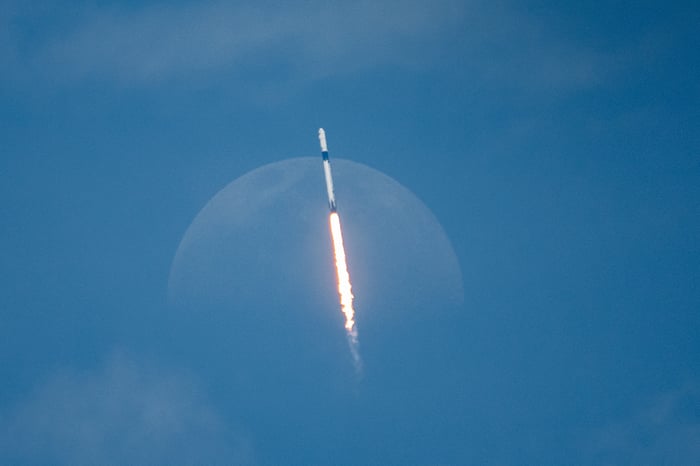
Image source: Getty Images.
Tesla's valuation was never just about cars
Tesla delivered roughly 1.6 million vehicles in 2025, making it one of the world's largest EV manufacturers. But traditional automakers also sell millions of vehicles. None trade at a valuation anywhere close to Tesla's. For perspective, Tesla's stock has a price-to-sales (P/S) ratio of 15.6, far ahead of General Motors' P/S ratio of 0.4.
That's because investors never valued Tesla like a normal car company.
They gave Tesla credit for businesses that remain largely ahead of it, including robotaxis, autonomous driving, humanoid robots, AI-driven software, and energy infrastructure. Investors effectively treated Tesla as a technology platform with multiple long-term growth opportunities.
For years, Tesla also benefited from a powerful advantage: scarcity. Investors who believed in Musk's ability to build transformative businesses had limited public market ways to invest alongside him. SpaceX, xAI, and Neuralink all remained private. So, Tesla became the default option.
But a SpaceX IPO could begin changing that dynamic.
SpaceX could reshape Tesla's valuation framework
At first glance, some investors may assume a SpaceX IPO matters simply because money could rotate out of Tesla stock. That may happen around the margins. But the bigger shift could involve investor psychology.
A public SpaceX listing would give investors another major Musk-led company to evaluate directly. And unlike Tesla, SpaceX could enter public markets with what many investors may view as a fresher growth story.
Tesla today faces declining EV sales, rising competition from Chinese automakers, margin pressure, and continued uncertainty about autonomous driving timelines. Meanwhile, SpaceX operates in industries with fewer scaled competitors and enormous infrastructure opportunities.
So, for years, investors have paid a premium for Tesla partly because it felt like the clearest way to invest in Musk's long-term vision. A SpaceX IPO could challenge that premium for the first time. And once investors have another large-scale Musk company to compare with Tesla, Tesla's valuation framework could start to evolve.
Tesla may need to prove that it's worthy of its valuation
For years, investors rewarded Tesla largely for the possibility. The company's valuation reflected not only its current business but also expectations that robotaxis, AI software, and robotics would become meaningful future revenue drivers.
Those opportunities still exist. But if SpaceX succeeds publicly, investors may begin demanding more measurable progress from Tesla rather than rewarding ambition alone.
That could place greater focus on:
- robotaxi deployment
- Full Self-Driving performance
- Optimus (Tesla's humanoid robot) commercialization
In other words, Tesla's valuation could become increasingly tied to execution rather than the long-term narrative alone.
Why selling Tesla entirely could still be a mistake
At the same time, investors should not assume that SpaceX will automatically become the better investment.
One thing is that Tesla still possesses enormous long-term advantages. The company already operates at a global scale in manufacturing. Millions of Tesla vehicles collect real-world driving data every day. Tesla also controls much of its software, AI infrastructure, and hardware ecosystem internally.
If autonomous driving eventually works at scale, Tesla could still unlock entirely new high-margin businesses.
And importantly, Musk's companies increasingly resemble parts of a connected technology ecosystem rather than isolated businesses. Tesla has already invested billions into xAI. SpaceX, Tesla, and xAI continue collaborating on infrastructure, computing, and AI-related initiatives.
Some investors may ultimately choose to own both companies if they believe in Musk's broader ecosystem strategy.
What does it mean for investors?
For years, Tesla benefited from being investors' primary public market way to participate in Elon Musk's technological ambitions.
A SpaceX IPO could test how much that really mattered. And once investors finally have another way to invest alongside Musk, Tesla may no longer command the same premium simply for representing long-term technological possibility.
But that alone should not be the reason to sell Tesla's stock, especially for those convinced that Tesla can deliver on its futuristic bets.
Besides, diehard Musk supporters don't necessarily need to choose. Just own both stocks.
Don’t miss this second chance at a potentially lucrative opportunity
Ever feel like you missed the boat in buying the most successful stocks? Then you’ll want to hear this.
On rare occasions, our expert team of analysts issues a “Double Down” stock recommendation for companies that they think are about to pop. If you’re worried you’ve already missed your chance to invest, now is the best time to buy before it’s too late. And the numbers speak for themselves:
- Nvidia: if you invested $1,000 when we doubled down in 2009, you’d have $532,622!*
- Apple: if you invested $1,000 when we doubled down in 2008, you’d have $58,577!*
- Netflix: if you invested $1,000 when we doubled down in 2004, you’d have $443,191!*
Right now, we’re issuing “Double Down” alerts for three incredible companies, available when you join Stock Advisor, and there may not be another chance like this anytime soon.
See the 3 stocks »
*Stock Advisor returns as of June 6, 2026.
Lawrence Nga has no position in any of the stocks mentioned. The Motley Fool has positions in and recommends Tesla. The Motley Fool recommends General Motors. The Motley Fool has a disclosure policy.
Recommended Articles


