




There's a Reason SpaceX, OpenAI, Anthropic, and Cerebras Are All Making Their IPOs at the Same Time, and It Has Huge Implications for Stock Investors
Key Points
SpaceX, OpenAI, and Anthropic could all be worth more than $1 trillion when they go public.
Increases in gross proceeds for IPOs are a good indicator of forward returns for the rest of the market.
Three periods of IPO booms stand out as a historical warning for investors.
- These 10 stocks could mint the next wave of millionaires ›
2026 is set to smash previous records for initial public offerings (IPOs). We've already seen some sizable IPOs, including Cerebras Systems in May, which raised an impressive $5.6 billion. But this summer could kick off a string of IPOs unlike any we've ever seen, raising hundreds of billions of dollars in gross proceeds in aggregate.
The three most anticipated IPOs for the year are SpaceX, OpenAI, and Anthropic. All three are expected to come to market with valuations exceeding $1 trillion.
Will AI create the world's first trillionaire? Our team just released a report on the one little-known company, called an "Indispensable Monopoly" providing the critical technology Nvidia and Intel both need. Continue »
The timing of all of these companies making their public debut in short order isn't a coincidence. The management teams all have good reasons for going public. And while it's fantastic for the companies and their existing shareholders, it has huge implications for everyday investors.
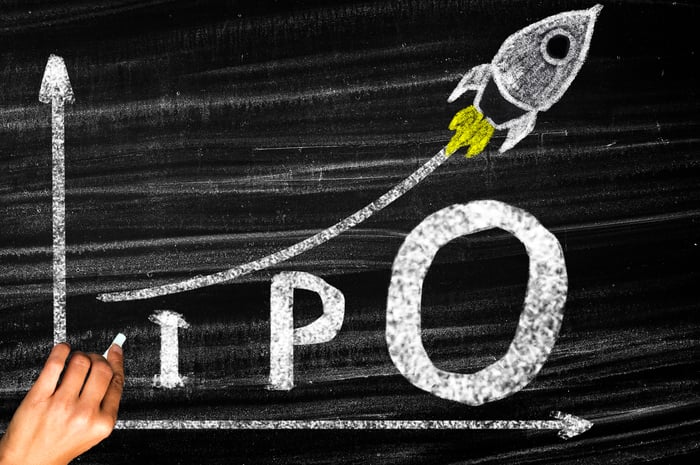
Image source: Getty Images.
Why are SpaceX, OpenAI, and Anthropic all going public now?
If you look at the history of IPOs, a clear pattern emerges. Companies like to go public in bull markets: when investors are confident, and valuations are high. As soon as there's a market downturn, the number of new IPOs dries up. That makes sense; a business wants to raise as much money as possible from an IPO.
Valuations are certainly high right now. The S&P 500 trades for roughly 22 times earnings estimates, and the tech-heavy Nasdaq-100 trades for over 26 times earnings. They've historically traded in the mid- to high teens. The cyclically adjusted P/E, which looks back 10 years, has climbed to 42.7, the highest level ever outside of the dot-com bubble.
While all three of these massive businesses have had no problems raising huge amounts of capital in private markets, the current market is extremely attractive for selling stock. Going public allows early investors to liquidate some of their holdings (after the lockup period). It also makes all stock acquisitions easier (such as SpaceX's potential $60 billion acquisition of Cursor) and makes stock-based compensation more attractive to employees.
A sudden increase in IPO activity can provide a signal for stock investors, and we may be seeing another one right now.
The history of IPO booms
There are three important periods of IPOs worth examining to understand what a spike in proceeds for newly issued stocks could mean for the rest of the market.
Between 1986 and 1987, IPOs generated over $28 billion in gross proceeds, according to data compiled by Jay Ritter. That's nearly as much as the prior 15 years combined. The IPO spike corresponded with a strong run-up in stock prices in those years. However, Black Monday in October 1987 ushered in a bear market, and the S&P 500 posted a negative return over the three years from October 1987 to October 1990.
The next spike in IPO activity came in the late 1990s as the dot-com bubble was nearing its peak. In 1999 and 2000, gross IPO proceeds totaled nearly $130 billion. Valuations were high, and the public was ready to buy any stock remotely related to the internet. Many of those IPOs didn't survive, and the rush to bring new issues to the market foretold an extended bear market.
The last big jump in IPOs came in 2020 and 2021. While not many companies were looking to IPO in early 2020, the market's rapid recovery following the COVID-19-related crash pushed them to go public in the back half of the year. 2021 saw more companies go public than any year since 2000 as the market continued to rally. Again, the increased activity was a good indication that valuations were high, and we entered another bear market in 2022.
While we can't know for certain if history will repeat itself once again over the next few years, beware the warning of John Templeton: "The four most dangerous words in investing are: 'This time it's different.'"
Where to invest $1,000 right now
When our analyst team has a stock tip, it can pay to listen. After all, Stock Advisor’s total average return is 983%* — a market-crushing outperformance compared to 212% for the S&P 500.
They just revealed what they believe are the 10 best stocks for investors to buy right now, available when you join Stock Advisor.
See the stocks »
*Stock Advisor returns as of June 4, 2026.
Adam Levy has no position in any of the stocks mentioned. The Motley Fool has no position in any of the stocks mentioned. The Motley Fool has a disclosure policy.
Recommended Articles


