




US July CPI Preview: Stocks, Dollar, and Gold Brace for Key Volatility as Inflation May Cool Further
TradingKey - The U.S. Bureau of Labor Statistics will release the July Consumer Price Index (CPI) at 8:30 a.m. ET on August 12. Following an unexpected decrease of 23,000 in July nonfarm payrolls and a significant market reduction in expectations for a Federal Reserve rate hike in September, this CPI release will be a key data point in determining the Fed's next policy direction.
July CPI Expected to Continue Cooling as Fed’s September Rate Hike Faces Test
Looking at market expectations, the market expects the US July CPI to rise 3.4% year-on-year, slightly lower than the 3.5% in June; core CPI is expected to decline further to 2.5% year-on-year from 2.6%. On a month-on-month basis, the market expects headline CPI to rise 0.1% and core CPI to rise 0.2%.
In contrast, inflation in June cooled significantly. The CPI for that month fell 0.4% month-on-month, marking the first decline since April 2020, and its year-on-year growth rate pulled back sharply from May's 4.2% to 3.5%; core CPI was flat month-on-month, and fell to 2.6% year-on-year from 2.9%. Among them, a 5.7% month-on-month decline in energy prices and a 9.7% plunge in gasoline prices were major reasons for the cooling of headline inflation.
Therefore, the biggest risk in this July data lies in whether energy prices and core services prices can continue to remain moderate. The recent rebound in oil prices means that the inflation-easing effect from the sharp drop in energy prices in June may weaken. Meanwhile, the Federal Reserve remains highly focused on whether services inflation is re-accelerating.
Institutional views also reflect a clear divergence. JPMorgan's chief US economist Michael Feroli expects the July core CPI to rise by about 0.22% month-on-month, believing this level is not enough to prompt the Federal Reserve to raise rates in September, but if core inflation consistently approaches 0.3% in the future, the likelihood of the Fed taking action will rise significantly. Citi believes that if weak inflation data occurs again in July, a September rate hike can be basically ruled out; Bank of America, however, warned that if core services prices re-accelerate, the Fed may still keep the option of a September rate hike on the table.
How US Stocks, Dollar and Gold Reacted Short Term After July CPI Data Release
For US equities, if both the CPI and core CPI come in below expectations, the market may further reduce the probability of a September Fed rate hike. A retreat in Treasury yields would benefit tech stocks, AI-concept stocks, and other high-valuation growth stocks, with the S&P 500 and Nasdaq expected to find support. Conversely, if core CPI is significantly higher than expected, especially reaching 0.3% or more month-over-month, Fed rate hike expectations could quickly heat up, and rising Treasury yields could trigger a valuation correction in tech stocks. Morningstar Wealth believes that if CPI rebounds significantly and exceeds market expectations, US equities could face a sell-off as a result.
For the US dollar, a higher-than-expected CPI would mean that US inflation remains sticky, strengthening the case for the Fed to continue raising rates in September or even by the end of the year. Treasury yields could head higher, thereby driving a rebound in the US Dollar Index. If the CPI meets or falls below expectations, the dollar may remain under pressure. The US Dollar Index has already retreated significantly from its recent highs, falling below the 100 mark, and the market is waiting for the CPI to determine the direction of its next phase.
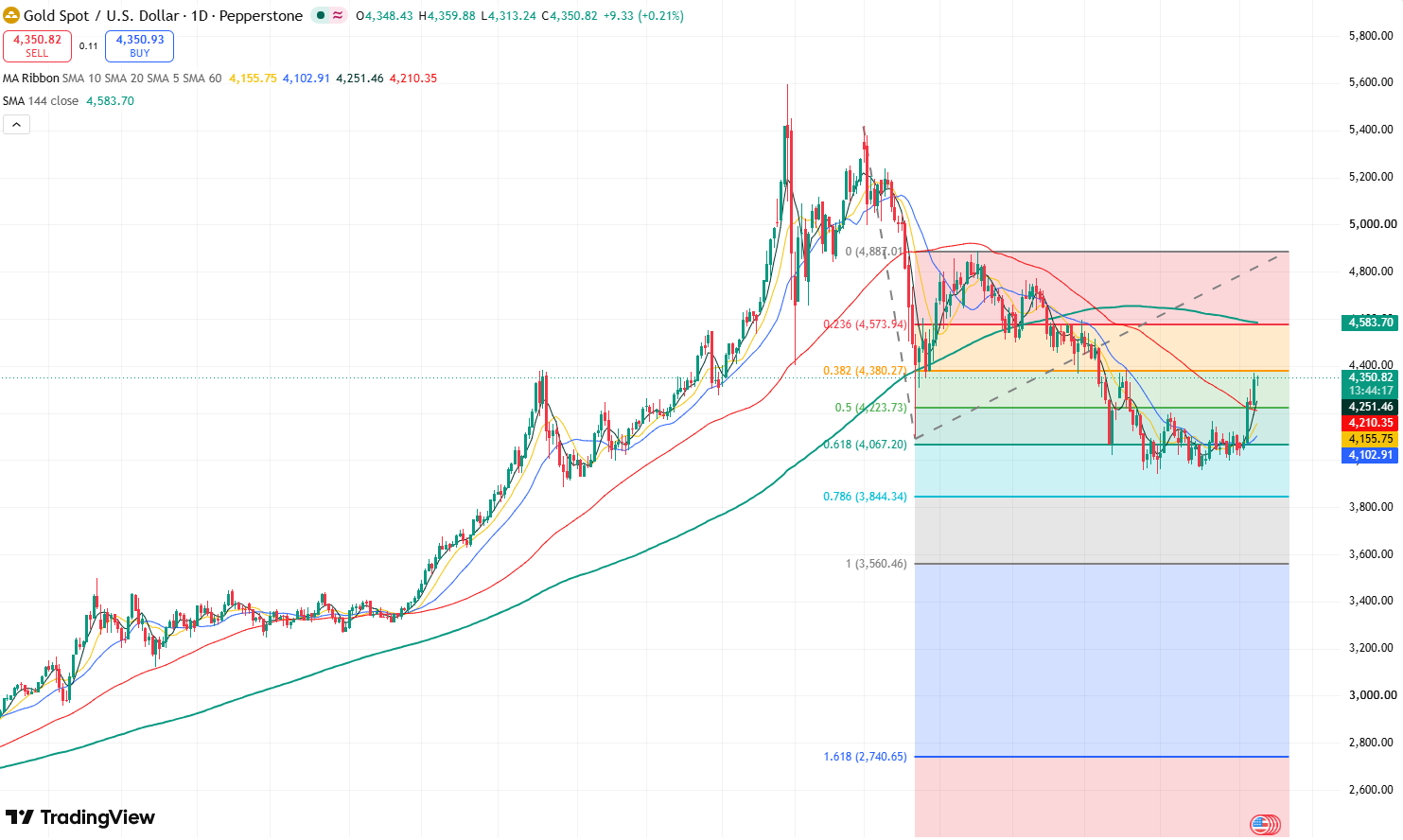
Gold Price Daily Chart, Source: TradingView
For gold ( XAUUSD ), a lower-than-expected CPI would be directly bullish for gold prices. If inflation continues to cool, the probability of a Fed rate hike will decrease, and the US dollar and real Treasury yields may fall in tandem. This would enhance the appeal of gold as a non-yielding asset, and gold prices could challenge the $4,500 mark to the upside. Conversely, if CPI unexpectedly rebounds, especially if core inflation is significantly higher than expected, the US dollar and Treasury yields may rise, putting short-term profit-taking pressure on gold, which could test the $4,300 mark to the downside. Since the previously weak non-farm payrolls have already significantly reduced market rate-hike expectations, this CPI print will actually determine whether the logic behind this gold rally can be further sustained.
Recommended Articles


