




Bitcoin Surges Over 8% Triggering Short Liquidations, Ethereum Jumps 18%: Here's Why
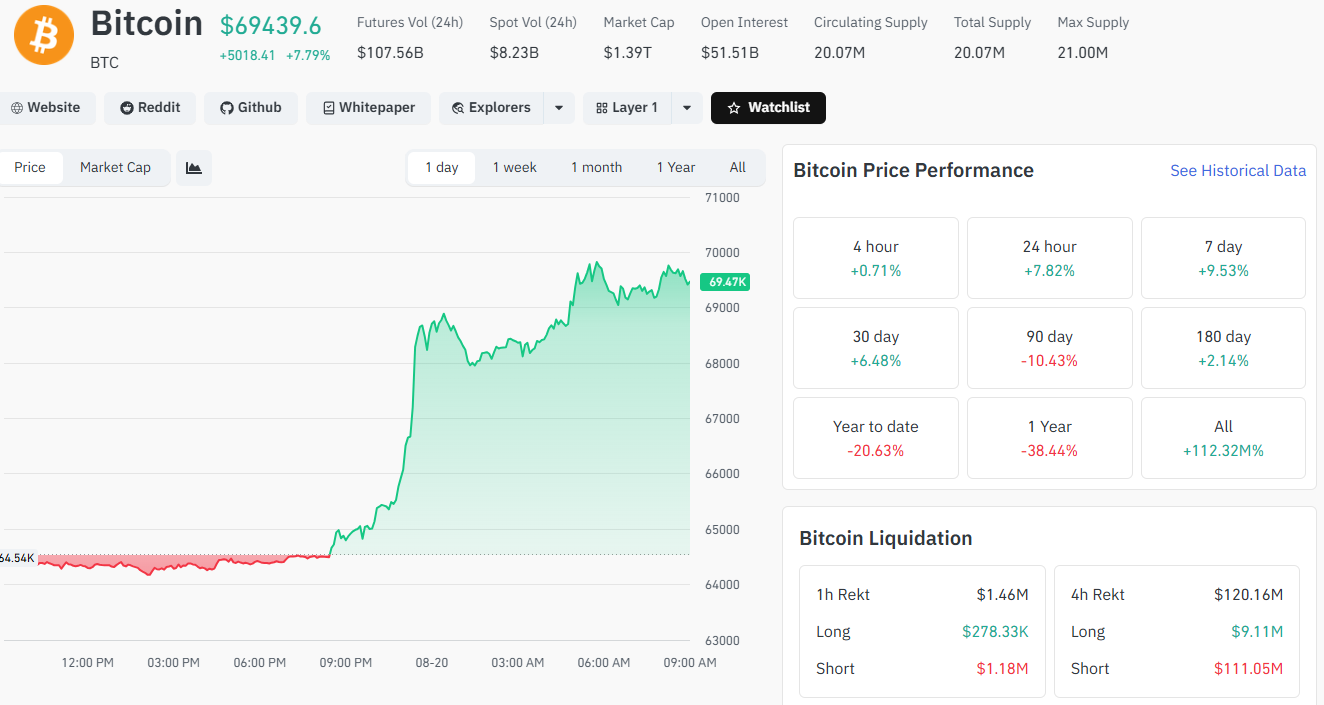
TradingKey - The cryptocurrency market staged a strong rebound, with Bitcoin (BTCUSD) surging over 8% intraday to approach $70,000, reaching its highest level since early June and recording its largest single-day gain since March. Meanwhile, Ethereum (ETHUSD) briefly broke above $2,300 and is currently trading at $2,263.6, up over 18%.

Source: CoinGlass
Data from CoinGlass showed that in just about an hour, short liquidations in the cryptocurrency market exceeded $1 billion. Bitcoin had previously undergone months of consolidation, at one point falling to just above $60,000, as bearish positions accumulated in the market. When prices suddenly turned upward, a large number of shorts were forced to cover, further accelerating the rally and triggering a classic short squeeze.
Meanwhile, the U.S. Treasury's expansion of long-term bond buybacks, declining U.S. dollar and Treasury yields, and improving expectations for U.S. digital asset regulation collectively provided fresh support for risk assets.
Overcrowded Short Positions Turn Rally Into Short Squeeze
In the preceding months, Bitcoin continued to pull back from its peak above $126,000 in October 2025, at one point dipping to just above $60,000. Almost every market rebound ended in failure as selling sentiment gradually took dominance, prompting a large number of traders to use leverage to bet on further price declines.
This highly crowded positioning structure set the stage for the sharp reversal that followed.
Once prices broke through key technical levels, highly leveraged short positions were the first to hit forced liquidation levels. To close these positions, trading platforms had to buy back Bitcoin on the market, generating fresh passive buying demand. As prices climbed further, more shorts were liquidated, fueling a further rise in the cryptocurrency's price.
Treasury Policy Becomes Key Driver of Market Rally
Against the backdrop of long-term U.S. Treasury yields rising to multi-year highs and market financing costs continuing to climb, the U.S. Department of the Treasury announced that, starting September 9, it will raise the single liquidity-support buyback cap for Treasuries with maturities of over 10 years from $2 billion to at least $4 billion. The program will run through early November, aiming to improve trading liquidity for long-term Treasuries and ease the pressure recently faced by the bond market.
Following the announcement, both 10-year and 30-year U.S. Treasury yields pulled back, the U.S. dollar weakened, and risk assets such as stocks and cryptocurrencies rebounded rapidly.
For non-yielding assets like Bitcoin, falling yields mean a lower opportunity cost of holding such assets, while a weaker dollar is similarly favorable for U.S. dollar-denominated risk assets. For this reason, some market participants view this shift as an accommodative liquidity signal.
Notably, this does not mean that the market environment has completely shifted to monetary easing. Treasury buyback operations remain fundamentally different from traditional quantitative easing, but they have indeed relieved some of the recent pressure on the bond market and renewed investors' willingness to allocate to risk assets.
White House and SEC Send Positive Signals
U.S. President Trump met with executives from cryptocurrency companies including Coinbase, Payward, and Blockchain at the White House, reiterating his desire to make the United States a global digital asset hub.
Although the high-profile Clarity Act remains stalled due to bipartisan disagreements over provisions such as ethical standards, the executive branch's supportive stance toward the industry has nevertheless improved investor expectations for the U.S. regulatory environment.
The U.S. Securities and Exchange Commission has also proposed new crypto asset regulatory rules, planning to establish a dedicated securities issuance framework for certain investment contracts involving digital assets. The proposal includes two types of registration exemptions: one allowing issuers to raise up to $5 million over four years, and another allowing them to raise up to $75 million in any 12-month period, with varying disclosure requirements based on the scale of fundraising. The SEC proposal indicates that regulators aim to reduce institutional barriers for crypto startups raising capital in the U.S. while maintaining investor protections.
Trump also stated on the same day that he would consider recommendations proposed by regulators for the government to increase its Bitcoin holdings. Although this idea remains far from actual implementation, his remarks have once again reinforced market optimism regarding the long-term direction of U.S. digital asset policy.
Recommended Articles


