




Sky Protocol moves to restructure treasury post-Genesis Capital close
Rune Christensen, the founder of Sky Protocol published a proposal on the Sky governance forum on April 24 to consider permanently moving the protocol out of its bootstrap funding phase after the recent transfer of Genesis Capital to Grove, an institutional credit allocator in the Sky Agent Network.
Sky Protocol, which operated for the first nine years of its lifetime as MakerDAO, announced the plans to simplify how its treasury distributes net revenue now that it has completed the founding-era capital deployments on its governance forum.
Genesis Capital was the mechanism Sky used to seed new agents with USDS, the stablecoin of the Sky Protocol, so they could begin deploying capital.
The final transfer sent roughly 20.8 million USDS to Grove, according to a thread posted by Sky’s official account on X on April 8. Grove’s total allocation was approximately 25 million USDS, reduced by pre-token-generation-event expenses of about 3.6 million USDS and a token launch penalty of roughly 565,000 USDS.
What the proposal changes
Christensen’s proposal would collapse Sky’s Treasury Management Function (TMF) from its current five-step conditional waterfall into four steps. Right now, the protocol routes all net protocol revenue through a sequence that goes in the order:
- Security and Maintenance.
- Aggregate Backstop Capital.
- Fortification Conserver.
- Smart Burn Engine (which funds SKY buybacks).
- Staking rewards for SKY and USDS holders.
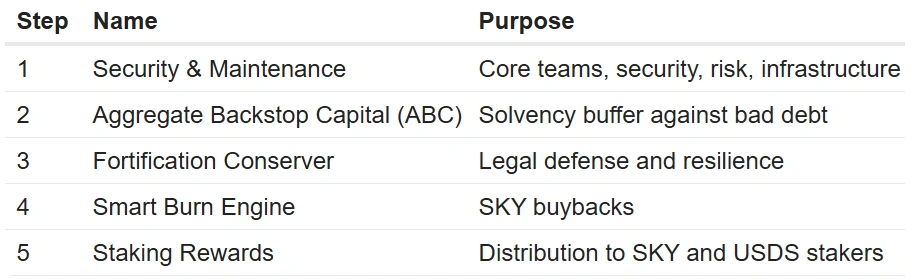
If Christensen has his way, Fortification Conserver will be gone from the sequence, and their allocations will be spread at a fixed rate across the remaining categories.
The proposal will also retire several legacy mechanisms, including the Net Revenue Ratio, phase-based distinctions between Genesis and post-Genesis spending rules, activity-based staking reward tiers, and Short Term Trading provisions, according to the forum post.
Under the current framework, at least 79% of all net revenue stays with the protocol at all times. That floor applies even when the Security and Maintenance allocation sits at its Genesis-phase maximum of 21% of total net revenue, Christensen wrote.
After the Genesis phase ends, governance can set that allocation only within a 4% to 10% band.
How big has Sky Protocol become?
The founder’s treasury restructuring proposal arrives as Sky Protocol and its USDS stablecoin continue to gain ground in a DeFi scene that’s rather chaotic at the moment.
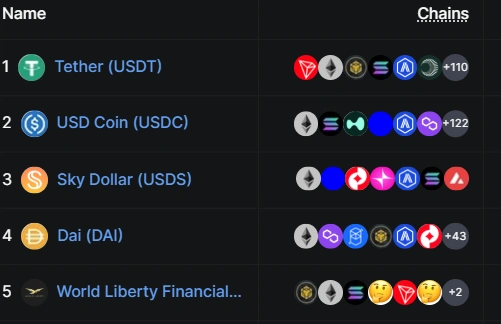
According to DeFiLlama data, Sky’s USDS supply has reached roughly $11 billion as of writing to claim the spot of the third-largest stablecoin by market capitalization.
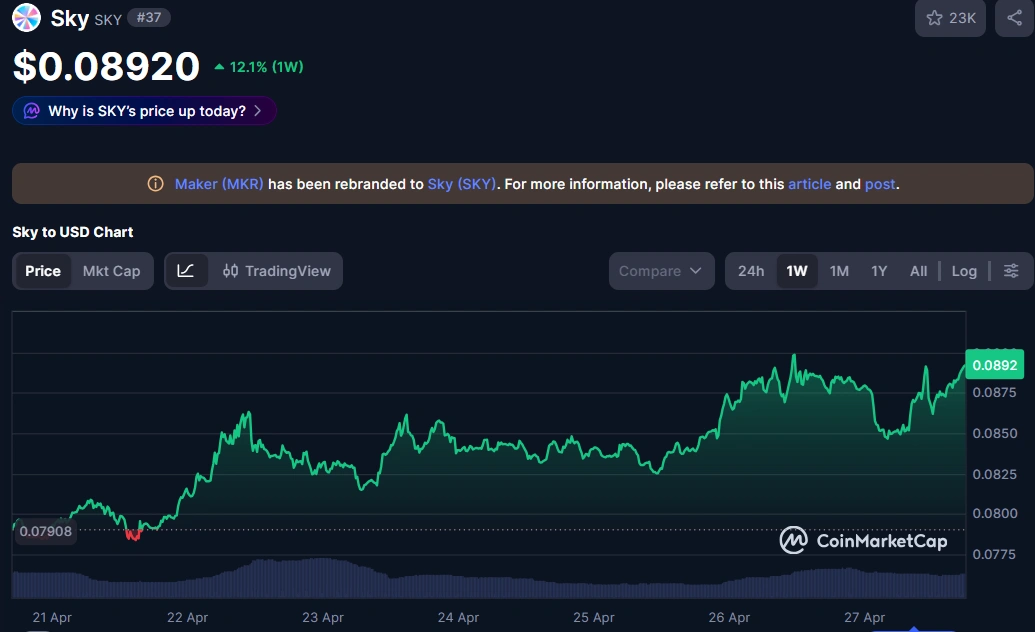
The SKY token is currently trading at $0.089, up more than 12% over the last week, with about $2 billion in market capitalization.
Earlier in 2026, the Sky Protocol community authorized up to $2.5 billion for deployment through stablecoin incubator Obex, and in April, the protocol launched native USDS on Avalanche through the SkyLink bridge.
In March, Sky governance proposed approximately 70 million USDS in Genesis Capital allocations for its remaining launch-phase agents, including 25 million USDS each for Amatsu and Ozone, 10 million USDS for Keel, and 10.5 million USDS for Launch Agent 6, according to an Atlas Edit proposal posted on the Sky Forum on March 15.
Grove, one of the network’s largest agents, announced on April 6 that it had crossed $3 billion in total value locked.
The smartest crypto minds already read our newsletter. Want in? Join them.
Recommended Articles


