




WTI (USOIL) Is up 4.00% on Jul 13: What Changed in Supply and Demand?
WTI (USOIL) is up 4.00% at Jul 13 00:10(ET), now at $74.247, with a 7-day up of 8.37%.
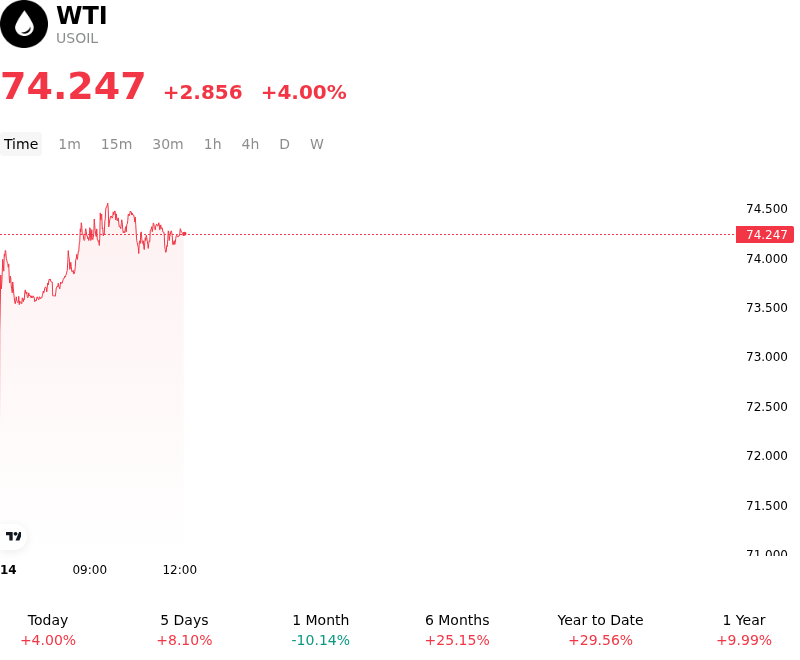
What is driving WTI (USOIL)’s stock price up today?
The significant advance in USOIL prices is primarily attributed to a sharp re-escalation of geopolitical tensions in the Middle East, specifically involving the United States and Iran. Following the effective collapse of a fragile ceasefire and the expiration of a 60-day negotiation window, market participants are pricing in a substantial risk premium. Recent rhetoric from Washington suggesting a shift toward a more aggressive military posture has renewed fears of a prolonged blockade of the Strait of Hormuz, a critical artery that handles nearly one-fifth of global oil trade. This breakdown in diplomatic channels has forced a repricing of supply-side security as the likelihood of direct conflict increases.
While the International Energy Agency’s most recent report noted a partial recovery in global supply as transit volumes through the Strait improved in June, the sudden pivot toward hostilities has shifted the focus back to potential disruptions. Investors are increasingly concerned that the projected market balance for the coming year may be undermined if renewed attacks lead to further infrastructure damage or more stringent export restrictions. The fragility of the current environment is underscored by the fact that global output remains significantly below pre-war levels, leaving the market with limited spare capacity to absorb new supply shocks.
Fundamental support is also being provided by the latest U.S. inventory data, which highlighted a tightening in the refined products market. Despite a modest build in headline commercial crude stocks, massive and unexpected draws in distillate and gasoline inventories have signaled robust domestic consumption. This depletion, occurring during the peak summer travel season, suggests that pent-up demand is outpacing the recovery in refinery activity, which has been hampered by earlier logistical disruptions and high operational costs.
The upward movement is being further amplified by institutional capital flows and technical factors. As prices breached key resistance levels, a wave of short-covering and momentum-driven buying accelerated the upside. While macroeconomic concerns regarding stalled disinflation and the possibility of tighter central bank policy in the fourth quarter persist, the immediate threat to energy security in the Gulf has become the dominant driver of price action.
Looking ahead, the market remains highly sensitive to military developments and any signs of renewed diplomatic engagement. The primary risk for investors continues to be a broader regional conflict that could permanently displace Middle Eastern production. However, any unexpected de-escalation or progress in peace negotiations would likely lead to a rapid unwinding of the current geopolitical premium, especially as non-OPEC+ supply growth continues to expand elsewhere in the Atlantic Basin.
Technical Analysis of WTI (USOIL)
Technically, WTI (USOIL) shows a MACD (12,26,9) value of 2.255, indicating a neutral signal. The RSI at 46.608 suggests neutral condition and the Williams %R at 19.693 suggests overbought condition. Please monitor closely.
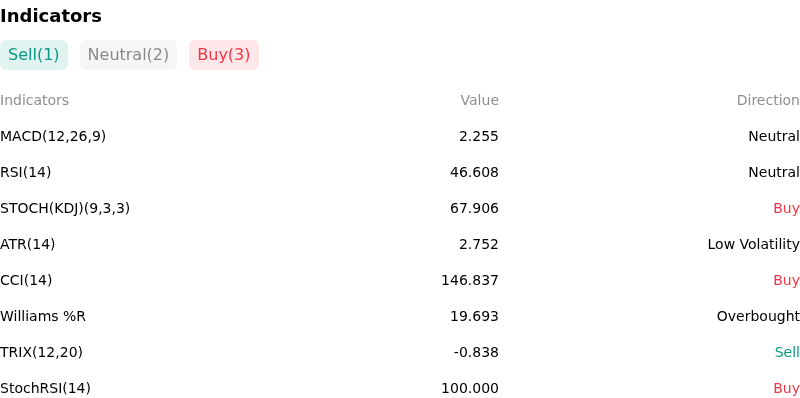
More details about WTI (USOIL)
Recent Events and Risks:
- Geopolitical Risk De-escalation: Reports of potential progress in regional ceasefire negotiations have significantly reduced the "war premium" embedded in WTI prices, as the immediate threat of supply chain disruptions in the Middle East appears to be receding.
- Chinese Industrial Demand Deterioration: Recent economic indicators from China, including weak manufacturing purchasing managers' index (PMI) data and declining refinery run rates, suggest that consumption in the world’s largest oil importer remains sluggish despite government stimulus efforts.
- OPEC+ Supply Normalization Fears: Market anxiety is rising regarding the scheduled unwinding of voluntary production cuts by OPEC+ members, with traders concerned that the introduction of additional barrels later this year will coincide with a period of seasonal demand cooling, leading to a global inventory surplus.
- US Inventory Builds and Refined Product Weakness: Latest industry reports indicating unexpected builds in commercial crude stocks and underwhelming gasoline demand during the peak summer driving season have increased downward pressure on front-month futures, signaling a potential softening of the domestic US market.
Recommended Articles


