




Corn Futures (CORN-F) Is up 2.02% on Jul 6: Why It Happened
Corn Futures (CORN-F) is up 2.02% at Jul 6 00:20(ET), now at $429.84, with a 7-day up of 5.33%.
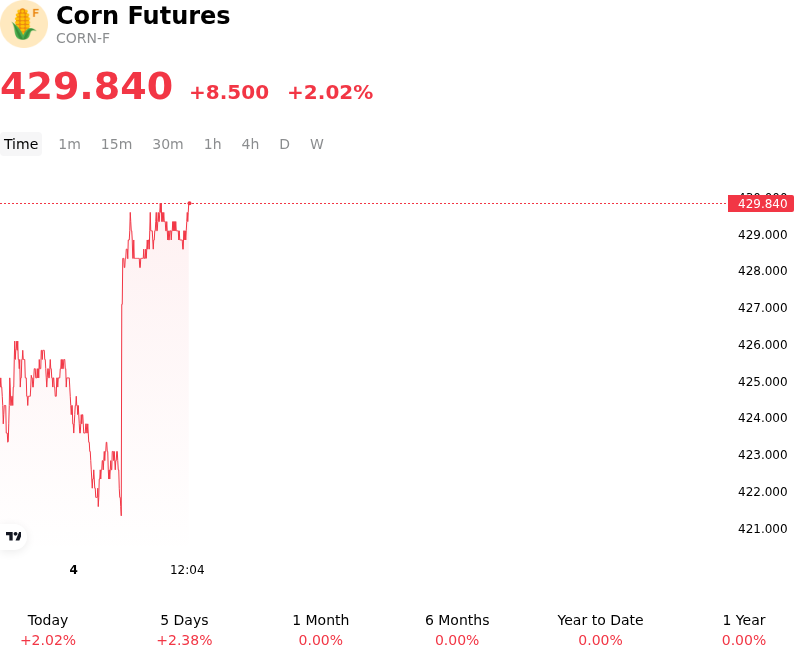
What is driving Corn Futures (CORN-F)’s stock price up today?
The upward movement in corn futures was primarily driven by building weather premiums and supply-side anxieties across the U.S. Corn Belt.
A severe heat wave spreading through key Midwestern producing states, including Illinois, Indiana, Iowa, and Missouri, has significantly altered market expectations. Temperatures climbing into the mid-90s have begun to trigger critical concerns regarding heat stress and soil moisture depletion. Market analysts are particularly focused on the timing of this heat, as much of the domestic crop is rapidly approaching its highly sensitive pollination phase. Extreme heat and dry conditions during this window can severely restrict yield potential by hindering successful fertilization and ear development.
These concerns are compounded by early-season weather patterns. Heavy spring precipitation across parts of the Midwest led to localized flooding and saturated soils, preventing corn plants from establishing deep root systems. Agronomists have warned that these compromised, shallow root networks make the current crop exceptionally vulnerable to any sudden, prolonged stretches of hot and dry weather. Consequently, the threat of rapid yield degradation has prompted institutional investors to bid up prices as they factor in a potential downward revision to final production volumes.
This weather-driven premium has been further reinforced by international supply risks. In Europe, hot and dry summer conditions have similarly threatened yield potential, pushing European corn contracts to contract highs and intensifying competition for global feed grain supplies.
Additionally, the price recovery is being supported by a technical and positioning rebound following a period of seasonal pressure. As the market returned from the U.S. holiday weekend, the combination of acute weather risks, robust export demand from key buyers like Mexico, and active short-covering from speculative participants looking to hedge against a deteriorating production outlook created strong upward momentum for the grain.
More details about Corn Futures (CORN-F)
Recent Events and Risks:
- Favorable Weather Mitigating Yield Risk: Meteorological reports showing that oppressive Midwest heat is subsiding and returning to normal or slightly below-normal temperatures through mid-July have eliminated near-term heat stress concerns. This highly favorable transition aligns perfectly with the critical corn pollination phase, stripping weather-related risk premiums out of CBOT futures.
- Persistent Oversupply and Large Acreage Forecasts: The USDA’s end-of-June acreage report maintained U.S. corn planted acreage at a high 95.34 million acres, keeping the market on track to produce the second-largest corn crop on record. Above-average crop health ratings (with 67% rated good-to-excellent) further reinforce expectations of massive yields and elevated domestic ending stocks.
- Softening Biofuel and Energy Market Demand: Domestic demand indicators remain weak as weekly ethanol production paces have softened, repeatedly lagging behind annual projections. Concurrently, a sharp drop in international crude oil prices has dragged down ethanol margins and further dampened corn consumption forecasts.
- Export Pressure from South American Harvests: The rapid advancement of the Argentine corn harvest, which has surpassed 53% completion, continues to flood the global market with cheap physical supply. This heavy South American export competition is capturing key global market shares and keeping old-crop U.S. export volumes under downward pressure.
Recommended Articles


