




Natural Gas (NATGAS) Is down 2.55% on Jul 6: Is the Market Repricing It?
Natural Gas (NATGAS) is down 2.55% at Jul 6 00:00(ET), now at $3.091, with a 7-day down of 1.06%.
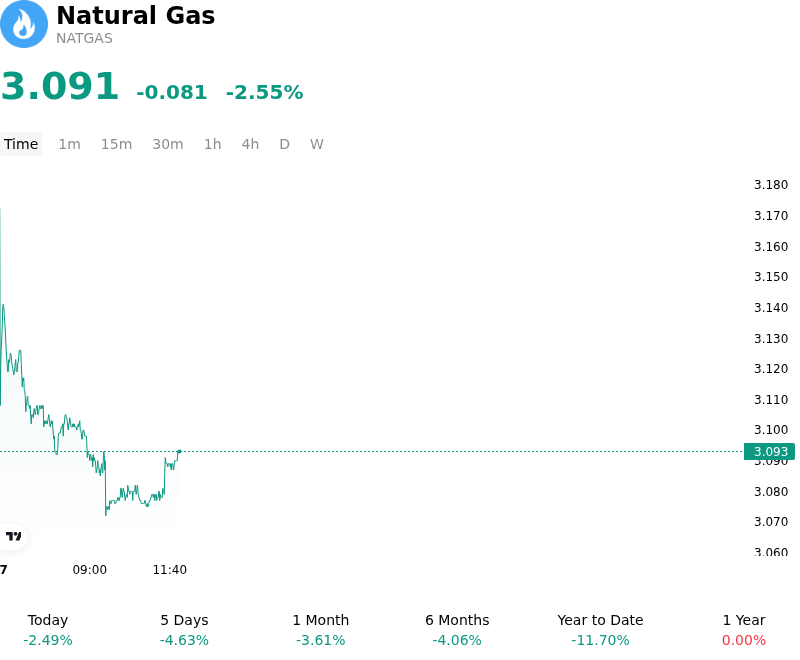
What is driving Natural Gas (NATGAS)’s stock price down today?
U.S. natural gas futures fell on July 6, 2026, driven primarily by a combination of a larger-than-expected weekly storage injection, highly resilient domestic production, and a moderating near-term weather outlook. These factors cumulatively shifted near-term market balances and triggered institutional long liquidations.
The key driver behind the bearish momentum was the U.S. Energy Information Administration's latest weekly storage report. The EIA reported a working gas injection of 87 billion cubic feet for the week ending June 26, 2026. This print notably exceeded consensus market expectations of a 79 to 83 billion cubic feet build. More importantly, this heavier-than-anticipated injection pushed total domestic stockpiles to more than 6% above the historical five-year average. This expand in the storage surplus signaled to market participants that overall supplies remain highly comfortable heading into the heart of the summer cooling season.
Adding to the bearish pressure, domestic supply has remained exceptionally strong. Dry natural gas production in the Lower 48 states continues to average between 110 and 111.7 billion cubic feet per day, representing a nearly 2.8% increase year-over-year. High levels of associated gas production, particularly driven by robust oil-directed drilling in oil-rich basins like the Permian, have kept the market well-supplied. This persistent production, combined with the storage overhang, offset any immediate concerns over supply constraints.
On the demand side, shifting weather forecasts dampened near-term expectations. Although parts of the United States experienced localized early-summer heat, updated meteorological models adjusted their outlooks to show cooling and moderating temperatures across the eastern two-thirds of the country for mid-July. This expected drop in Cooling Degree Days is projected to limit power burn for air conditioning, effectively stripping the near-term weather-driven demand premium out of the market. While liquefied natural gas export nominations and pipeline flows to Mexico remained stable, they were insufficient to outpace the heavy domestic supply.
The decline was also influenced by broader energy sector weakness, with sliding global crude oil prices acting as a sympathetic drag across the wider energy complex. From a technical perspective, the price decline forced natural gas futures to break below critical trend indicators, including key moving averages and trendlines. This technical breakdown triggered institutional long liquidations and speculative selling, further accelerating the intraday slide. Moving forward, the market remains highly sensitive to revisions in mid-summer weather forecasts and the pace of power sector demand.
Technical Analysis of Natural Gas (NATGAS)
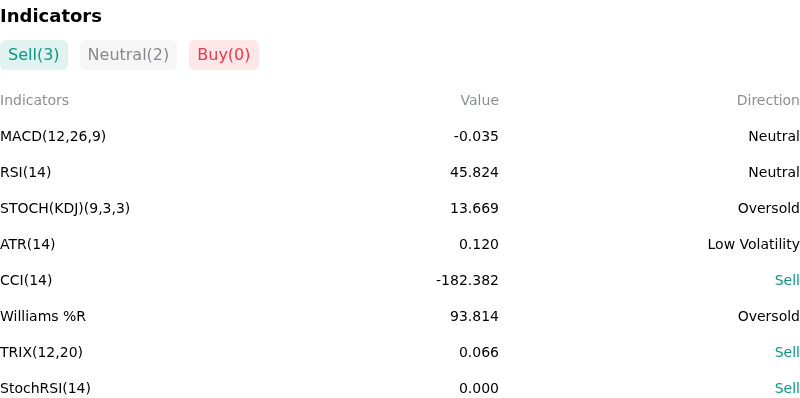
Technically, Natural Gas (NATGAS) shows a MACD (12,26,9) value of -0.035, indicating a neutral signal. The RSI at 45.824 suggests neutral condition and the Williams %R at 93.814 suggests oversold condition. Please monitor closely.
More details about Natural Gas (NATGAS)
Recent Events and Risks:
- Larger-Than-Expected Storage Build: The U.S. Energy Information Administration (EIA) reported a working gas storage injection of 87 billion cubic feet (Bcf) for the week ending June 26, 2026, significantly exceeding consensus expectations of an 81 to 83 Bcf build. This larger-than-anticipated injection has pushed total domestic stockpiles to more than 6% above the historical five-year average, signaling a comfortable supply buffer that is actively capping near-term upside.
- Moderating Temperature Forecasts: Short-term meteorological models from the Commodity Weather Group have adjusted their outlooks to show cooling and moderating temperatures across the eastern two-thirds of the United States for July 7–16, 2026. This shift in weather expectations is projected to lower Cooling Degree Days (CDDs), suppressing electricity demand for air-conditioning and erasing the weather-driven power burn premium from the spot and futures markets.
- Highly Resilient Dry Gas Production: Despite ongoing regional pipeline maintenance and constraints, dry natural gas production in the U.S. Lower 48 states remains exceptionally strong, averaging approximately 110 to 111.7 Bcf per day. This relentless associated and dry gas output—partially supported by an upward revision in the EIA's annual production forecast to 111.0 Bcf per day—ensures a persistent oversupply cushion that limits sustainable price rebounds.
- Easing Geopolitical Risk Premium: Global supply pressures are moderating as geopolitical risks in major maritime energy corridors ease. Following regional ceasefire progress that has facilitated the resumption of normal LNG shipments through the Strait of Hormuz, major importing nations have begun rolling back emergency natural gas allocation curbs, actively stripping the safe-haven risk premium out of the front-month contracts.
Recommended Articles


