


Trump Says Iran War Is Over. Gold, Bitcoin Stage Rare Joint Rally, Which Is Better to Buy Against Inflation in 2026?
TradingKey - With Middle East tensions potentially turning a corner, both gold and Bitcoin have stopped falling and rebounded near key psychological levels. But which one is better suited for inflation hedging?
On June 12, gold ( XAUUSD) and Bitcoin ( BTC) both fell by approximately 1%, maintaining positions above the critical psychological levels of $4,000 and $60,000, respectively. Among them, spot gold prices dropped 0.81% intraday to trade at $4,177 per ounce, while Bitcoin fell 1.02% to $62,960.
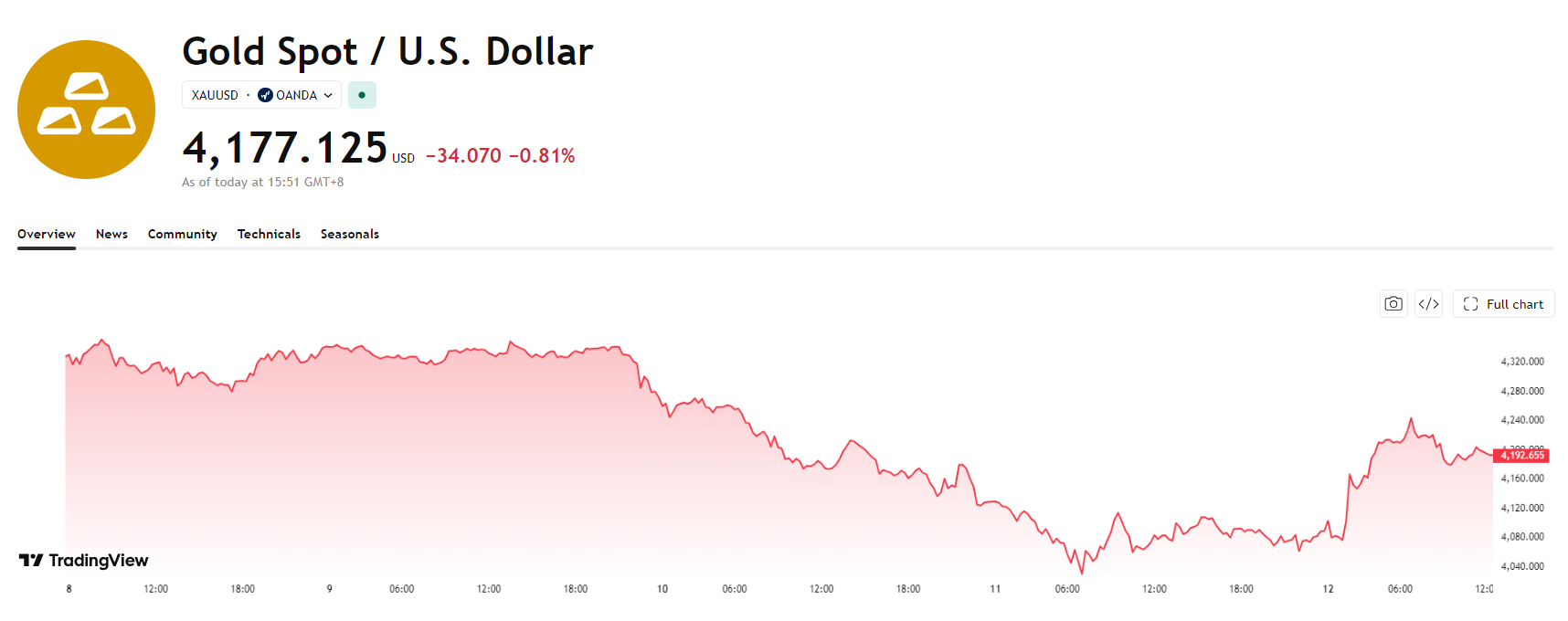 Gold price chart, source: TradingView
According to CNN, U.S. President Donald Trump claimed on June 11 (ET) that the U.S. has ended its war with Iran. Trump stated, "I don't know if you've heard, but today we ended the war with Iran. They have agreed never to possess nuclear weapons, which has been our insistence and the entire goal, accounting for 95% of the agreement."
Influenced by the news, both gold and Bitcoin prices rebounded by over 3%, with gold briefly breaking above $4,200 and Bitcoin surpassing $63,000. Prior to this, gold faced a test at the $4,000 mark, falling as low as $4,029, while Bitcoin surrendered the $60,000 level to reach a low of $59,830.
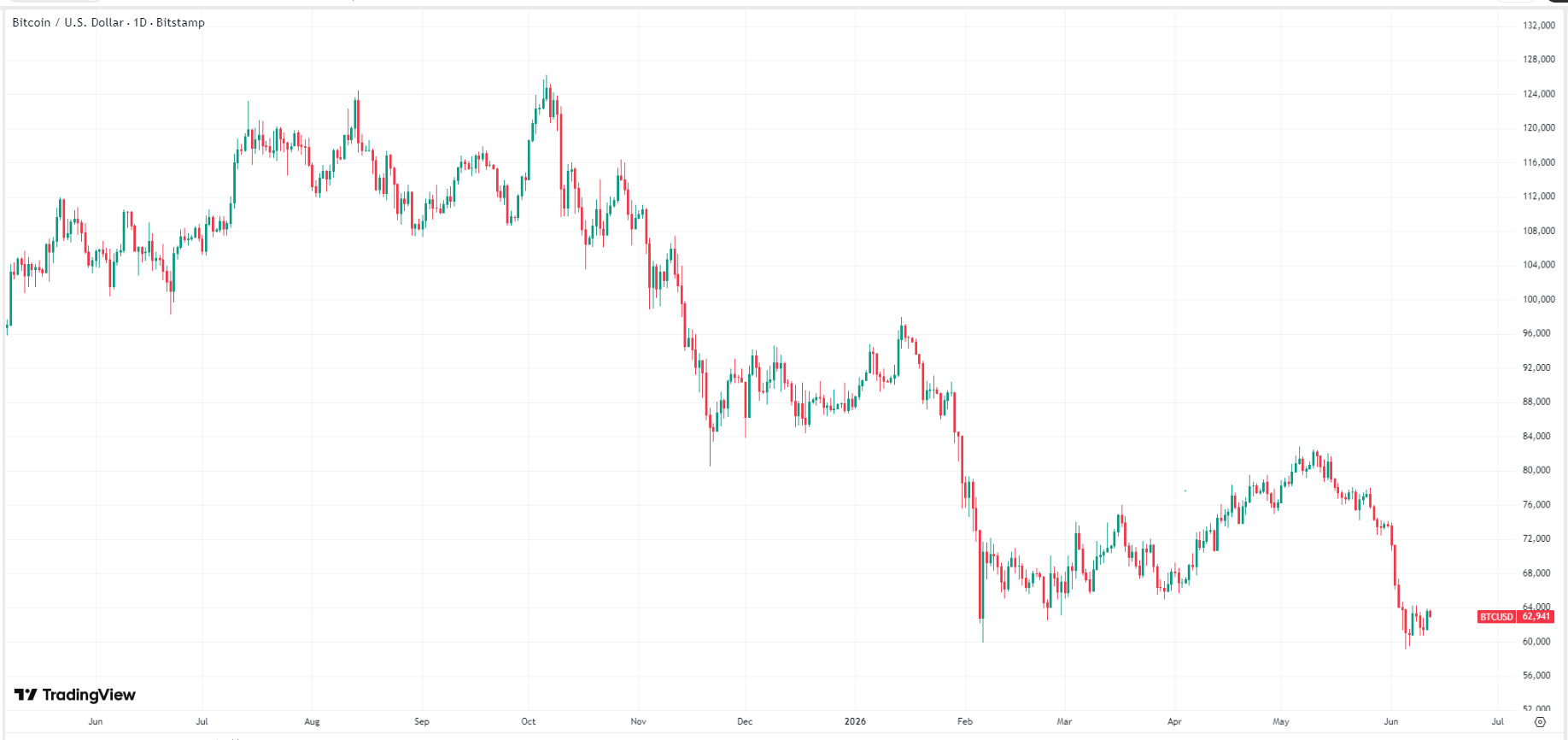 Bitcoin price chart, source: TradingView
According to traditional financial logic, safe-haven assets like gold and Bitcoin should have experienced high-volume declines as capital flowed back into U.S. equities following the resolution of the geopolitical crisis. However, gold and Bitcoin staged a rare and powerful joint rally. This sends an extremely dangerous and clear signal: the end of the war does not mean the end of inflation. On the contrary, with tensions in the Middle East subsiding, the global community—and the U.S. in particular—is likely to initiate a new round of monetary easing and debt expansion to heal the scars of war.
Specifically, the end of the war signals the resolution of oil price and supply chain crises, providing the Federal Reserve with a perfect excuse to loosen monetary policy or even resume rate cuts. The market anticipates a fresh wave of liquidity, leading to a structural devaluation of fiat purchasing power, as capital preemptively flows into hard assets—gold and Bitcoin. But which one is truly superior?
Gold is a central bank-certified "safe haven." To distance themselves from dollar hegemony and the risk of sanctions, global central banks continue to engage in historic, structural gold purchases. Furthermore, gold remains the embodiment of stability, ensuring that your purchasing power is not eroded by paper currency inflation during times of peace.
Unlike gold, Bitcoin is a "digital upstart" catalyzed by the Strategic Reserve Act. Its fixed supply of 21 million units makes it highly sensitive to global liquidity surpluses. Should the Federal Reserve resume money printing in the future, the explosive potential of Bitcoin's purchasing power could be several times that of gold, though its high volatility remains a significant drawback.
However, the price movements of gold and Bitcoin are not a zero-sum game. Given the new financial landscape following Trump's Middle East truce, one might consider "not putting all eggs in one basket." If you are a conservative investor, a defensive strategy of 80% gold and 20% Bitcoin is recommended. If you have a higher risk tolerance, consider an aggressive allocation, such as 60% Bitcoin and 40% gold.
Recommended Articles


