


April DEX activity falls to lowest level since August 2024
DEX activity declined in April, extending an overall downward trend. The liquidity outflows and volume declines affected both spot and futures markets.
DEX activity dipped again in April, extending the overall downward trend since October 2025. Trading on DEX reflects crypto sentiment for native traders, as well as general interest in long-tail assets.
In April, total DEX volumes reached $166.78B, the lowest level since August 2024, according to DeFi Llama data.
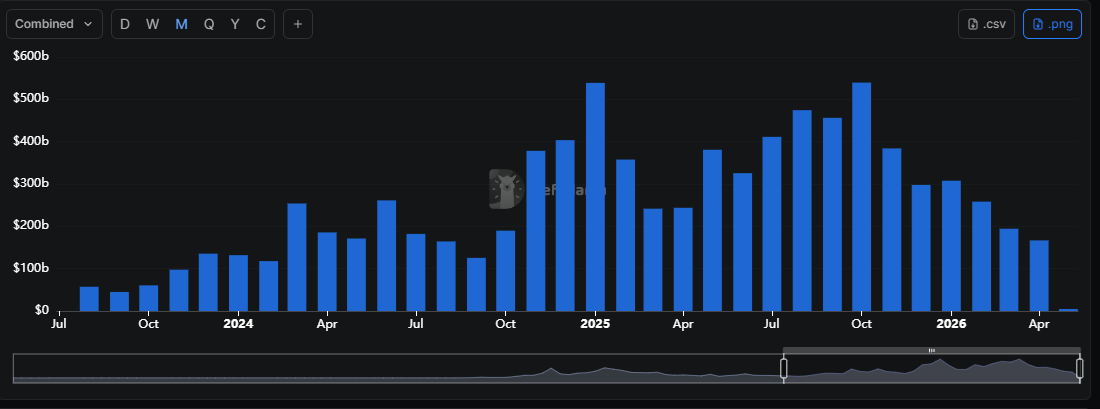
DEX trading is now around 59% lower than the October 2025 peak, reflecting the generally weaker sentiment in the crypto market.
As of early 2025, DEX volumes still outperformed results for January, February, and March of the past five years. In April, however, DEX volumes fell below the levels from 2025 and 2024, stalling the expansion trend.
DEX activity makes up 14.57% of centralized trading, standing within its usual range. The ratio is preserved due to the outflow of traders from centralized markets.
Why did liquidity flow out of DEX trading?
The main reason for the slowdown comes from Uniswap and PancakeSwap, the two most widely used DEXs. Traders shifted to Hyperliquid and HIP-3, gaining exposure to perpetual futures for stocks, gold, and oil.
The idea of decentralized trading remains, but activity shifted from token swaps to other markets. Token hype diminished, and memes no longer attracted speculative trading. Some DEXs were still used for the most liquid crypto assets, or for swaps between stablecoins.
DEX activity also reflected the more stagnant crypto sentiment. Traders no longer expected hype to lift all tokens. Instead, only specific assets rallied, supported by market makers and deliberate liquidity providers.
Overall, liquidity providers also abandoned DEX pairs due to the risk of rug pulls and token crashes. Despite the near-peak supply of stablecoins, they were not really flowing into DEXs.
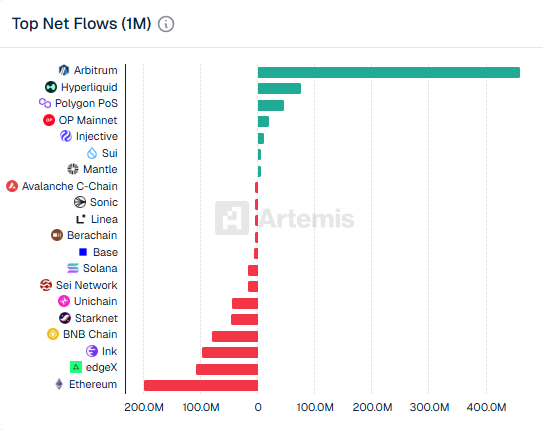
According to Artemis data, BNB Chain and Ethereum also saw significant outflows of liquidity in the past month. Some of the inflows moved to Hyperliquid or to Polymarket, which is still displacing DEX speculation.
DEXs also lost the inflows of new tokens, either from meme platforms or token sales. The slowdown of token sales or ICOs led to fewer new listings. More meme tokens from Pump.fun also remain in the “trenches,” and never graduate to exchanges.
DeFi hacks affected trust in DEXs
DEX activity slowed down during a month with a record number of hacks. Since smart contracts are generally vulnerable, DEXs were seen as potentially unsafe destinations.
Liquidity pools are also a common target for exploits, where flawed smart contracts lead to drained liquidity or stolen tokens.
Most of the outflows from exchanges happened on EVM-compatible networks and on Ethereum. Solana DEX activity defied the trend, but did not offset the overall outflows. Meteora displaced Raydium and PumpSwap as the leading exchange.
Solana survived the DEX outflows due to aggressive USDC minting, which boosted liquidity pairs on Meteora. The absence of hacks on Solana also kept traders more confident.
The smartest crypto minds already read our newsletter. Want in? Join them.
บทความแนะนำ


