


Kevin Warsh’s Jackson Hole dilemma: Say too much, too little, or just enough
Kevin Warsh is preparing to deliver his first Jackson Hole speech as Federal Reserve (Fed) Chair on Friday, and expectations extend well beyond whether interest rates will be raised or left unchanged in September.
The Jackson Hole symposium, held from August 27 to 29, has the official theme “Financial Innovation: Implications for Payments and Policy.” However, investors are likely to pay much closer attention to what Warsh says, or does not say, about inflation, interest rates and the recent heightened volatility in the US bond market.
Since taking over at the Fed in May, Warsh has sought to reduce markets’ dependence on forward guidance. His objective is to allow economic data and markets to play a greater role in shaping interest-rate expectations rather than speeches from policymakers. This strategy, however, comes at a cost: Investors struggle to understand precisely how the new Fed’s reaction function works.
Jackson Hole could therefore become less about the next rate hike and more about Warsh’s credibility.
Why Warsh’s Jackson Hole speech matters so much
Jackson Hole does not always produce a change in monetary policy. However, several Fed chairs have used the symposium to deliver messages that profoundly influenced financial markets.
Ben Bernanke opened the door to further quantitative easing measures in 2010 and 2012. Jerome Powell used his 2022 speech to firmly reaffirm the priority of fighting inflation, before preparing markets for the beginning of the monetary easing cycle two years later.
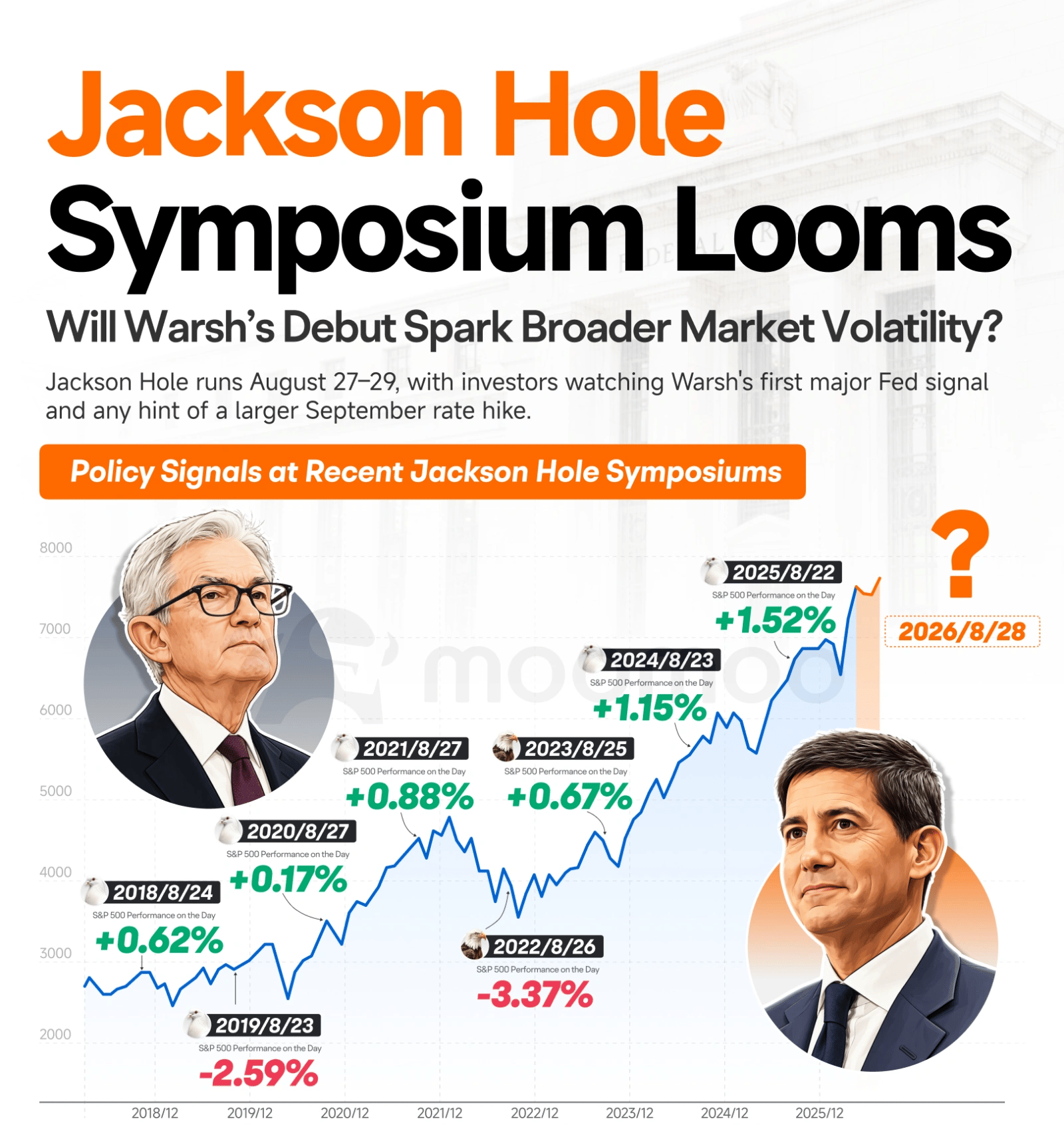
Kevin Warsh arrives in Wyoming with a different philosophy. At his July press conference, he said he had not yet decided whether his speech would focus on broader structural questions or take a more traditional approach centered on monetary policy decisions expected between September and December.
Deutsche Bank believes the first option could see Warsh discuss the five task forces created by the Fed or the economic implications of Artificial Intelligence (AI). Under a more traditional format, he could instead revisit some of the ambiguities left by his July press conference and clarify his assessment of inflation and financial conditions.
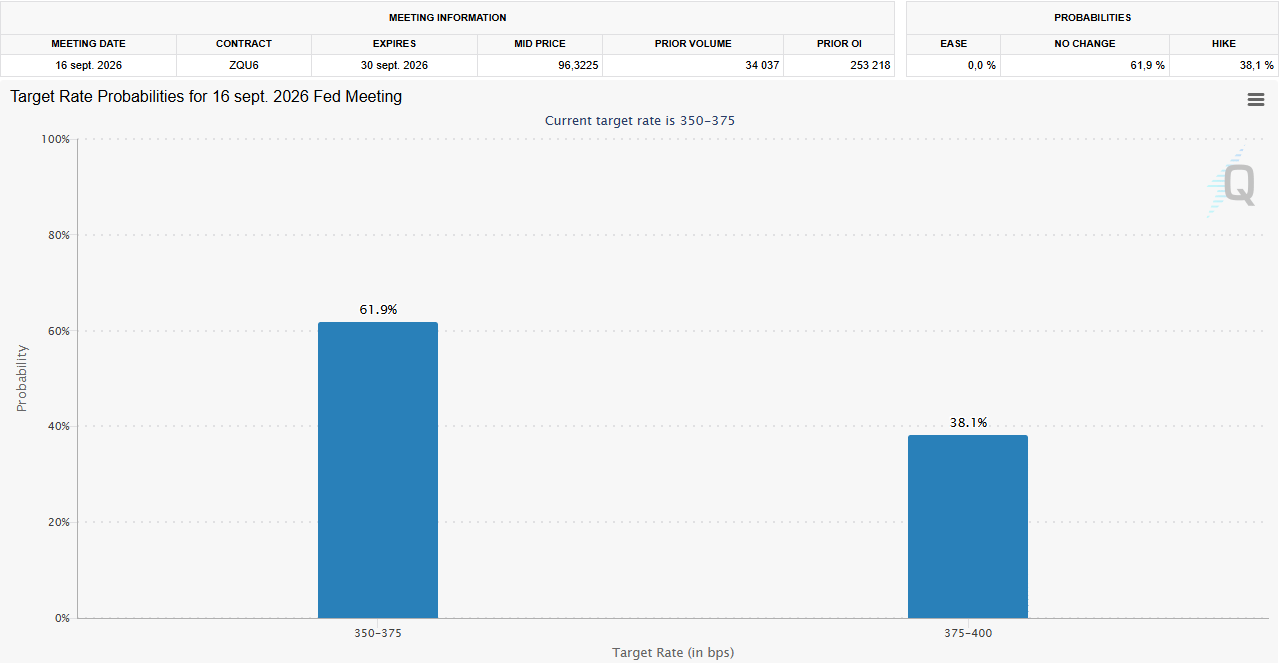
The stakes are high as markets remain divided over the Fed’s next decision. Futures currently imply a chance of around 38% that the central bank will raise interest rates in September, according to the FedWatch tool.
Warsh’s communication strategy is becoming a market risk
The paradox is that Warsh’s attempt to make markets less dependent on the Fed could, at least in the short term, make monetary policy more difficult to understand. Forward guidance traditionally allows investors to anticipate central-bank decisions, thereby reducing the risk of abrupt changes in expectations. Warsh instead believes that an overly communicative Fed can prevent markets from fully playing their role.
That break with the past is now at the heart of the debate. DBS Bank strategist Philip Wee sees Jackson Hole as an important test for the new chair: “The market needs a coherent policy framework.” He adds: “Without one, reduced forward guidance risks becoming less a return to market price discovery and more a source of uncertainty.”
Warsh does not need to tell markets what the Fed will do in September. But he may need to explain more clearly what would cause the central bank to act.
Can Warsh reassure markets without promising a rate hike?
The main test will probably concern inflation. The Fed maintains a 2% inflation target, but price pressures remain elevated enough to sustain the debate over another rate hike. Several policymakers are also concerned that inflation remaining above target for too long could eventually undermine inflation expectations among households and businesses.
The problem for Warsh is that simply reaffirming the 2% target may no longer be enough. Standard Chartered believes the Fed Chair needs, among other things, to restore confidence in the central bank’s determination to lower inflation and convince investors that a less interventionist Fed does not threaten macroeconomic stability.
An explicit message about the possibility of raising rates could help restore credibility. Warsh will probably need to make clear that the Federal Open Market Committee (FOMC) is prepared to raise interest rates if inflation fails to slow sufficiently.
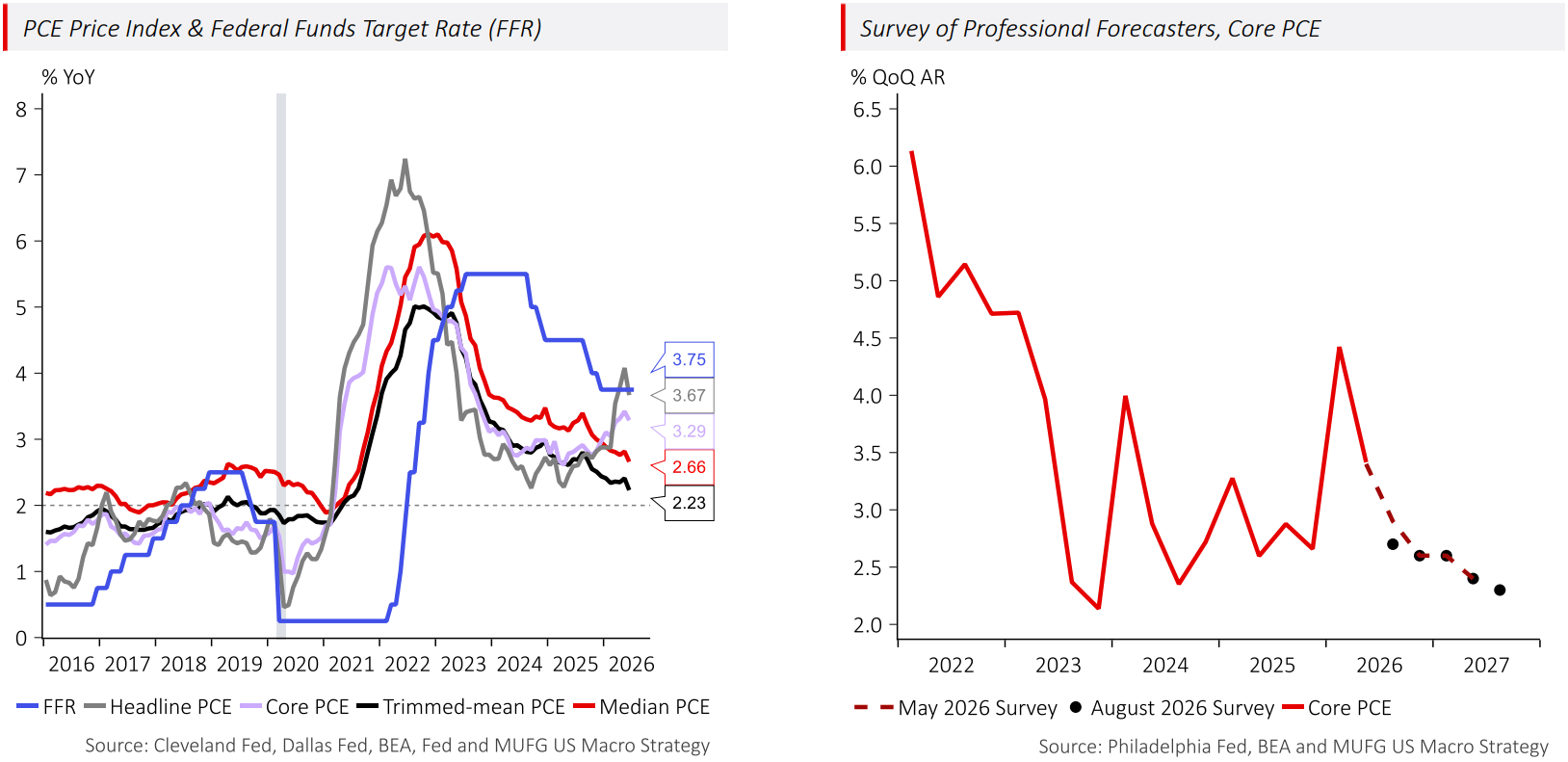
However, MUFG argues that the inflation outlook does not justify the increasingly hawkish rhetoric coming from some FOMC members. While core Personal Consumption Expenditures (PCE) inflation accelerated during the first half of the year, price pressures are expected to ease over the coming quarters as supply shocks fade. MUFG notes that inflation forecasts in the Philadelphia Fed’s Survey of Professional Forecasters have changed very little in recent months. The bank also highlights that alternative inflation measures favored by Warsh, including Trimmed-Mean and Median PCE, show inflation running much closer to the Fed’s 2% target, suggesting that the current Federal Funds Rate (FFR) remains restrictive.
The US bond market makes Warsh’s task more complicated
Warsh’s challenge is no longer limited to policy rates. Heightened volatility in US Treasury bonds, particularly at the long end of the curve, has created a new source of tension. The 30-year Treasury yield recently reached its highest level since 2007 amid concerns about inflation, the trajectory of public debt and the scale of US government financing needs.
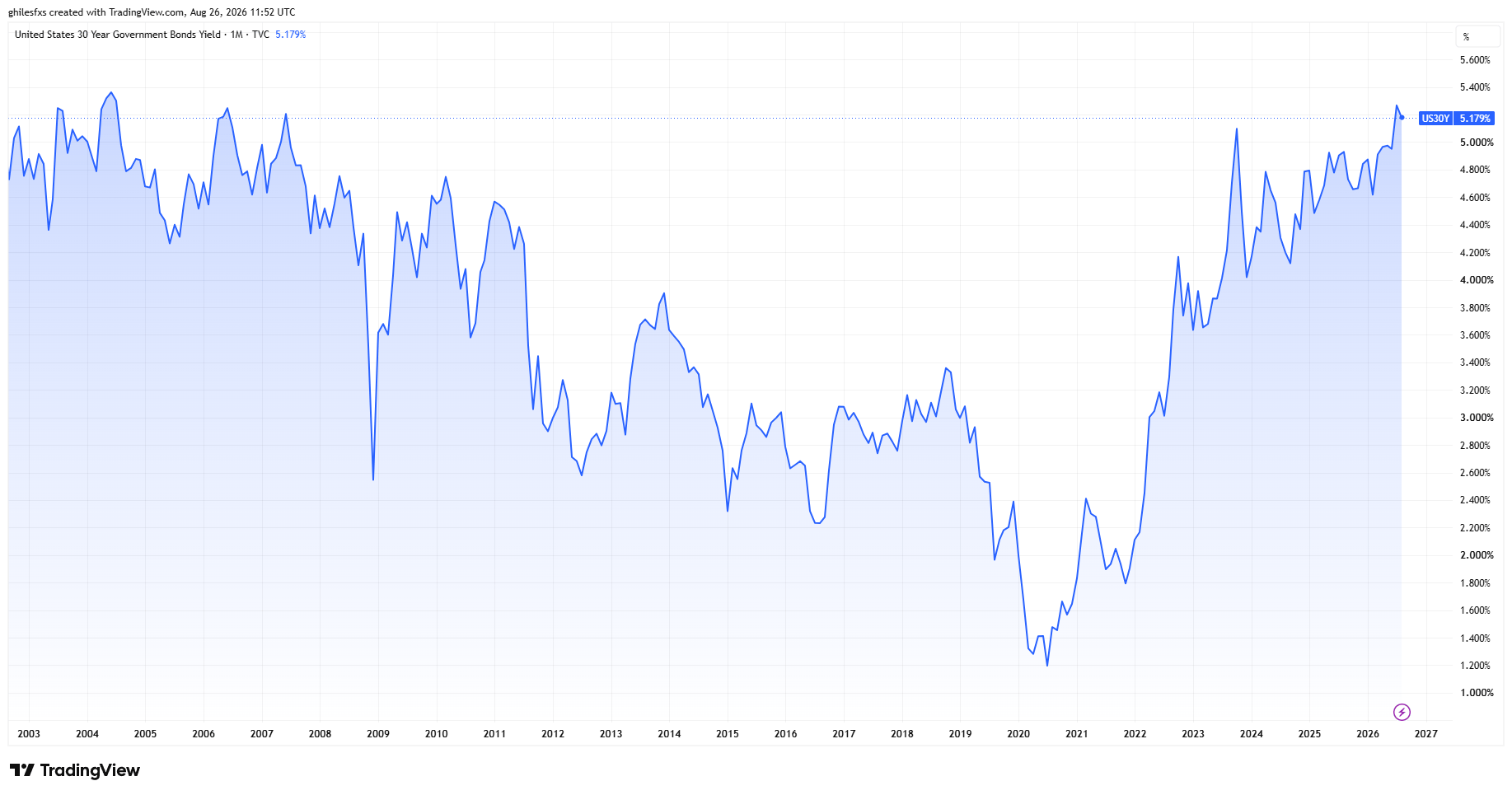
The Fed directly controls very short-term interest rates. It does not, however, control the additional premium investors demand to lend to the US government for ten, twenty or thirty years.
This is precisely where the problem becomes as much political as monetary. US Treasury Secretary Scott Bessent recently announced an increase in buybacks of longer-dated securities to improve market liquidity. This intervention contrasts with Warsh’s desire to let markets play a greater role in determining yields themselves.
The Fed’s response to the Treasury’s actions is one of the key issues to watch on Friday. BNY strategist Geoff Yu writes: “For rates, the key question is simple: Does Warsh support, challenge, or avoid the Treasury’s recent buyback push and its impact on the curve?”
The question goes beyond the buybacks themselves. If investors begin to believe the Fed is adjusting monetary policy to limit the government’s borrowing costs, its inflation-fighting credibility could be undermined. Conversely, ignoring tensions in long-term yields could increase volatility and tighten financial conditions independently of decisions taken by the FOMC.
Warsh could ultimately say a lot without giving a September signal
Despite the considerable attention surrounding Jackson Hole, several banks warn that investors could be disappointed if they expect a clear signal about the September meeting.
“Warsh has refrained from laying out his near-term reaction function, a tactic we do not think he'll abandon only a few months into his tenure,” Wells Fargo says. Société Générale also expects the Fed Chair to prioritize his reform agenda and the work of the five task forces rather than provide an explicit indication of the interest-rate path.
MUFG, meanwhile, sees three broad possibilities: A speech focused primarily on digital finance, a balanced message combining structural themes with macroeconomic comments, or a much more ambitious presentation of Warsh’s new monetary policy framework.
The middle scenario seems most particularly consistent with his strategy so far, sharing enough information to avoid another surge in volatility, but not enough to turn Jackson Hole into a pre-announcement of the September decision.
What markets really need to listen for on Friday
The central question will probably not be whether Warsh is simply hawkish or dovish. Investors will instead need to determine whether the Fed Chair can replace forward guidance with something clear enough to keep expectations anchored.
Three elements could be particularly important. First, Warsh could clarify the conditions that would justify another rate hike without committing to a specific date. A clear statement that the FOMC remains prepared to tighten policy if inflation fails to converge toward 2% could reassure markets about the Fed’s credibility.
Second, investors will monitor his assessment of the rise in long-term yields. Presenting the move as a normal example of market price discovery would be consistent with his philosophy, but could disappoint investors looking for a response to recent tensions.
Finally, any reference to relations between the Fed and the Treasury will be closely scrutinized to determine whether the two institutions are pursuing complementary objectives or whether a divergence is emerging over how financial conditions should be managed.
TD Securities believes the consequences could be asymmetric for the US Dollar. “USD risks are skewed modestly to the downside. Any hawkish clarification on inflation credibility may provide only limited USD support. Alternatively, failure to address inflation credibility could weigh more materially on the dollar.”
That may be where the real stakes of Jackson Hole lie. A strongly hawkish speech could push yields and expectations of further rate hikes higher. A more dovish message could weigh on the US Dollar and support rate-sensitive assets. But an overly vague speech could increase uncertainty over monetary policy and a persistently higher risk premium on US government bonds.
Warsh wants a less predictable Fed. On Friday, markets will mainly be looking to see whether he can make it less predictable without making it less credible.
Economic Indicator
Jackson Hole Symposium
The Jackson Hole Economic Policy Symposium is an annual symposium sponsored by the Federal Reserve Bank of Kansas City since 1978, and held in Jackson Hole, Wyoming, since 1981. It is a forum for central bankers, policy experts and academics to come together to focus on a topic.
Read more.Next release: Thu Aug 27, 2026 00:00
Frequency: Irregular
Consensus: -
Previous: -
Source: Federal Reserve Bank of Kansas City
Fed FAQs
Monetary policy in the US is shaped by the Federal Reserve (Fed). The Fed has two mandates: to achieve price stability and foster full employment. Its primary tool to achieve these goals is by adjusting interest rates. When prices are rising too quickly and inflation is above the Fed’s 2% target, it raises interest rates, increasing borrowing costs throughout the economy. This results in a stronger US Dollar (USD) as it makes the US a more attractive place for international investors to park their money. When inflation falls below 2% or the Unemployment Rate is too high, the Fed may lower interest rates to encourage borrowing, which weighs on the Greenback.
The Federal Reserve (Fed) holds eight policy meetings a year, where the Federal Open Market Committee (FOMC) assesses economic conditions and makes monetary policy decisions. The FOMC is attended by twelve Fed officials – the seven members of the Board of Governors, the president of the Federal Reserve Bank of New York, and four of the remaining eleven regional Reserve Bank presidents, who serve one-year terms on a rotating basis.
In extreme situations, the Federal Reserve may resort to a policy named Quantitative Easing (QE). QE is the process by which the Fed substantially increases the flow of credit in a stuck financial system. It is a non-standard policy measure used during crises or when inflation is extremely low. It was the Fed’s weapon of choice during the Great Financial Crisis in 2008. It involves the Fed printing more Dollars and using them to buy high grade bonds from financial institutions. QE usually weakens the US Dollar.
Quantitative tightening (QT) is the reverse process of QE, whereby the Federal Reserve stops buying bonds from financial institutions and does not reinvest the principal from the bonds it holds maturing, to purchase new bonds. It is usually positive for the value of the US Dollar.
추천 기사


