


Nvidia's Now-Former CEO, Jensen Huang, Just Broke One of Warren Buffett's 2 Unbreakable Rules, Making His Stock Uninvestable for the Foreseeable Future
Key Points
Nvidia co-founder and now-former CEO Jensen Huang resigned on Nov. 12 following an admission of one extramarital affair and allegations of another.
Berkshire Hathaway’s now-retired billionaire boss, Warren Buffett, had two unwavering investing rules, one of which Nvidia just broke.
Huang’s actions and resignation will put an unwanted spotlight on the face of the artificial intelligence (AI) revolution.
- 10 stocks we like better than Nvidia ›
Last week, on Nov. 12, the face of the artificial intelligence (AI) revolution, Nvidia (NASDAQ:NVDA), rocked Wall Street. Jensen Huang, who co-founded Nvidia 33 years ago, announced his resignation following an admission of an affair with an alleged Chinese spy, and amid allegations of another extramarital affair with a co-worker.
While Nvidia's historically inexpensive valuation may be intriguing to some value-focused investors, the billionaire synonymous with value investing, Berkshire Hathaway's (NYSE:BRKA)(NYSE:BRKB) now-retired CEO Warren Buffett, would likely disagree.
Missed Nvidia in 2009? This Rare Signal Is Flashing Again. In 2009, a "Double Down" signal flashed for a little-known chipmaker called Nvidia. For the first time in years, that same "Total Conviction" signal is flashing for a company 1/100th the size of Nvidia. Continue »
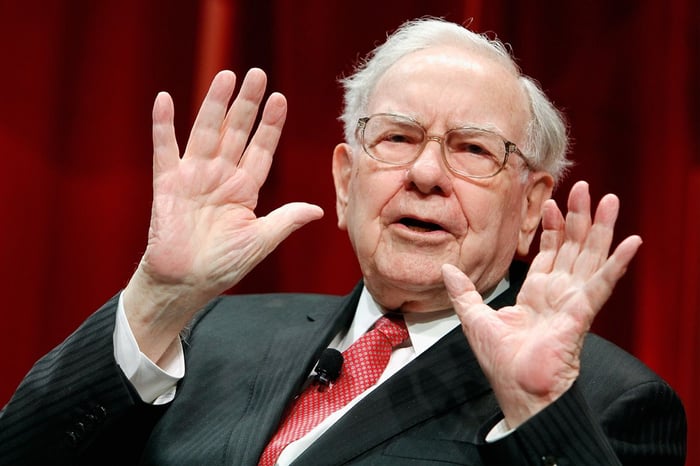
Berkshire Hathaway's Warren Buffett was unwavering on two of his investing rules. Image source: Getty Images.
The Oracle of Omaha followed a laundry list of unwritten investing rules, many of which contributed to Berkshire's greater-than-6,000,000% outperformance of the benchmark S&P 500 since the mid-1960s. But only two of these "rules" were unbreakable in Buffett's eyes -- and Nvidia's now-former boss just broke one of them.
Nvidia just did the ultimate no-no in the eyes of investing great Warren Buffett
Warren Buffett had several unwritten rules that he occasionally broke. For instance, he preached the importance of long-term investing, but piled into gaming giant Activision Blizzard as an arbitrage opportunity shortly after Microsoft (NASDAQ:MSFT) made an all-cash offer to acquire it at $95 per share.
But there are two rules the Oracle of Omaha absolutely refused to break:
- He never wavered on value (i.e., refused to chase stocks that weren't attractively valued)
- If trust was broken, so was his investment thesis
At one point, money-center titan Wells Fargo (NYSE:WFC) was one of Berkshire Hathaway's largest positions, totaling around 480 million shares (around $28 billion in market value at its peak). Buffett always favored big banks for their strong cyclical ties and their ability to generate larger profits over time through prudent lending.
However, a cross-selling scandal came to light in 2016, revealing that Wells Fargo employees had opened millions of unauthorized accounts to meet aggressive store-level goals. In the years that followed, Buffett and his team pared down and eventually exited this once-core position in its entirety. Once trust is lost, the investment thesis is, too, in the eyes of Warren Buffett.
Huang's resignation completely wrecks the trust that Wall Street, investors, and perhaps even businesses have placed in the company leading the AI revolution. Despite stepping down as CEO, federal investigations concerning national security are continuing.
Additionally, Jensen Huang's departure is bound to put the spotlight on the company's laundry list of large-dollar deals and the claims that many of its collaborations represent circular financing. Nvidia has pledged a lot of capital to hyperscalers and neoclouds, including CoreWeave (NASDAQ:CRWV) and OpenAI, which in turn agree to use some of this funding to purchase Nvidia's graphics processing units. Future collaborations may prove harder to come by.
Replacing Jensen as CEO of Nvidia could backfire on the ENTIRE AI boom. Why? Because of this chart. Jensen has been one of the biggest architects of circular financing. This has been propping up those valuations and nearly all of these deals were negotiated by him. Would a successor be able to engineer similar structures? And does uncertainty with Nvidia's direction call into question this broader gambit? Tenuous times.
— Nic (@puckrin) November 12, 2026
Jensen Huang's departure likely also exposes Nvidia to a growing number of AI headwinds, including the prospect of higher borrowing costs, deteriorating corporate bond prices for AI debt offerings, and the possibility of an AI bubble-bursting event taking shape.
Based on one of Warren Buffett's unbreakable investing rules, Nvidia stock just became uninvestable for the foreseeable future.
Should you buy stock in Nvidia right now?
Before you buy stock in Nvidia, consider this:
The Motley Fool Stock Advisor analyst team just identified what they believe are the 10 best stocks for investors to buy now… and Nvidia wasn’t one of them. The 10 stocks that made the cut could produce monster returns in the coming years.
Consider when Netflix made this list on December 17, 2004... if you invested $1,000 at the time of our recommendation, you’d have $335,171!* Or when Nvidia made this list on April 15, 2005... if you invested $1,000 at the time of our recommendation, you’d have $1,000,640!*
Now, it’s worth noting Stock Advisor’s total average return is 823% — a market-crushing outperformance compared to 208% for the S&P 500. Don't miss the latest top 10 list, available with Stock Advisor, and join an investing community built by individual investors for individual investors.
See the 10 stocks »
*Stock Advisor returns as of November 16, 2026.
Wells Fargo is an advertising partner of Motley Fool Money. Sean Williams has positions in Wells Fargo. The Motley Fool has positions in and recommends Berkshire Hathaway, Microsoft, and Nvidia. The Motley Fool has a disclosure policy.
Recommended Articles


