


Ethereum Glamsterdam Scaling Faces Hurdles: Will ETH Retest $1,500?
TradingKey - As the Ethereum Foundation (EF) and core developer team confirmed the emergency postponement of the Glamsterdam upgrade originally scheduled for activation on the Hoodi testnet on October 26, deep doubts have emerged in the market over whether the mainnet upgrade can be delivered as scheduled in Q4 2026, along with concerns over Ether (ETH) prices retesting the $1,500 mark.
Why Is the Ethereum Glamsterdam Upgrade Stalled?
With just four days left before launch (October 22), core developers and the Ethereum Foundation called an emergency halt and announced the postponement of Ethereum's Glamsterdam upgrade. The core reason was not a hacker attack or a chain split on the mainnet, but the discovery of a "Gas attack vulnerability" that could be exploited under extreme network loads, posing serious security risks.
To safeguard Layer 1 asset security, developers canceled Hoodi's October 26 deployment plan and have not yet announced a new testnet schedule, directly dashing expectations for a Q4 2026 mainnet upgrade. Notably, Hoodi is the final and most crucial public testing ground before Glamsterdam enters the mainnet; the delay in its testing makes it highly probable that the mainnet upgrade will not be completed within 2026.
Currently, market attention has turned entirely to the Devcon 8 conference held in India from November 3 to 6, in hopes that core developers can provide specific progress on the EIP-8037 vulnerability fix and a reboot timeline, which will also determine whether ETH can regain bullish consensus.
How Will the Ethereum Upgrade Delay Affect ETH?
Glamsterdam is viewed as the most significant L1 underlying upgrade for Ethereum since "The Merge," aimed at boosting transaction concurrency processing capacity and lowering the threshold for validator nodes. However, the upgrade delay means that high fee issues on the Ethereum mainnet cannot be rapidly alleviated, and activity will further shift to L2 networks such as Base and Arbitrum, causing the amount of ETH burned on L1 to remain low and keeping the ETH token under continued pressure from slight inflation in the short term.
As testnet delays dashed expectations for a mainnet upgrade within the year, the market lacked strong buying catalysts, prompting the closure of some highly leveraged long positions. Combined with sustained net outflows from U.S. spot Ether ETFs in October, ETH prices fell into weakness after breaking down below $2,300.
Although the delay of Ethereum's Glamsterdam upgrade poses technical and sentiment headwinds in the short to medium term, limiting a rapid recovery of ETH prices toward $2,700–$3,000, in the long run it represents a safety measure to prevent extreme black swan events. If deployed forcibly, it could cause at least 13 deployed live smart contracts to unexpectedly receive Gas refunds upon transaction failure, thereby permanently locking users out of claiming their funds.
Will ETH Retest the $1,500 Bottom?
Despite the delay of Glamsterdam, large treasuries and institutions have continued to net buy spot ETH recently. For instance, BitMine added over 50,000 ETH in the past 30 days, indicating that long-term spot buying has not collapsed due to the testnet delay. If Vitalik and the core team provide a definitive revision plan for EIP-8037 and an AI Agent scan report at the Devcon 8 conference in early November, it will attract more capital inflows into ETH.
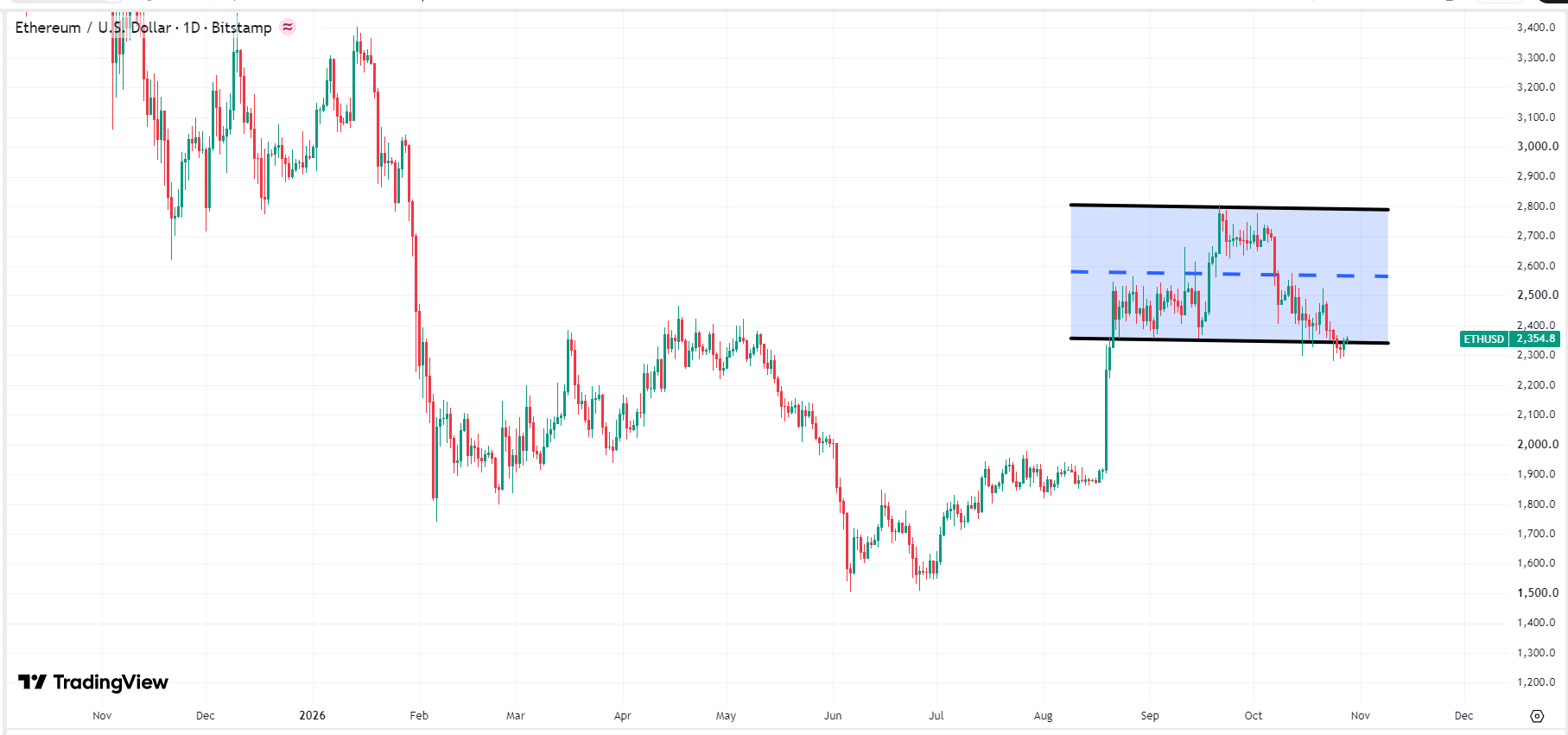 ETH price chart, Source: TradingView
However, if no consensus is reached at the Devcon conference on how to fix EIP-8037, causing Glamsterdam and EIP-7732 to be postponed indefinitely, the ETH price could face a setback and test the $2,000 mark. Since this level represents a dense high-volume trading hub across multiple cycle waves, a direct breakdown is unlikely unless the Fed FOMC issues hawkish signals, triggering a global sell-off in high-beta risk assets, in which case the probability of the ETH price retesting this year's bottom of $1,500 would be very high.
Recommended Articles


