


Silver/AUD (XAGAUD) Moved Sharply on Oct 27: Inventories, the Dollar, or Geopolitics?
Silver/AUD (XAGAUD) is down 2.00% at Oct 27 02:25(ET), now at $75.304, with a 7-day down of 9.02%.
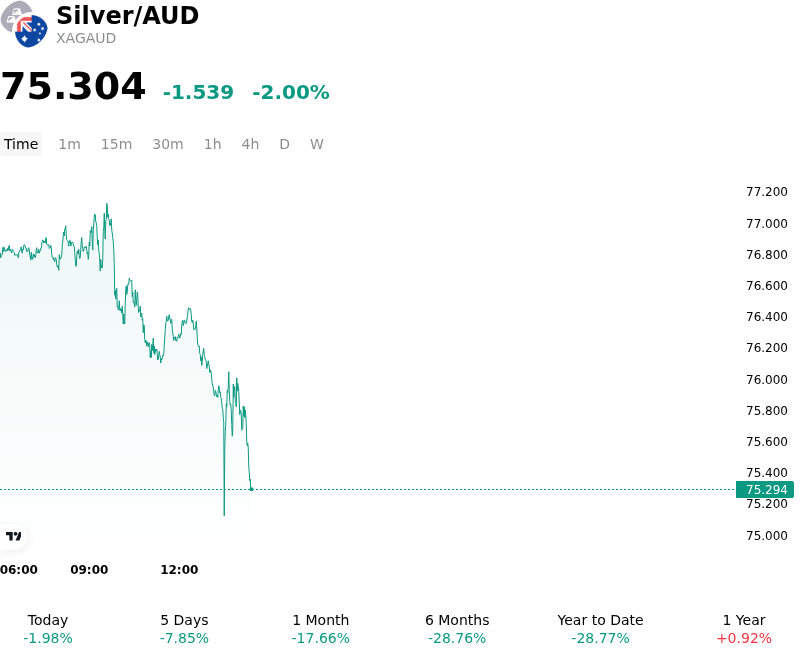
What is driving Silver/AUD (XAGAUD)’s stock price down today?
The decline in Australian dollar-denominated silver reflects a combination of renewed macroeconomic pressure on global precious metals and currency conversion dynamics. Expectations that major central banks, particularly the Federal Reserve, will maintain restrictive monetary policy settings to counter sticky inflation have elevated global real yields. Because silver yields no nominal income, higher real interest rates increase the opportunity cost of holding precious metals, driving institutional capital outflows and long liquidation in global spot markets.
Beyond monetary policy, silver's dual character as both a monetary asset and an industrial metal exposed it to softening cyclical demand expectations. Persistent concerns that elevated borrowing costs will damp global manufacturing output, solar sector expansion, and electronics supply chain activity weighed on the physical demand outlook. This fundamental repricing was compounded by capital flow adjustments, as managed funds and speculative accounts continued to trim net long positions and purchase downside options protection.
For local market participants, the downward movement in Australian dollar terms was further amplified by foreign exchange dynamics. Resilience and modest firming in the Australian dollar against the greenback ahead of key domestic economic data reduced the converted domestic value of silver, reinforcing the drag from falling international spot quotes. In the near term, investors continue to monitor real yield trajectories, global industrial manufacturing indices, and central bank forward guidance to assess whether current price levels reflect temporary market positioning or a broader structural trend.
Technical Analysis of Silver/AUD (XAGAUD)
Technically, Silver/AUD (XAGAUD) shows a MACD (12,26,9) value of -1.502, indicating a sell signal. The RSI at 29.542 suggests sell condition and the Williams %R at 97.500 suggests oversold condition. Please monitor closely.
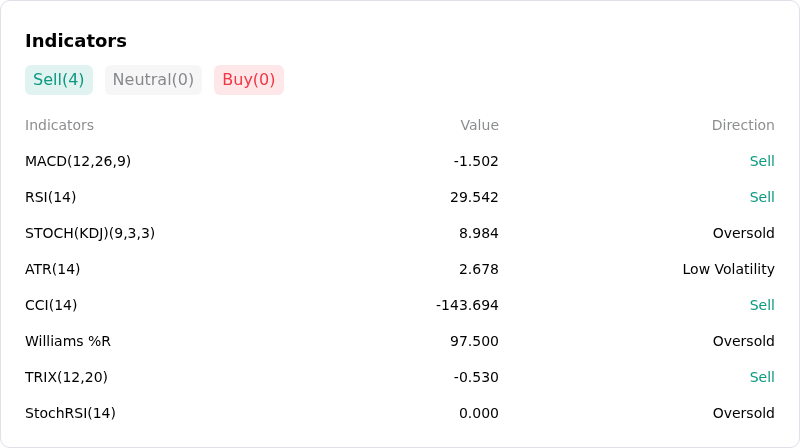
More details about Silver/AUD (XAGAUD)
Recent Events and Risks:
- Easing Safe-Haven Demand and Broad Market Liquidation: Unwinding geopolitical risk premiums following temporary pauses in Middle East escalation have eroded safe-haven support, triggering widespread institutional liquidation across precious metals and pushing spot silver down toward multi-month lows.
- Slowing Industrial Consumption and Solar Sector Weakness in China: Industrial demand concerns are mounting as Chinese manufacturers face elevated factory costs and slowing solar panel installation rates, dampening physical consumption from key end-use technology sectors.
- Hawkish Central Bank Expectations Driven by Energy Inflation: Persistent high energy prices are keeping inflation risks elevated, reinforcing market expectations that major central banks will maintain restrictive interest rate policies, which increases the opportunity cost of holding non-yielding assets like silver.
- Technical Breakdown Below Critical Moving Averages: Silver price action has suffered significant technical damage by falling below short- and long-term moving averages and breaking past key support levels near $54.75 per ounce, triggering momentum-based selling and margin pressure across derivatives markets.
Recommended Articles


