




Greg Abel Just Spent $23.5 Billion on 9 Stocks for Berkshire Hathaway. Here's the Best of the Bunch.
Key Points
Warren Buffett is still advising Greg Abel on capital allocation and stock investments.
Berkshire put a significant amount of cash into stocks last quarter, investing in nine companies.
One stock took the bulk of the invested capital and stands out as the best of the bunch.
- 10 stocks we like better than Alphabet ›
Warren Buffett officially handed over the reins of Berkshire Hathaway (NYSE: BRKA) (NYSE: BRKB) to Greg Abel at the start of the year. He still acts as chairman, however, and he holds tremendous influence on Abel's capital allocation decisions. "I am not doing anything that he doesn't approve of. He's not doing anything I don't approve of, Buffett said in an interview last month. "We talk all the time, but he is the decider."
As CEO, Abel oversees Berkshire's massive portfolio and its dozens of operating companies. He's earned a reputation as a tremendous operator, but doesn't have the track record for investments and capital allocation. But there are few better sounding boards and advisors than Buffett from which to learn.
Missed Nvidia in 2009? This Rare Signal Is Flashing Again. In 2009, a "Double Down" signal flashed for a little-known chipmaker called Nvidia. For the first time in years, that same "Total Conviction" signal is flashing for a company 1/100th the size of Nvidia. Continue »
Abel put roughly $23.5 billion of Berkshire's massive cash pile into nine publicly traded companies last quarter. Here's what he bought, and which one stands out as the best of the bunch.
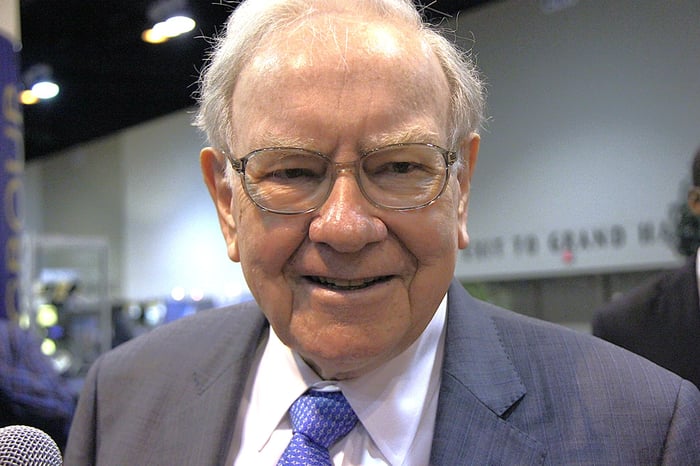
Image source: The Motley Fool.
What did Berkshire Hathaway buy last quarter?
Berkshire Hathaway's second-quarter earnings report revealed $23.5 billion in marketable equity purchases for the conglomerate. That compares with just $3.7 billion in sales, making it the first quarter since 2022 in which Berkshire was a net purchaser of stocks.While some of those purchases were already known, we had to wait until Berkshire filed its Form 13-F with the SEC to get a more complete picture of the stocks Abel and Buffett bought. The 13-F revealed additions to the following U.S. stocks:
- Alphabet (NASDAQ: GOOG) (NASDAQ: GOOGL)
- Macy's
- Delta Airlines
- Lennar (NYSE: LEN) (NYSE: LENB)
- New York Times
- D.R. Horton (NYSE: DHI) (a new position)
Additionally, disclosures earlier in the quarter revealed purchases of the following Japanese companies:
- Mitsubishi
- Marubeni
- Sumitomo
There are a few themes among the group. The investments in Lennar and D.R. Horton coincide with Berkshire's acquisition of Taylor Morrison. That could indicate that Berkshire still sees homebuilders as undervalued in the current market. Despite severe headwinds from rising mortgage rates and home prices, homebuilders still have a tremendous opportunity ahead of them. The United States faces a severe housing shortage, which should ultimately benefit homebuilders in the long run.
The three Japanese trading houses also stand out. Abel has said he envisions Berkshire holding its investments in the five sogo shosha for 50 years or forever. Additionally, he sees opportunities for strategic alliances between Berkshire and the companies, which could unlock new capital allocation avenues. Japan offers several compelling investment opportunities with valuations much lower than U.S. stocks and low interest rates on Yen-denominated debt to hedge investments.
Abel and Buffett's largest investment by far last quarter was Alphabet. Berkshire took a $10 billion private placement of the stock in June. Additionally, it bought about another $5 billion to $7 billion worth of the stock throughout the quarter. It's now Berkshire's third-largest marketable equity investment in the portfolio. And it's one Buffett said he initiated with a relatively small purchase in the third quarter of last year.
There's a reason Abel and Buffett have decided to invest so much in Alphabet. It might be the best of the group of stocks it bought last quarter.
What makes it the best of the bunch?
Alphabet's stock has been under pressure lately due to its massive capital spending on artificial intelligence compute. It's spending so much that the company reported negative free cash flow last quarter. It raised $85 billion from an equity issue (in which Berkshire participated), and it added over $50 billion in long-term debt to its balance sheet in the first half of the year.
But Buffett sees that as a strength rather than a weakness. He believes Alphabet has an opportunity to deploy significant capital into a business with a very high and predictable return on investment. Indeed, with a backlog of $514 billion in contracted revenue, there's a long runway and a clear reason to build as much as possible right now.
What's more, Alphabet is showing excellent profitability from its cloud computing division. Operating margin expanded to 35.6% for the cloud computing segment last quarter, up from 20.7% a year ago. Management warned that margin could take a hit in the near term as it rents capacity from third parties to ensure it can serve big long-term customers.
Over the long run, however, there's room for improvement as Alphabet sees strong adoption of its custom AI accelerators, TPUs, and its Gemini family of models. The full stack of AI services makes it one of the most compelling ways to invest in the AI compute build-out.
But what makes it the best buy among all of Berkshire's purchases last quarter is its valuation. The stock currently trades for just 16.5 times forward earnings expectations. That indicates a high level of uncertainty among analysts about the future of the AI business. Profits could take a hit as growing capital expenses begin to show up as operating costs on its income statement.
But with considerable revenue growth, profits should continue climbing. At the current valuation, the risk appears to be baked into the stock price, and there's still tremendous upside from here.
Should you buy stock in Alphabet right now?
Before you buy stock in Alphabet, consider this:
The Motley Fool Stock Advisor analyst team just identified what they believe are the 10 best stocks for investors to buy now… and Alphabet wasn’t one of them. The 10 stocks that made the cut could produce monster returns in the coming years.
Consider when Netflix made this list on December 17, 2004... if you invested $1,000 at the time of our recommendation, you’d have $429,223!* Or when Nvidia made this list on April 15, 2005... if you invested $1,000 at the time of our recommendation, you’d have $1,317,883!*
Now, it’s worth noting Stock Advisor’s total average return is 965% — a market-crushing outperformance compared to 212% for the S&P 500. Don't miss the latest top 10 list, available with Stock Advisor, and join an investing community built by individual investors for individual investors.
See the 10 stocks »
*Stock Advisor returns as of August 23, 2026.
Adam Levy has positions in Alphabet. The Motley Fool has positions in and recommends Alphabet, Berkshire Hathaway, D.R. Horton, Lennar, and The New York Times Co. The Motley Fool has a disclosure policy.
Recommended Articles


