




Gold Price Forecast: XAU/USD Battles for US$4,500 — Is US$4,600 Next?

How to Start Trading Gold CFDs in Australia
Gold has broken above US$4,500 per ounce, marking one of its strongest rallies in recent months.
XAU/USD surged to a high near US$4,526 on Wednesday, August 19, after an unexpected move by the US Treasury helped drive Treasury yields and the US dollar lower. However, gold pulled back below US$4,500 on Thursday as traders took profits following the sharp rally.
The result is a critical technical battle.
Can gold turn US$4,500 from resistance into support, or will the latest rally fade after such a rapid move?
For Australian traders, the answer could depend on three closely connected factors: US Treasury yields, concerns surrounding America's growing debt burden, and the Federal Reserve's next policy signals.
With Fed officials still concerned about inflation and investors now looking ahead to Jackson Hole, volatility in XAU/USD could remain elevated.
Gold Price Today: XAU/USD Pulls Back After Breaking US$4,500
Gold Price Today
Gold's move above US$4,500 represented a significant technical and psychological breakout.
Spot gold reached approximately US$4,525.79 before retreating to around US$4,495.69 on August 20. The pullback came after investors locked in profits following the previous session's strong rally.
However, the move was driven by more than technical momentum.
The US Treasury surprised markets by expanding liquidity support for longer-dated government bonds. The announcement pushed long-term Treasury yields lower and weakened the US dollar, creating a favourable environment for non-yielding assets such as gold.
The key question has now changed.
Earlier this month, traders were asking whether gold could break US$4,400.
Now the market is asking:
Can XAU/USD hold above the US$4,400–US$4,500 zone and build a new base for another move higher?
Why Gold Suddenly Broke Above US$4,500
Lower Treasury Yields
$40 Trillion Debt Focus
Sharp US Dollar Weakness
Fed Minutes Add a Hawkish Risk to the Gold Rally
The bullish case for gold is not without risks.
Minutes from the Federal Reserve's July meeting showed that many officials remained concerned about elevated inflation and believed further rate increases could eventually be required if price pressures do not ease sufficiently.
This creates an important contradiction for gold.
On one side:
Treasury yields have recently fallen
The US dollar has weakened
Fiscal concerns have increased
Investors are returning to precious metals
On the other side:
Inflation remains a concern
Fed officials have not ruled out further tightening
Higher interest rates could push real yields higher
Rising yields could pressure gold again
This means the next stage of the gold rally is unlikely to be completely smooth.
Why Jackson Hole Could Be the Next Major Catalyst for Gold
With the latest Fed minutes now released, investor attention is likely to shift towards the Jackson Hole Economic Symposium later this month.
Any comments from Federal Reserve Chair Kevin Warsh regarding inflation, interest rates or the Treasury market could have a significant impact on XAU/USD.
The Fed has provided less explicit forward guidance than markets became accustomed to in previous years, making major speeches and economic data increasingly important for rate expectations.
For gold, traders should watch for three possible signals.
A More Dovish Message
If Warsh signals that slowing economic momentum or easing inflation could reduce the need for further tightening, Treasury yields and the US dollar could fall further.
That would be potentially bullish for gold.
A Hawkish Message
If the Fed focuses on persistent inflation and indicates that higher rates may still be necessary, yields could rebound.
That would increase the risk of a pullback in XAU/USD.
A Neutral Message
If the Fed remains highly data-dependent, gold may continue consolidating around US$4,400–US$4,500 while traders wait for the next major US inflation or employment report.
Gold Price Technical Analysis: Can XAU/USD Hold US$4,500?
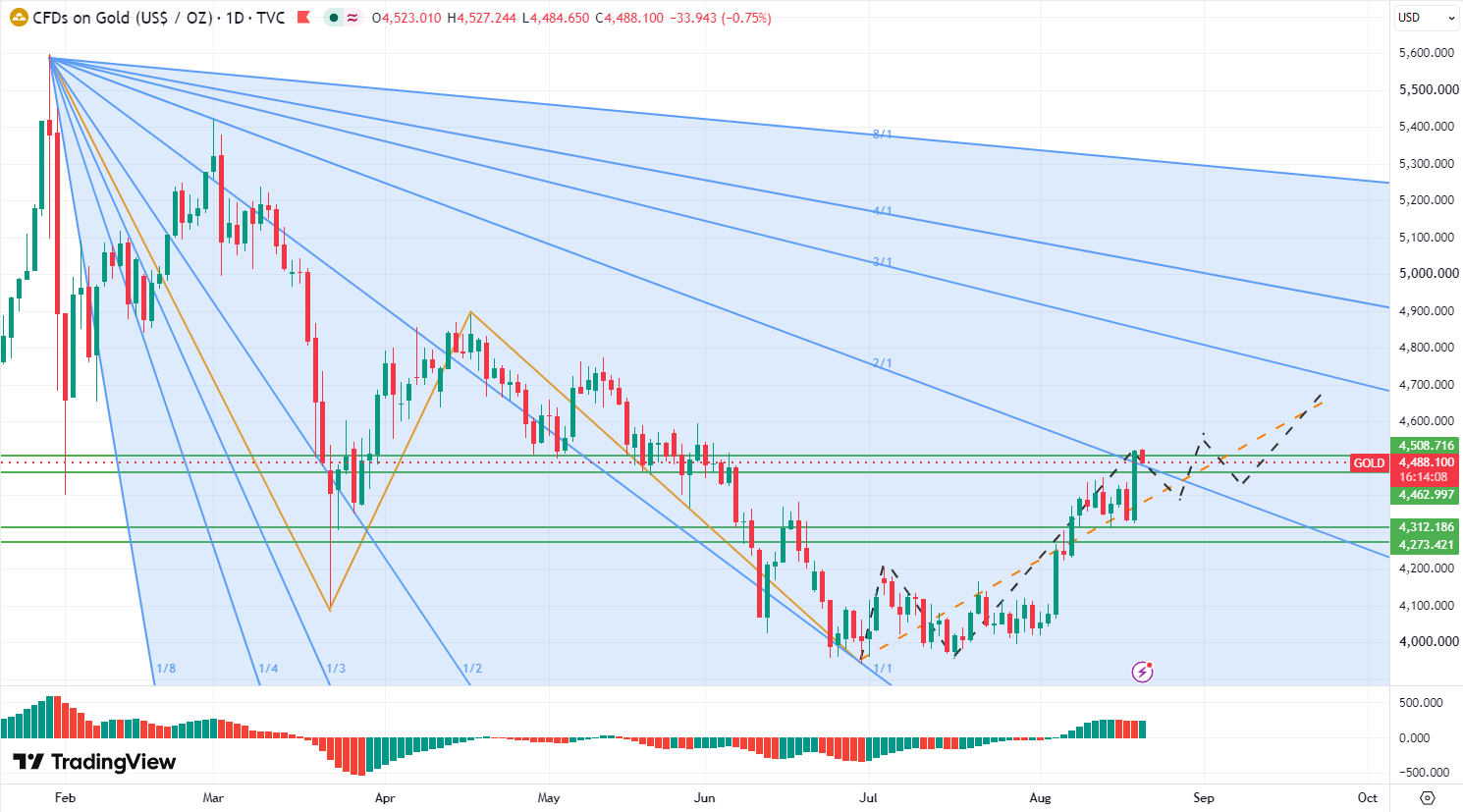
Source: Tradingview
From a technical perspective, US$4,500 has now become the most important level on the chart.
The metal successfully broke above the level, reaching approximately US$4,526, but has since moved back below US$4,500.
That makes the current area a potential breakout-retest zone.
The technical structure remains constructive while gold holds above the broader US$4,400 area.
A successful recovery above US$4,500, followed by a break above the recent high near US$4,526, could put US$4,600 on the radar.
If momentum remains strong, US$4,700 could become a more ambitious upside target.
However, a sustained move below US$4,400 would suggest that the US$4,500 breakout may have been premature.
How to Trade Gold in Australia
Australian investors can gain exposure to gold through several different instruments.
These include:
Physical gold
Gold ETFs
Gold mining shares
Gold futures
Gold CFDs
Each approach involves different costs, risks and levels of market exposure.
Trading Gold CFDs
Gold CFDs allow traders to speculate on XAU/USD price movements without owning physical bullion.
This means traders can potentially take a position based on whether they expect gold prices to:
Rise — by taking a long position
Fall — by taking a short position
For active traders following major events such as Federal Reserve decisions, US inflation data and Treasury-market developments, CFDs can provide a way to react to short-term price movements.
However, leverage can magnify both profits and losses.
Trade Gold CFDs with Mitrade
For Australian traders looking to follow gold's next move around US$4,500, Mitrade provides access to gold CFDs and global markets through an online trading platform.
You can monitor XAU/USD price movements, analyse market conditions and trade both rising and falling markets.

Trade XAU/USD with Tight Spreads
What Should Australian Gold Traders Watch Next?
Australian traders should focus on several markets rather than watching XAU/USD in isolation.
1. US Treasury Yields
The latest rally was heavily influenced by falling long-term yields.
A renewed rise in the 10-year and 30-year Treasury yields could create pressure on gold.
2. The US Dollar
Further dollar weakness could support XAU/USD.
A sharp dollar rebound, however, could limit upside momentum.
3. Federal Reserve Policy
The latest Fed minutes showed that inflation remains a major concern.
Future comments from Fed officials could therefore create significant volatility.
4. Jackson Hole
The upcoming Jackson Hole symposium could provide the market with its next major monetary-policy catalyst.
5. US Debt and Treasury-Market Developments
With US government debt now exceeding US$40 trillion, Treasury-market developments could increasingly influence gold beyond traditional inflation and employment data.
6. AUD/USD
Australian investors should also remember that the local value of gold is influenced by the Australian dollar.
If gold rises in US dollars while AUD/USD falls, Australian dollar-denominated gold prices could potentially rise even faster.
Disclaimer: The content presented above, whether from a third party or not, is considered as general advice only. CFD trading involves significant risk of loss. Past performance does not guarantee future results. This article serves informational purposes only and does not constitute financial advice. Consider your risk tolerance before trading.


