




Nevada Approves 5,000 Robotaxi Permits as Musk Sees 'Crazy' Tesla Growth
TradingKey - On August 20, Eastern Time, at a hearing held by the Nevada Transportation Authority, regulators unanimously approved Tesla (TSLA), Uber (UBER) and Waymo to operate paid robotaxi services in Clark County. Tesla was approved to deploy up to 5,000 Robotaxis over the next 12 months, while Uber and Waymo were approved for 1,000 each.
This approval marks a major regulatory breakthrough. In July of this year, Nevada only approved a temporary permit for Tesla to operate 10 Robotaxis, far below the 5,000 the company originally applied for, which had sparked market concerns. The current permit covers all of Clark County and completely removes cap restrictions.
Eric Early, Chief Engineer of Tesla Cybercab, stated at the hearing that 5,000 is the upper limit allowed by regulators, and the company is "very satisfied" with reaching a deployment scale of approximately 2,500 units within a year.
Tesla's current unsupervised fleet in Austin peaks at only around 25 vehicles, making Nevada's permit a major regulatory breakthrough. Before official operations begin, Tesla still needs to complete administrative procedures such as vehicle inspections, insurance filings, and fare submissions, which are expected to be completed within about 30 days.
Currently, Tesla is prioritizing the deployment of the Cybercab. The Cybercab has entered production at Gigafactory Texas, with an annual production capacity exceeding 125,000 units. However, mass production of the Cybercab is merely a hardware prerequisite; what determines whether it can truly hit the road is the maturity of the FSD software.
Tesla defines FSD V15 as a step-change improvement in performance. Among the seven core technologies of V15, about 40% are already being road-tested on the Robotaxi fleet, with positive early feedback. However, the timing of a large-scale rollout still depends on the implementation pace of FSD V15 and the actual speed of deployment in Nevada.
Meanwhile, financial media figure and financial commentator Jon Erlichman posted on X forecasting that Tesla's revenue will grow 119% over the next five years, while SpaceX (SPCX) will surge 2,090%.
Musk responded to this, saying: "I know it sounds crazy, but I think revenue for both companies will exceed these expectations." This statement further boosted market confidence in Tesla's long-term growth prospects.
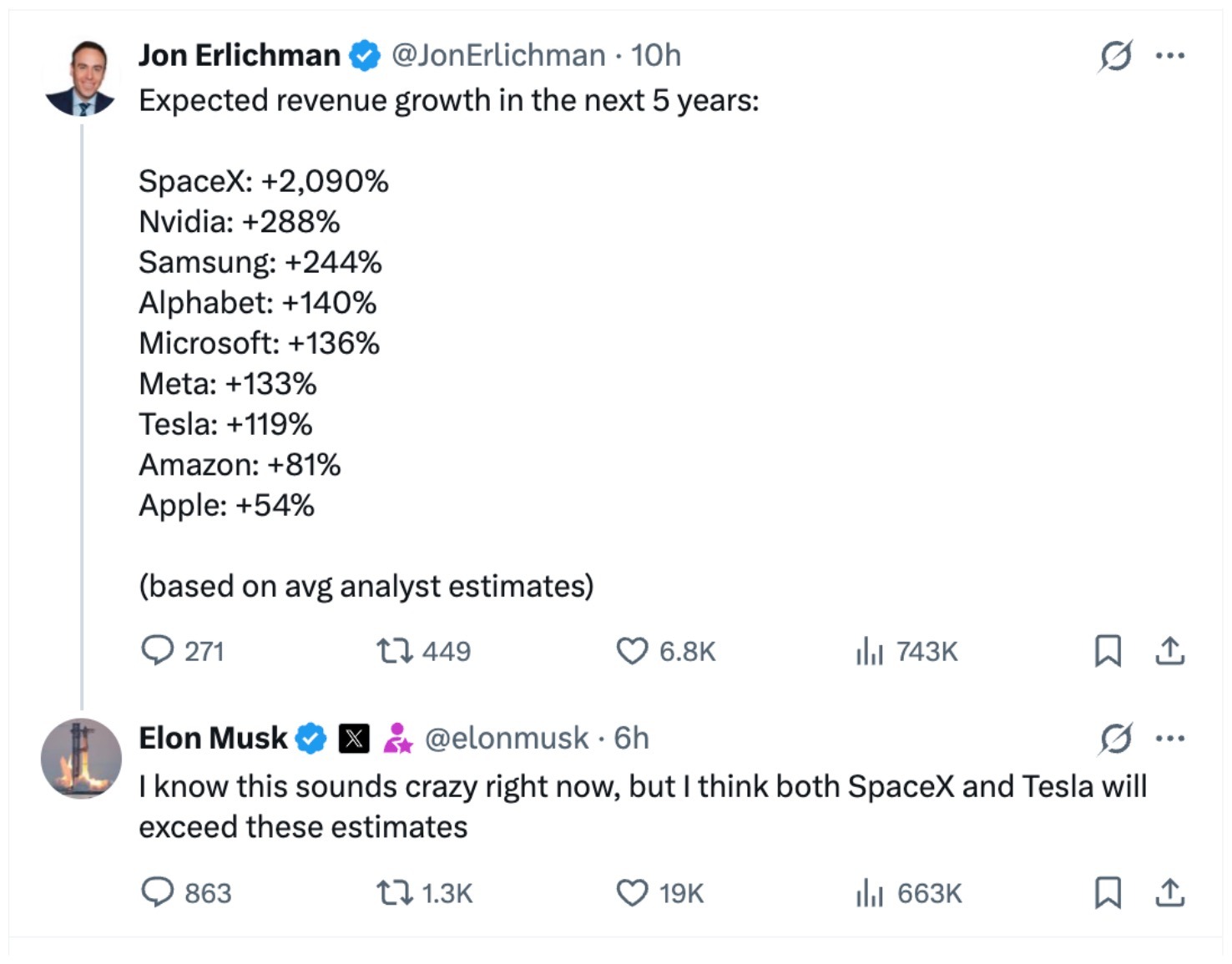
[Source: X]
JPMorgan (JPM) analyst Rajat Gupta maintained a "Neutral" rating on Tesla with a price target of $445, expecting revenue to grow from around $95 billion in 2025 to $203 billion in 2030, with autonomous driving and service businesses contributing nearly half of the incremental growth. This expectation is built precisely on the dual foundation of regulatory breakthroughs and FSD iterations.
Recommended Articles


