




New Fed Chairman Kevin Warsh Wants to Break 2 FOMC Practices From the Last 15 Years, and It Could Be Bad News for Stock Investors
Key Points
Kevin Warsh was sworn in as the Federal Reserve chairman on May 22.
He replaces Jerome Powell, with whom he disagrees on several policies.
Warsh wants to change two Fed policies that could have a notable impact on stock valuations.
- 10 stocks we like better than S&P 500 Index ›
Kevin Warsh plans to shake up the Federal Reserve under his chairmanship. Not only is he coming in with a monetary policy agenda that could depart from his predecessor's efforts, but he also has an opposing view on a couple of other FOMC (Federal Open Market Committee) policies from the past 15 years. And if he gets his way, it could create a lot of volatility in the stock market, especially given that valuations for the S&P 500 (SNPINDEX: ^GSPC) and the Nasdaq Composite (NASDAQINDEX: ^IXIC) are at such high levels.
Warsh wants to change the Fed's communication policies, but doing so could have serious repercussions for financial markets.
Will AI create the world's first trillionaire? Our team just released a report on the one little-known company, called an "Indispensable Monopoly" providing the critical technology Nvidia and Intel both need. Continue »
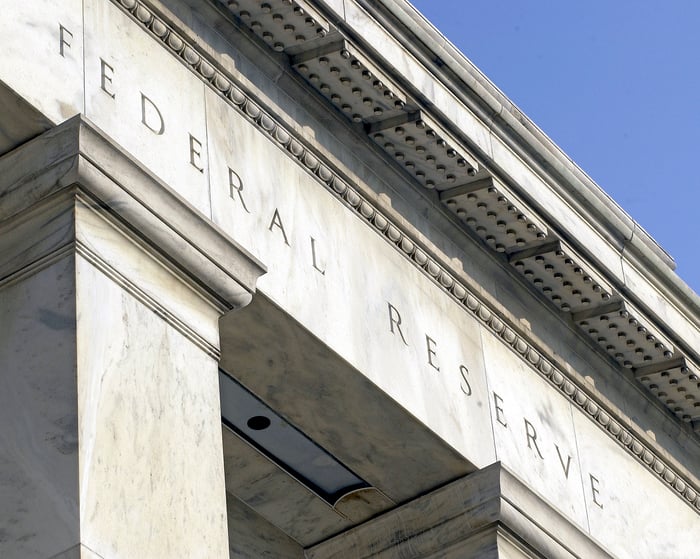
Image source: Federal Reserve.
Breaking the lines of communication
The Federal Reserve Chairman has been hosting press conferences after select FOMC meetings and rate decisions since 2011. Then Chairman Ben Bernanke aimed to provide greater transparency and answer the press's questions. Chairman Powell increased the frequency of those press conferences to provide additional information after every FOMC meeting.
In 2012, Bernanke introduced the dot plot, which is released after every other FOMC meeting. It showed the rate projections of all FOMC members for the end of the current year, the next three years, and the long term. At the time, Bernanke felt it would provide more confidence among investors that the Fed would keep rates low.
Warsh doesn't think either practice is worth maintaining at the Fed.
In his Senate hearing, Warsh didn't completely rule out press conferences. He said, "If one has a press conference, one wants to deliver some important news." In other words, he thinks there's no need to hold a conference after every meeting. He also thinks the dot plot does more harm than good. "I think part of the reason why, after making a mistake in 2021 and 22, the mistake was compounded is the Fed gives its forward guidance," he told the Senate Committee.
Jerome Powell sought to change the Fed's dot plot release last year. At his final press conference as Chairman, he told reporters, "I was never the world's biggest fan of the dot plot, but you can't beat something with nothing."
Fed silence could trigger market uncertainty
And that's what makes Warsh's plans to reduce communication so dangerous for the stock market. Investors have come to rely on the Federal Reserve's predictability to lower their uncertainty about how interest rates will affect equity prices for the foreseeable future. Warsh and other critics say that the relationship could prevent the Fed from acting swiftly enough to fulfill its dual mandate of steady inflation and full employment.
Nonetheless, the implications for stock investors are significant. If Warsh reduces the Fed's communication, stock investors will demand a higher risk premium. That means lower valuations and lower stock prices to account for the increased uncertainty of investing.
At P/E ratios of roughly 22 for the S&P 500 and 26 for the Nasdaq-100, stocks remain expensive relative to their historic valuations in the teens. That means stocks could fall further as valuations compress, and a lack of communication from Warsh's Fed could be a major contributor.
Should you buy stock in S&P 500 Index right now?
Before you buy stock in S&P 500 Index, consider this:
The Motley Fool Stock Advisor analyst team just identified what they believe are the 10 best stocks for investors to buy now… and S&P 500 Index wasn’t one of them. The 10 stocks that made the cut could produce monster returns in the coming years.
Consider when Netflix made this list on December 17, 2004... if you invested $1,000 at the time of our recommendation, you’d have $477,813!* Or when Nvidia made this list on April 15, 2005... if you invested $1,000 at the time of our recommendation, you’d have $1,320,088!*
Now, it’s worth noting Stock Advisor’s total average return is 986% — a market-crushing outperformance compared to 208% for the S&P 500. Don't miss the latest top 10 list, available with Stock Advisor, and join an investing community built by individual investors for individual investors.
See the 10 stocks »
*Stock Advisor returns as of May 26, 2026.
Adam Levy has no position in any of the stocks mentioned. The Motley Fool has no position in any of the stocks mentioned. The Motley Fool has a disclosure policy.
Recommended Articles


