




Gold Deep Analysis: What Signals to Watch for When Gold Stops Rising
TradingKey - Since 2026, gold prices have undergone a sharp correction after hitting an all-time high of nearly $5,600 per ounce, dropping to $4,100 in April before rebounding to above $4,700 in early May. The structural pricing logic for gold is beginning to loosen, and investors are now focusing on which signals will mark the end of gold's long-term upward trend.
Global central banks shift from net purchases to net sales.
Continuous gold purchases by global central banks represent the firmest floor for the structural bull market in gold. Data from the World Gold Council shows that global central bank net gold purchases reached 244 tons in the first quarter of 2026, hitting a high not seen in over a year. Goldman Sachs expects average monthly gold purchases to remain around 60 tons in 2026.
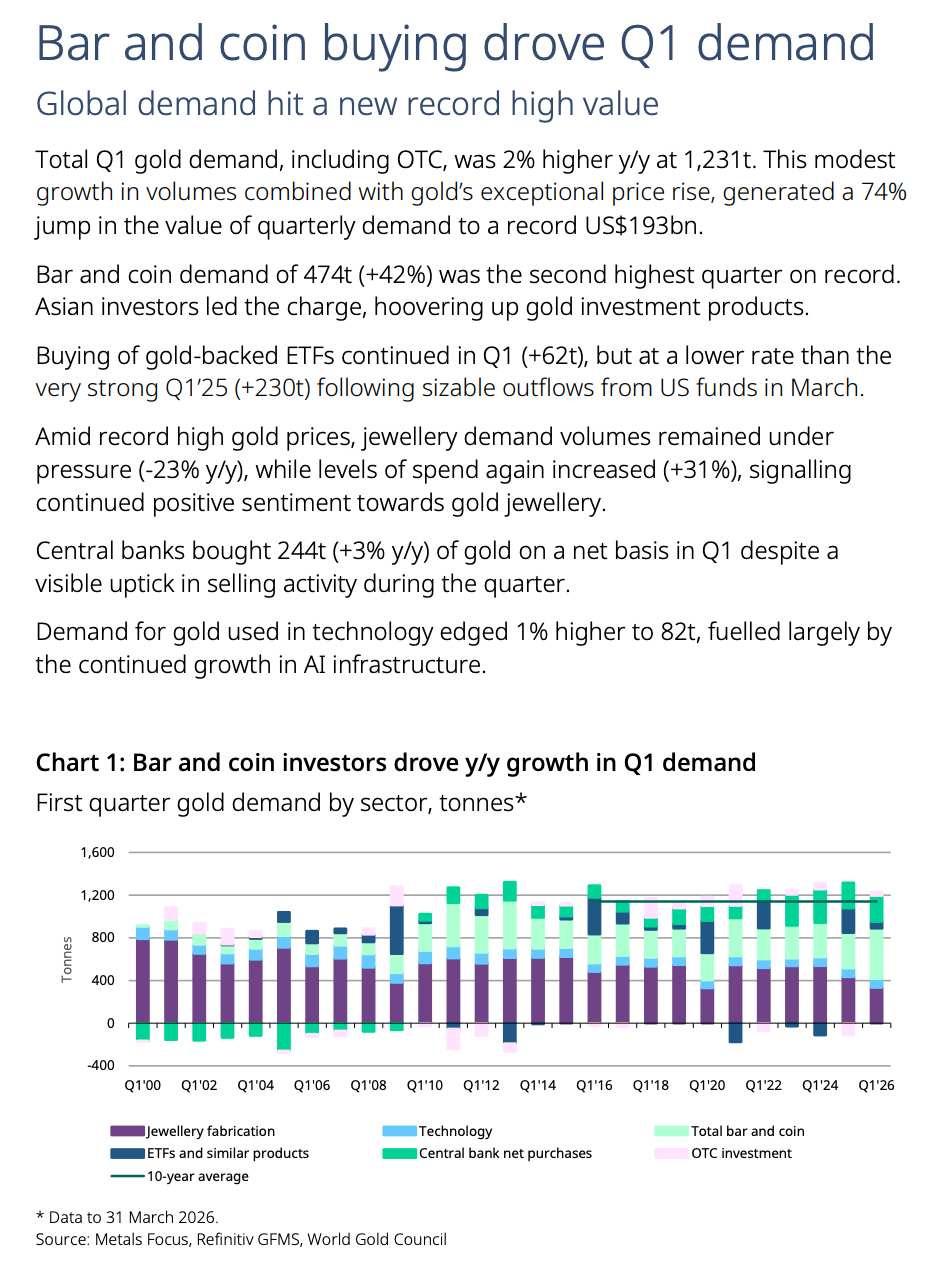
[Global demand reaches a record high; Source: World Gold Council]
However, divergence among central banks has emerged. In March, global central banks made a rare shift toward net selling, offloading 30 tons of gold. Turkey reduced its holdings by 118.4 tons within two weeks—the largest reduction on record—primarily using gold-for-FX swaps to obtain dollar liquidity. Despite subsequent replenishments, its holdings have decreased by over 79 tons since the start of Q1 2026.
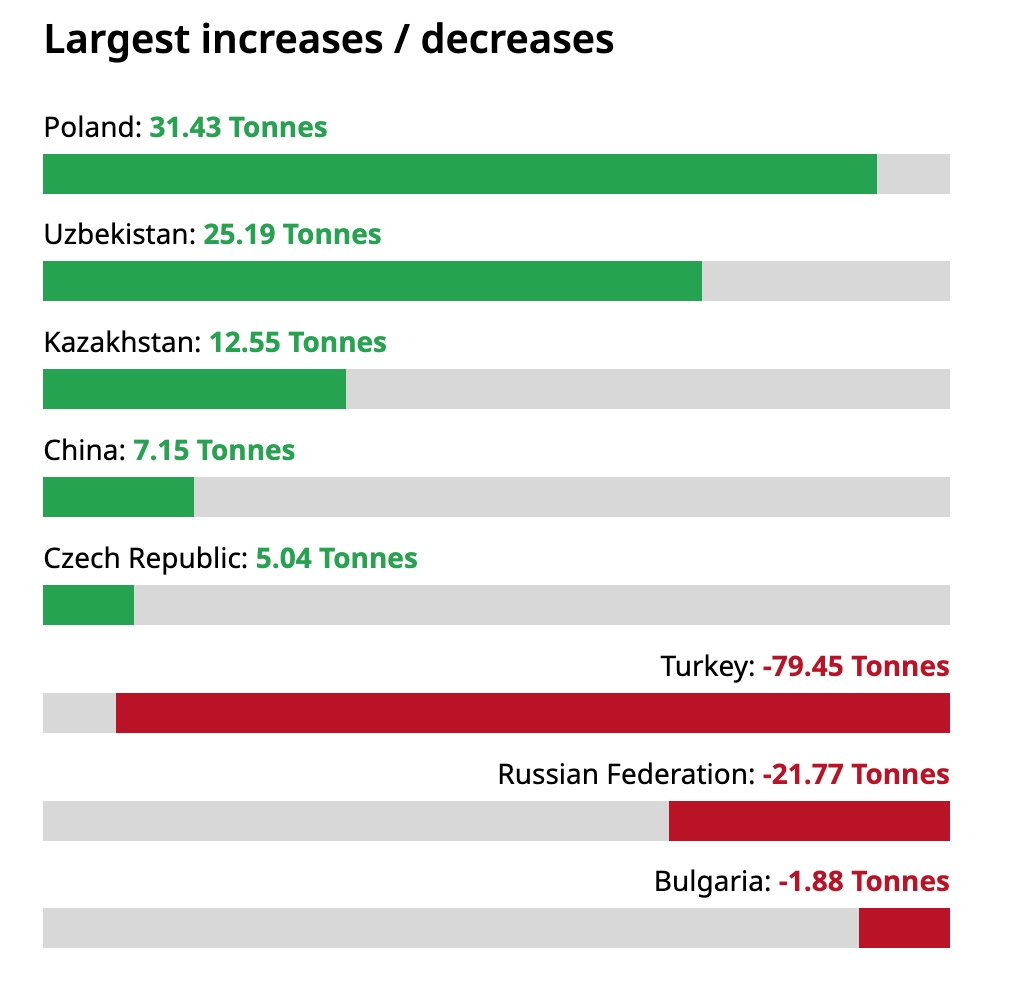
[Global central bank gold net purchases and sales in Q1 2026; Source: World Gold Council]
Russia also reduced its holdings by 21.77 tons during Q1 2026. If more central banks are forced to "monetize" gold due to fiscal pressures or currency crises, and if global central banks record net sales for more than two consecutive quarters, the structural support gold receives from sovereign credit will systematically weaken.
Fed interest rate path shifts from rate cuts to hikes.
Gold pricing is anchored to the Federal Reserve's real interest rates. Morgan Stanley's May report clearly noted that the current core driver for gold has shifted from safe-haven demand to Fed monetary policy and Treasury yield trends.
The surge in oil prices since April has pushed up inflationary stickiness, severely constraining the Fed's room for monetary easing.
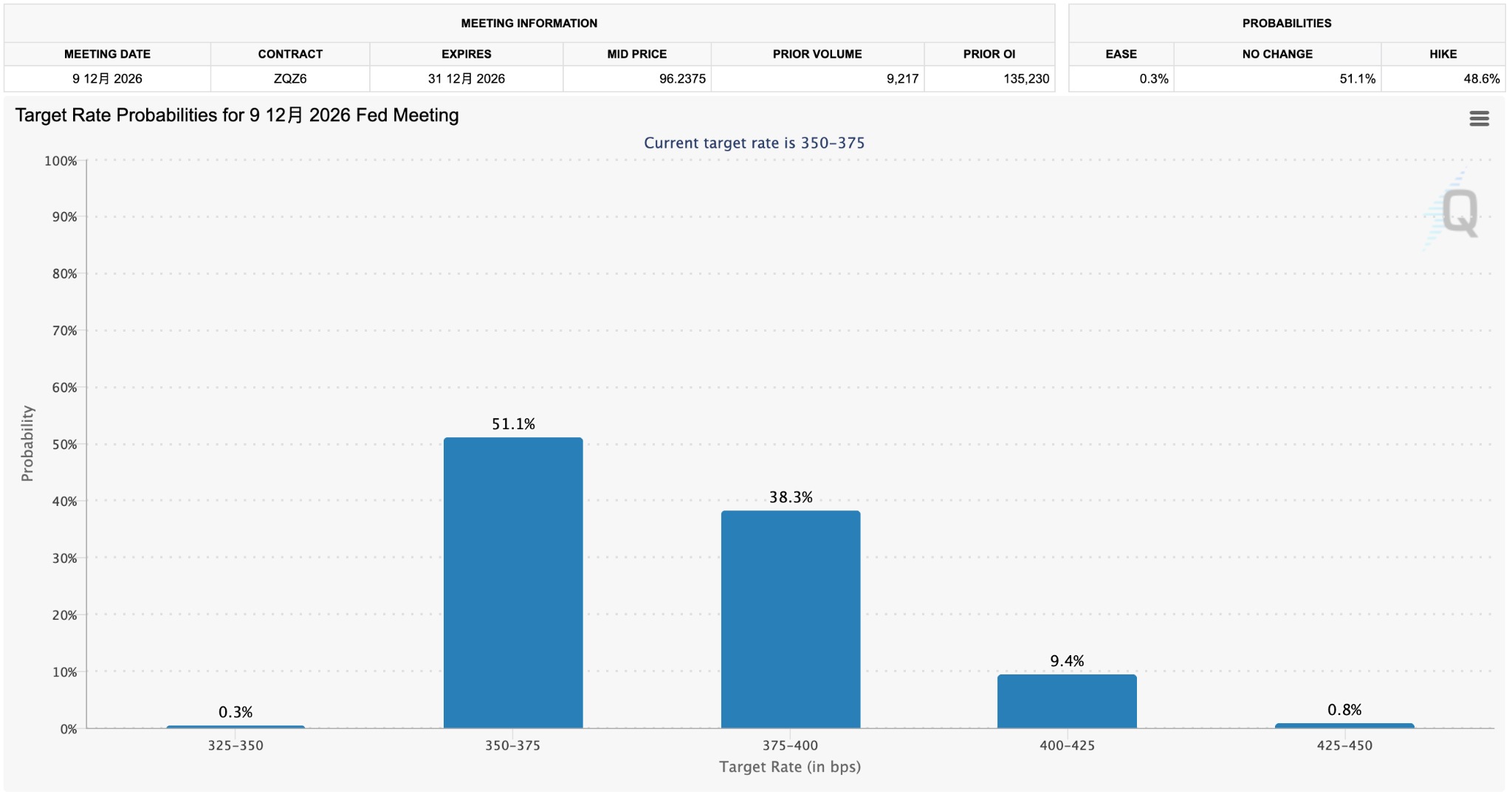
[Market Pricing of Fed Rate Hike Probability Within the Year, Source: CME FedWatch]
CME FedWatch shows that the probability of interest rates remaining unchanged throughout 2026 has risen significantly, with the probability of a rate hike in December 2026 even approaching 50%.
Goldman Sachs' April research report noted that the primary downside risk for gold is accelerating U.S. economic growth combined with a Fed pivot toward rate hikes. Once the interest rate trajectory shifts qualitatively from "delayed cuts" to "resumed hikes," gold will face a structural collapse of its pricing framework.
ETF flows shift from structural inflows to systemic outflows.
Changes in ETF positioning serve as a vital window for observing institutional sentiment. From March to April, SPDR Gold Trust holdings experienced a continuous decline, recording eight consecutive trading days of reductions as of May 1.
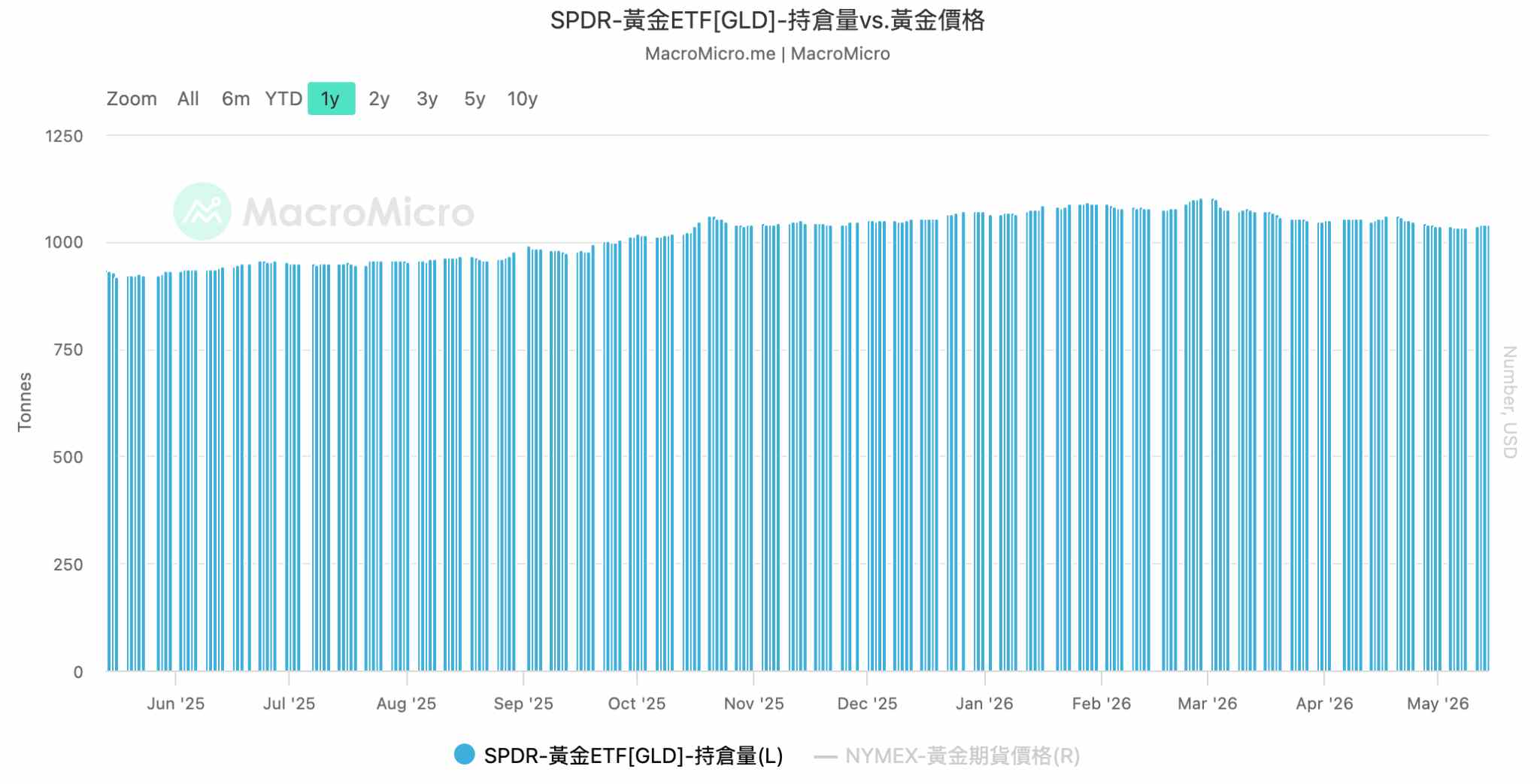
[Gold holdings have pulled back from their peak; Source: Macromicro]
Although SPDR recorded five consecutive trading days of increased holdings from May 7 to May 13, levels have still fallen significantly from their peaks.
Note: SPDR Gold Trust is an exchange-traded fund (ETF) that tracks the performance of international gold prices; it is the world's largest and most liquid gold ETF (Ticker: GLD).
In terms of regional net ETF flows, Asian investors continue to accumulate gold, while investors in Europe and the U.S. have periodically exited amid shifting interest rate expectations. Goldman Sachs maintains that as long as the U.S. fiscal situation does not improve, allocations driven by fears of currency debasement will not cease.
Current Price Range and Institutional Forecasts
Institutions remain generally optimistic about the medium-term outlook for gold. Goldman Sachs maintains its end-2026 gold price target at $5,400, while Morgan Stanley previously lowered its year-end target to $5,200, though this still offers significant upside compared to the spot price at the time of writing.
In February, JPMorgan’s European metals, mining, and steel research team released a report raising its long-term gold price forecast to $4,500 per ounce; the team also expects the London spot gold price to rise to $6,300 per ounce by the end of 2026.
The primary headwinds for gold prices currently stem from a strong dollar and persistently high real interest rates. Gold has shown some resilience in the $4,600 to $4,700 range, but an upside breakout would require a pullback in oil prices to drive a greater-than-expected decline in CPI, alongside a clear dovish pivot signal from the Federal Reserve.
Based on the above analysis, the end of the long-term upward trend in gold would require the following conditions to be confirmed simultaneously:
- Global central banks show consecutive net selling, and the pace of gold purchases by core accumulators such as China and Poland significantly slows or even reverses.
- U.S. core inflation remains stubbornly high, forcing the Federal Reserve to formally initiate a rate hike cycle in 2027.
- Global gold ETFs experience systematic net outflows for several consecutive months.
Against the backdrop of persistent geopolitical uncertainty and the ongoing de-dollarization trend, the peak of gold's rally remains dependent on the interplay of three core variables: global central bank behavior, the Federal Reserve's interest rate path, and institutional fund flows. Given that these three variables have yet to pivot comprehensively, continued gold price volatility will remain the dominant market theme.
Recommended Articles


