




US May Nonfarm Payrolls Far Exceed Expectations. 172,000 Added, Strengthening Fed’s Wait-and-See Stance
TradingKey - On June 5, ET, the latest employment report released by the U.S. Bureau of Labor Statistics showed that U.S. nonfarm payrolls increased by 172,000 in May, significantly higher than market expectations. Economists had generally expected an increase of approximately 85,000; the actual data significantly exceeded expectations, indicating that the U.S. labor market remains resilient.
Meanwhile, the unemployment rate remained at 4.3%, holding steady for the third consecutive month. Although the unemployment rate remains in a relatively high range for recent years, the stronger-than-expected job growth eased market concerns about a rapid cooling of the U.S. economy. Business Insider reported that this job growth was significantly higher than market expectations, suggesting that corporate hiring demand has not deteriorated as quickly as previously feared.
By sector, job growth in May was primarily driven by leisure and hospitality, local government, and healthcare, while employment in financial activities declined. Markets had previously worried that high oil prices, global uncertainty, and rising corporate costs would curb hiring, but this data indicates that the U.S. service sector and public sector continue to support employment.
The report also revised upward the employment figures for the previous two months. Nonfarm payroll gains for March were revised up from 185,000 to 214,000, and April figures were revised from 115,000 to 179,000, a combined upward revision of 93,000. This implies that the U.S. job market not only performed strongly in May but also possessed better momentum than previously reported.
For the Federal Reserve, this nonfarm payroll report reduces the necessity for near-term rate cuts. A stronger-than-expected labor market suggests that high interest rates have not yet significantly impacted hiring demand. Against a backdrop of inflation still above target and ongoing uncertainty in energy prices, the Fed is more likely to maintain a wait-and-see approach rather than rushing to pivot toward easing. Markets believe the robust employment data may prompt the Fed to continue holding rates steady at its upcoming policy meeting.
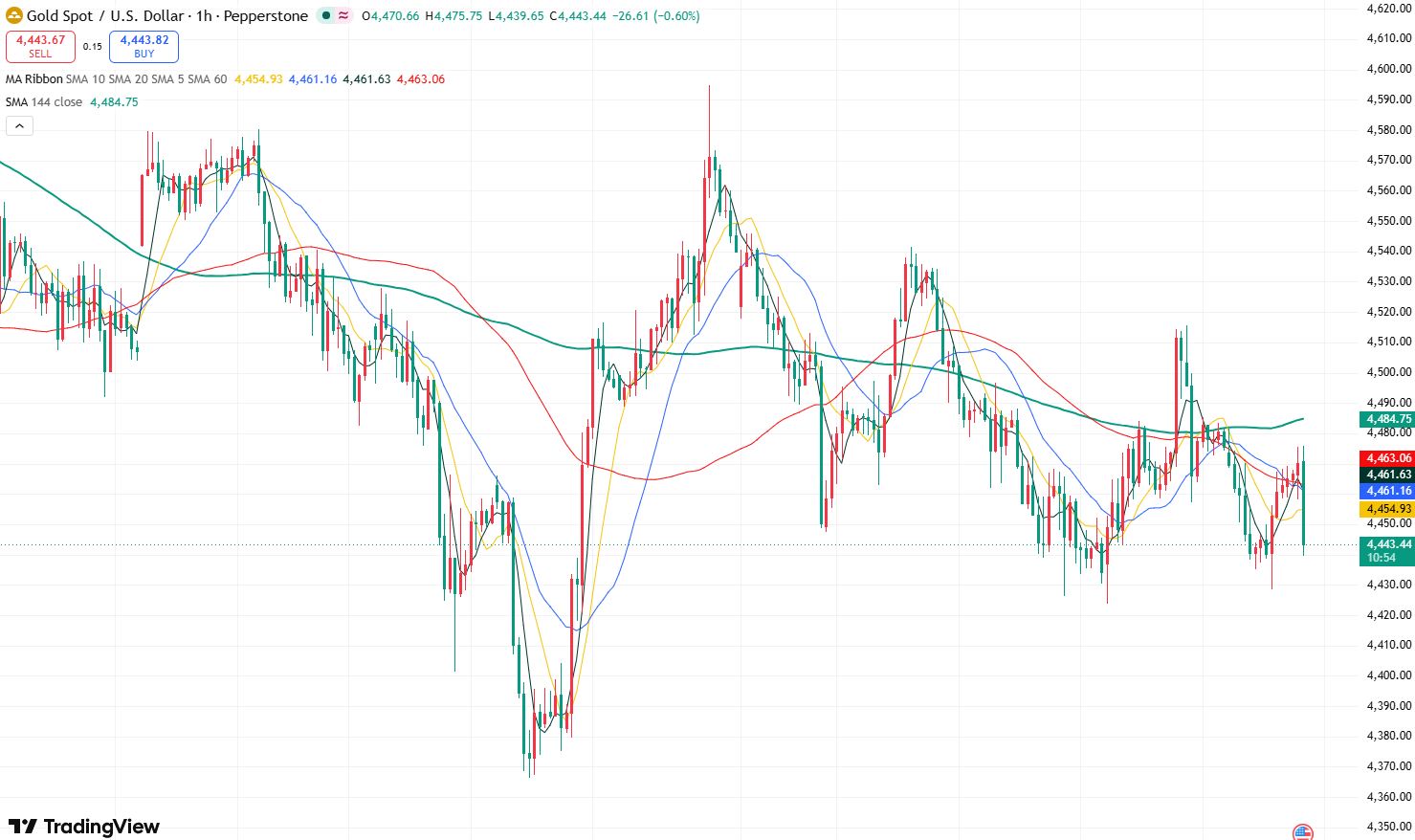
Gold price 1-hour chart, source: TradingView
Following the release, the strong nonfarm payrolls pushed the U.S. Dollar Index up rapidly by nearly 30 points, while weighing on gold ( XAUUSD ), which plummeted nearly $30 in the short term to trade near $4,440. For U.S. stocks, the data eased concerns about a rapid economic downturn, but it also means the high-interest-rate environment may persist longer; tech stocks and high-valuation growth stocks may still face valuation pressure. Near-term market focus will shift to next week's U.S. May CPI data and the Federal Reserve's policy meeting on June 16-17.
Recommended Articles


