




Micro Silver (XAGUSD-M) Is down 2.03% on Jul 1: What You Need to Watch
Micro Silver (XAGUSD-M) is down 2.03% at Jul 1 02:20(ET), now at $57.186, with a 7-day down of 0.30%.
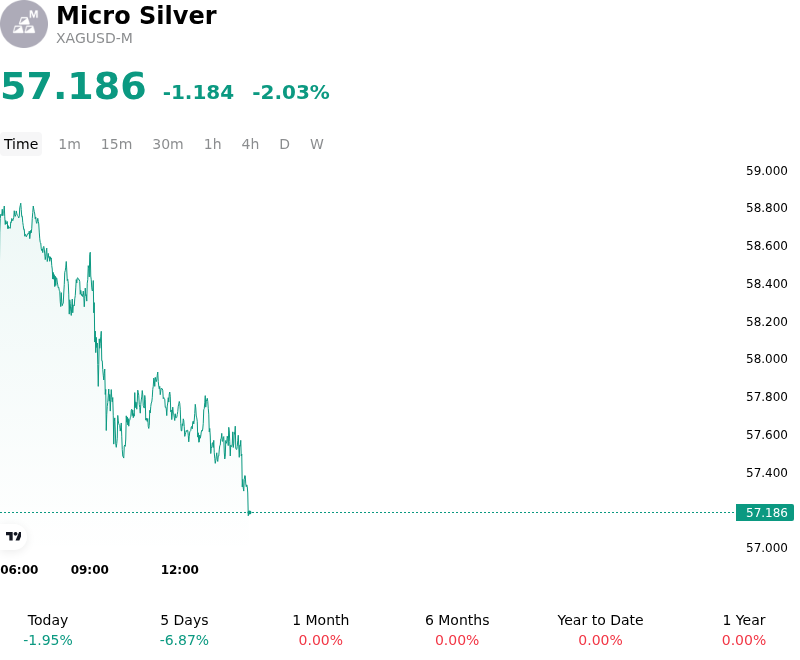
What is driving Micro Silver (XAGUSD-M)’s stock price down today?
Global precious metals markets faced intense downward pressure as spot silver prices dropped toward multi-month lows. This sudden decline was primarily driven by a powerful combination of robust U.S. macroeconomic data and a hawkish shift in monetary policy expectations, which severely dampened investor appetite for non-yielding assets.
On the macroeconomic front, U.S. economic resilience was highlighted by stronger-than-expected labor market indicators, including a notable rise in job openings. This resilient data reinforced market expectations that the Federal Reserve will maintain high interest rates, with investors increasingly pricing in the likelihood of additional rate hikes later in the year. The prospect of sustained or even higher interest rates, coupled with elevated U.S. Treasury yields, significantly increased the opportunity cost of holding silver, prompting speculative liquidation.
This hawkish outlook also fueled a broader appreciation of the U.S. dollar, which surged to its highest levels in over a year. Because international silver is priced in greenbacks, the strengthening currency made the metal more expensive for foreign buyers, further compounding the downward pressure on global prices.
Beyond monetary headwinds, geopolitical developments also acted as a catalyst for the sell-off. Progress in the U.S.-Iran peace talks in Qatar, which fueled hopes for a lasting ceasefire agreement, led to a rapid unwinding of the safe-haven premium that had previously supported precious metals. This reduction in geopolitical risk premiums prompted institutional money managers and retail investors alike to lock in profits, triggering substantial outflows from silver exchange-traded funds and active long-liquidation in the futures market.
From a demand perspective, the industrial outlook for silver showed near-term signs of fatigue, particularly in the photovoltaic sector. Reports of a weak supply-and-demand balance in physical markets and slower short-term purchasing from industrial fabricators weighed on spot physical transactions. Despite these near-term headwinds and the resulting correction, the broader structural backdrop remains characterized by a persistent annual market deficit, as emerging demand from artificial intelligence data centers and the automotive sector continues to support long-term market balance expectations. However, for the current session, the dominant market drivers remained firmly rooted in the stronger dollar, rising yield environment, and fading safe-haven demand.
More details about Micro Silver (XAGUSD-M)
Recent Events and Risks:
- Hawkish Federal Reserve Pivot and Rate-Hike Fears: Following the appointment of Kevin Warsh as Federal Reserve Chair, policy expectations have shifted drastically, with market participants now pricing in a strong probability of a rate hike by year-end. This hawkish outlook has driven real yields and the US Dollar Index higher, creating massive downward gravity and liquidation pressure on non-yielding precious metals like silver.
- De-escalation of Geopolitical Risk Premium: Progress in peace talks and a holding ceasefire agreement between the United States and Iran have significantly eroded safe-haven demand. The removal of this geopolitical risk premium has triggered a rapid unwinding of long speculative positions, leaving silver highly vulnerable to macroeconomic headwinds.
- Industrial Demand Destocking and Substitution Trends: Unusually high prices at the start of the year have severely damaged silver's physical demand, prompting major industrial consumers to seek alternatives. In particular, solar panel manufacturers—facing intense margin pressure and overcapacity—are actively accelerating efforts to thrift or adopt silver-free metallization technologies, eroding long-term demand support from the photovoltaic sector.
- Weakening Physical and Retail Market Support: High prices have also dampened physical retail demand, leading to a 19% drop in solar industry utilization, a 16% decline in jewelry fabrication, and a 20% drop in silverware demand. Lacking structural "dip buying" support from central banks—unlike gold—silver's dependency on speculative capital flows has exacerbated its downward volatility, driving the gold-to-silver ratio sharply higher.
Recommended Articles


