




Palladium (XPDUSD) Is down 2.15% on Jun 24: What You Need to Watch
Palladium (XPDUSD) is down 2.15% at Jun 24 07:15(ET), now at $1201.41, with a 7-day down of 8.64%.
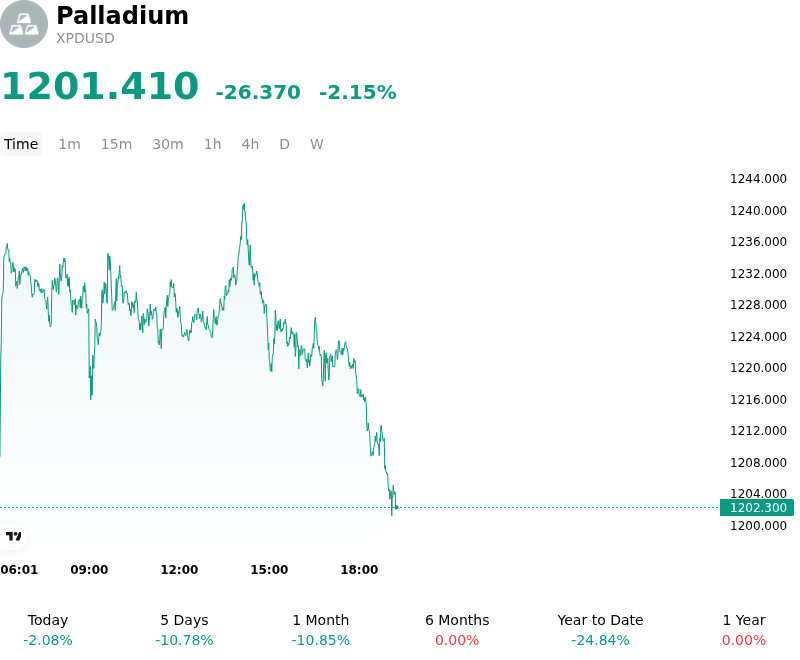
What is driving Palladium (XPDUSD)’s stock price down today?
The recent downward pressure on palladium is heavily driven by a combination of a hawkish macroeconomic outlook and a stronger US dollar. Following the Federal Reserve's recent policy updates, where officials signaled a more aggressive higher-for-longer stance on interest rates, Treasury yields and the US Dollar Index have marched higher. This tighter monetary environment has triggered broad-based liquidation across both precious and industrial metals. Because palladium is priced in dollars and does not bear yield, it has faced aggressive institutional selling as capital rotates toward higher-yielding assets.
Supply-side updates have further compounded the bearish sentiment. Norilsk Nickel, the world's largest palladium producer, released its market review projecting a global palladium surplus of three hundred thousand ounces in 2026 and two hundred thousand ounces in 2027, excluding investment and stock movements. Even though primary mining production in Russia and North America is expected to remain constrained due to lower grades and producer caution, the forecast of oversupply has deeply dented the market balance outlook. The confirmation of a persistent physical surplus, coupled with rising secondary recycling rates, has capped technical recovery attempts and forced market participants to reprice the metal's near-term value downward.
On the demand side, palladium continues to struggle with structural and cyclical headwinds in its primary consuming sector. High global borrowing costs continue to choke vehicle production and weigh on manufacturing sentiment. More structurally, the rapid and ongoing global transition toward battery electric vehicles, particularly in critical auto markets like China, represents an existential threat to long-term demand. As electric vehicles displace traditional internal combustion engines, they bypass the need for palladium-heavy catalytic converters, leading to continuous downgrades in industrial demand forecasts.
Additionally, the easing of geopolitical tensions has stripped the metal of its risk premium. Progress toward diplomatic stability in the Middle East, including a potential roadmap for secure shipping and energy flows through the Strait of Hormuz, has significantly reduced supply chain anxiety. As safe-haven demand subsides and energy markets stabilize, speculative capital has exited precious metals complexes. This convergence of a growing supply surplus, high interest rates, weakening industrial auto demand, and evaporating geopolitical premiums has left palladium technically and fundamentally vulnerable, driving the recent downward price action.
Technical Analysis of Palladium (XPDUSD)
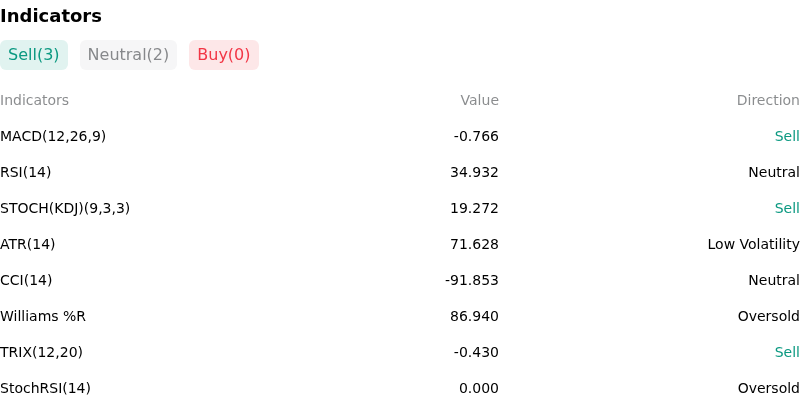
Technically, Palladium (XPDUSD) shows a MACD (12,26,9) value of -0.766, indicating a sell signal. The RSI at 34.932 suggests neutral condition and the Williams %R at 86.940 suggests oversold condition. Please monitor closely.
More details about Palladium (XPDUSD)
Recent Events and Risks:
- Projected Global Supply Surplus: On June 23, 2026, Norilsk Nickel, the world’s largest palladium producer, published its market review projecting a global palladium surplus of 300,000 ounces in 2026 and 200,000 ounces in 2027 (excluding investment and stock movements). This official oversupply forecast has intensified structural selling pressure and capped intraday recovery attempts for spot prices.
- Deteriorating Automotive and Industrial Demand: Spot palladium faces severe near-term headwinds as high global borrowing costs continue to suppress vehicle manufacturing and industrial activity. This cyclical slowdown is compounded by the structural transition toward battery electric vehicles (BEVs) that completely bypass palladium-intensive gasoline catalytic converters, prompting institutional strategists to downgrade long-term baseline demand.
- Monetary Tightening and U.S. Dollar Strength: A hawkish surprise from the Federal Reserve's June 2026 policy guidance, which signaled a higher-for-longer interest rate path, has bolstered the U.S. Dollar Index (DXY) and pushed bond yields higher. This restrictive monetary outlook has triggered broad-based liquidations in non-yielding assets, dragging XPDUSD down from its mid-June peaks to test key support levels below $1,230.
- Unwinding of Geopolitical Risk Premiums: Recent diplomatic progress concerning Middle East maritime trade routes and potential de-escalation agreements around the Strait of Hormuz have significantly defused supply chain and logistics concerns. The easing of these geopolitical tensions has prompted a rapid unwind of safe-haven premiums, driving speculative capital outflows from the precious metals complex.
Recommended Articles


