


BOJ Rate Decision Highlights: Return to 1% Rate Era, Bond-Buying Taper to Pause From Next April
TradingKey - On June 16, Tokyo time, the Bank of Japan concluded its two-day monetary policy meeting and announced a 25-basis-point rate hike, raising its policy interest rate from 0.75% to 1.00%. This marks the first time since 1995 that Japan's interest rate has reached the 1% level, and is also the bank's first rate hike since December 2025, in line with prior widespread market expectations.
Interest rate decision and bond purchase arrangements both finalized.
The Policy Board approved the interest rate decision by a 7-to-1 vote, with Board Member Toichiro Asada casting the dissenting vote. The plan to "suspend the reduction of JGB purchases from April 2027 and maintain the monthly Japanese government bond purchase volume at approximately 2 trillion yen" was also approved by a 7-to-1 vote, as Board Member Naoki Tamura's proposal to continue reducing bond purchases by 200 billion yen per quarter was not adopted.
In its statement, the central bank explained the main considerations for the interest rate hike. The pass-through effect of rising oil prices is spreading at a relatively fast pace, which could trigger upward price pressure across a wide range of commodities. Excluding temporary factors, there is a risk that the year-on-year growth rate of the Consumer Price Index could be "significantly above 2%." Based on this, the central bank judged that there is sufficient justification to adjust the degree of monetary easing.
The statement also pointed out that the Japanese economy continues its moderate recovery trend, and the risk of a significant slowdown has decreased compared to before. Although some areas still show signs of weakness and future economic growth may decelerate, it is expected to maintain a moderate expansion.
Regarding the pace of tapering bond purchases, the current arrangement of reducing purchases by approximately 200 billion yen per quarter will be maintained prior to the January-to-March period of 2027. Tapering will be suspended starting in April, anchoring the monthly bond purchase volume at approximately 2 trillion yen.
The central bank also decided to terminate the periodic mid-term review of the plan, but pledged to respond flexibly by increasing bond purchases or conducting fixed-rate operations if long-term interest rates rise sharply, while reserving the right to modify the bond purchase plan at future meetings.
Following the announcement of the decision, the yen rose slightly against the dollar in the short term, the Nikkei 225 Index turned positive and surpassed the 70,000-point mark for the first time in history, and government bond yields also rose.
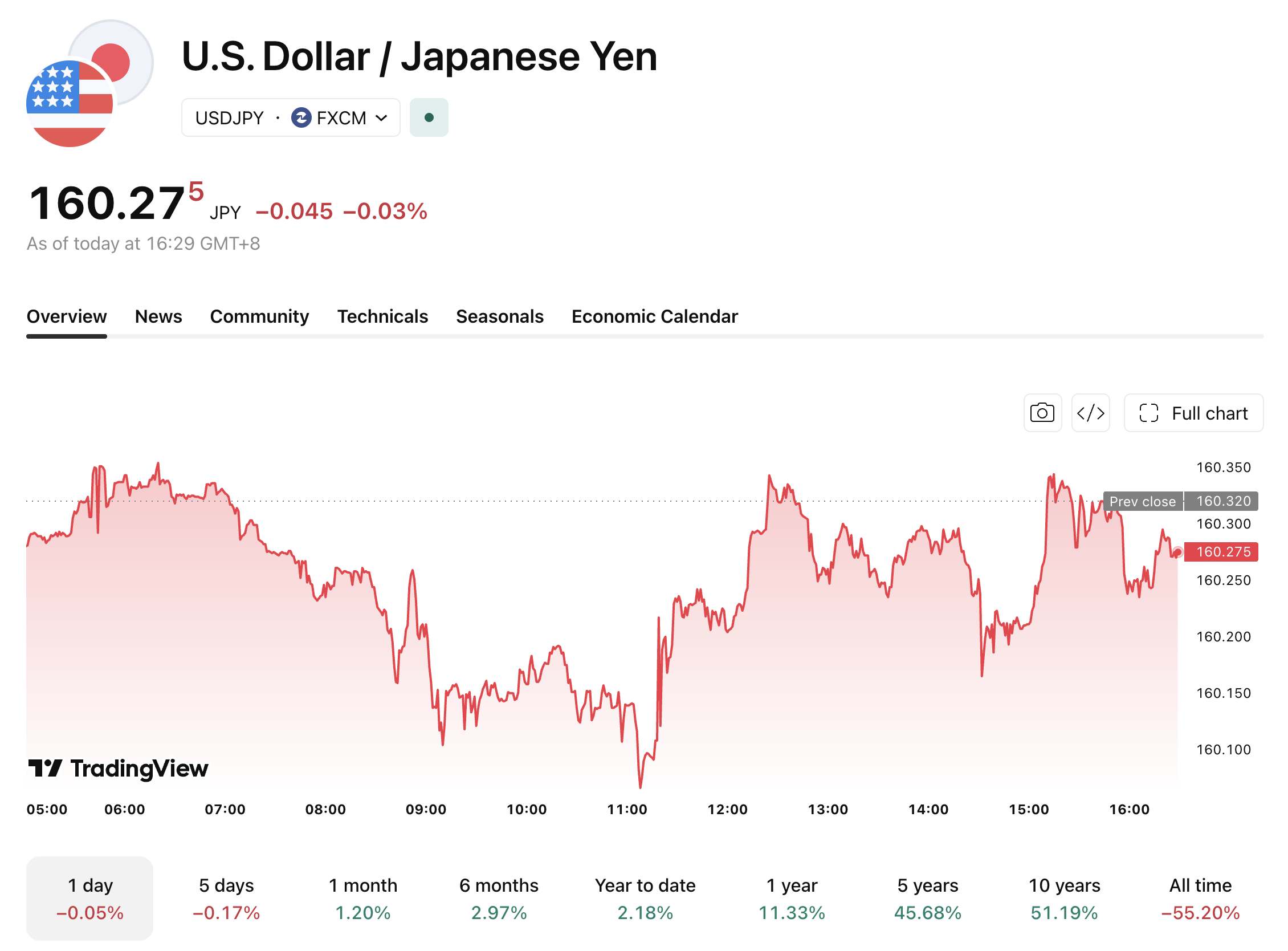
[Source: TradingView]
Potential inflation risks influence the pace of rate hikes
At the post-meeting press conference chaired by Deputy Governor Shinichi Uchida, the central bank further elaborated on its policy considerations. Uchida stated that the decision to raise interest rates is consistent with the direction of the government's economic policy. The timing was chosen partly because downside risks to the economy have significantly diminished, and partly out of concern that if policy adjustments continue to lag, the bank might be forced to implement more aggressive rate hikes in the future. He emphasized that there is no inherent contradiction between this rate hike and the bond-purchasing plans, adding that no proposal for a 50-basis-point rate hike was received during the meeting.
Regarding price trends, Uchida pointed out that underlying inflation faces upside risks of deviating from the target, and the transmission mechanism between wages and prices has strengthened. Stabilizing core inflation at the 2% level is of critical importance to the central bank. The overall trajectory of the economy and prices is largely in line with the central bank's baseline projections.
On the path of interest rates, Uchida explicitly stated that financial conditions will remain accommodative, and the central bank will continue to gradually advance rate normalization based on developments in economic activity, prices, and financial conditions. At the same time, he noted that estimates of the neutral interest rate are too widely dispersed to provide effective guidance for actual policy operations.
Middle East tensions ease; governor's absence does not hinder policy operations.
Uchida assessed that the risk of a major economic recession triggered by the Middle East conflict is gradually receding. He noted that the central bank will carefully consider the pace of subsequent rate hikes based on a continuous assessment of the dual impact of geopolitical factors on the economy and prices. Should government bond yields spike, the central bank will decisively respond with flexible bond operations.
Uchida also stated that there is currently no intention to adjust the pace of ETF purchases or divestments. He added that the annual government bond purchase scale of 2 trillion yen is sufficient to support the gradual optimization of the balance sheet, though the future pace of purchases may vary depending on whether market institutions can smoothly take over the central bank's role.
Regarding the exchange rate, Uchida emphasized that monetary policy does not directly target controlling exchange rates. However, he noted that the impact of currency fluctuations on underlying inflation has become more pronounced than in the past, and this is fully discussed at every policy meeting.
Addressing Governor Kazuo Ueda's absence due to illness, Uchida explained that Ueda's overall policy thinking remains consistent with his previous statements, and that this short-term hospitalization will not disrupt the normal implementation of monetary policy. Market analysts generally expect that, against the backdrop of a weak yen continuing to drive up import costs, the Bank of Japan may implement two more rate hikes this year.
Recommended Articles


