


SpaceX Goes Public at $135 a Share. Is It a Buy at That Price?
Key Points
Only about 5% of SpaceX's total value will be made available to investors in its IPO.
More than 20% of the available IPO shares are slated specifically for retail investors.
SpaceX's stock will trade at 92 times its trailing 12-month sales at IPO.
- 10 stocks we like better than Space Exploration Technologies ›
SpaceX (NASDAQ: SPCX) stock is set to launch on Friday at $135 per share in what's almost certainly going to be the biggest initial public offering ever. The stock is being heavily marketed through the company's roadshow and its IPO partners, including the underwriting investment banks and several online trading platforms.
If everything goes as planned, many SpaceX employees might become millionaires overnight, and Elon Musk could become the world's first trillionaire. But what about retail investors? At $135 a pop, is this a stock to consider?
Will AI create the world's first trillionaire? Our team just released a report on the one little-known company, called an "Indispensable Monopoly" providing the critical technology Nvidia and Intel both need. Continue »
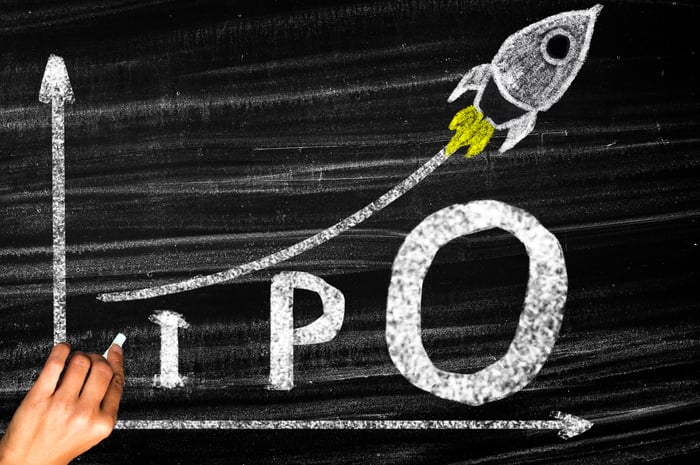
Image source: Getty Images.
Why is SpaceX's IPO price so high?
SpaceX is aiming for a valuation near $2 trillion, and to meet that threshold, it wants to raise $75 billion. That's in addition to what the company is already worth privately. To make that happen, the company is issuing 555,555,555 shares to the public at $135 apiece.
How does it actually work? The company is already highly valued as a private entity. The part going to the public via the IPO represents only about 5% of the company's ownership, and the low supply is likely to drive high demand, which is why investors are willing to pay the high price.
Typically, a company conducts an IPO roadshow to gauge what institutional investors think the stock would be worth on the open market. Management is doing its roadshow to build hype and boost demand, but it determined the $135 sell price early on.
As for the stock already owned by insiders, there are various lockup periods before they can sell. That helps create stability, since people who own shares that were originally worth something like $2 per share might be tempted to sell at the current price, which could flood the market and create an oversupply. According to the Wall Street Journal, pre-IPO SpaceX shares have gained 2,000% over the past few years.
Is this a great opportunity for retail investors?
SpaceX has the retail investor in mind for the IPO, and it has earmarked more than 20% of the shares for retail investors, according to reports. Typical IPOs earmark 5% to 7% of shares directly to retail investors. Five years ago, Musk tweeted about it on what was then Twitter and is now his privately owned X social media app: "Will make sure they get top priority. You can hold me to it," he wrote.
But is this arrangement favorable for retail investors? At $135 per share, using the company's 12-month trailing revenue figures, shares will trade at 92 times sales. That's a hefty premium for a company demonstrating 15% year-over-year revenue growth and a $4.3 billion loss in the 2026 first quarter. IPOs alone add to a company's expenses, including stock-based compensation, and could keep it in the red a bit longer.
Image source: Getty Images.
The average S&P 500 (SNPINDEX: ^GSPC) price-to-sales ratio is 3.7 right now, and even the Nasdaq-100, which is expected to have a higher average because the index is full of high-growth tech stocks, has an average price-to-sales ratio of 6.7.
Alas, it doesn't look like SpaceX stock is a good buy for retail investors at $135, considering its current financials. However, it's more about the valuation than the price tag. If sales increase, the company becomes profitable, and the valuation metrics become more reasonable, $135 might be a good price in the future.
If you're interested in buying SpaceX stock sooner, you might want to wait a few weeks and see if the price has come down. If you resist a bit longer, IPO prices generally come down even more as lockup periods end and more stock is sold by insiders.
Should you buy stock in Space Exploration Technologies right now?
Before you buy stock in Space Exploration Technologies, consider this:
The Motley Fool Stock Advisor analyst team just identified what they believe are the 10 best stocks for investors to buy now… and Space Exploration Technologies wasn’t one of them. The 10 stocks that made the cut could produce monster returns in the coming years.
Consider when Netflix made this list on December 17, 2004... if you invested $1,000 at the time of our recommendation, you’d have $439,038!* Or when Nvidia made this list on April 15, 2005... if you invested $1,000 at the time of our recommendation, you’d have $1,277,804!*
Now, it’s worth noting Stock Advisor’s total average return is 942% — a market-crushing outperformance compared to 206% for the S&P 500. Don't miss the latest top 10 list, available with Stock Advisor, and join an investing community built by individual investors for individual investors.
See the 10 stocks »
*Stock Advisor returns as of June 11, 2026.
Jennifer Saibil has no position in any of the stocks mentioned. The Motley Fool has no position in any of the stocks mentioned. The Motley Fool has a disclosure policy.
Recommended Articles


