


Japanese Yen recovers against US Dollar as oil prices correct sharply
- Japanese Yen bounces back against the US Dollar as oil prices correct sharply.
- Iran says that the Hormuz could reopen within seven days if the US takes initiative to ease military pressure.
- The BoJ is expected to deliver more interest rate hikes this year.
The Japanese Yen (JPY) claws back its early losses and turns slightly positive against the US Dollar (USD) during the European trading session on Thursday, with the USD/JPY pair dropping 0.2% to near 157.00.
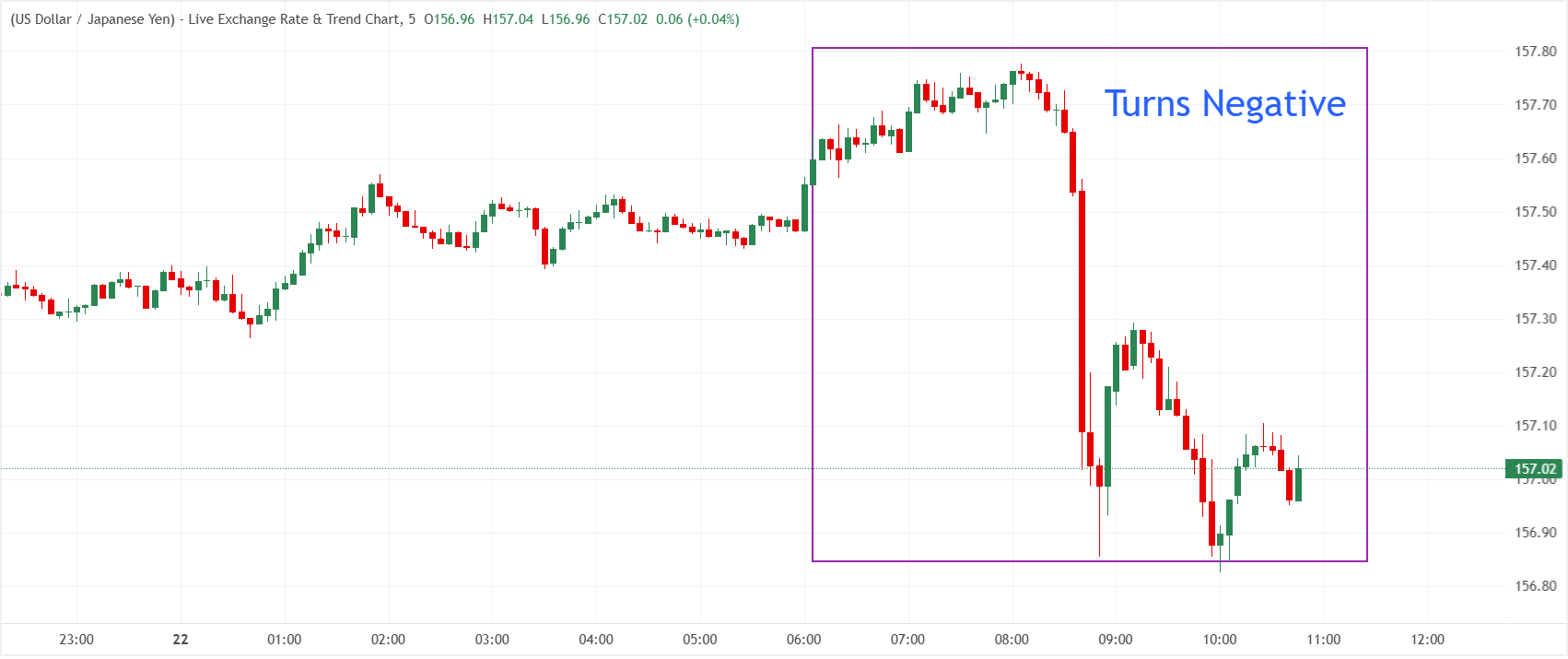
The Japanese currency bounces back as oil prices correct sharply on hopes of diplomacy between the United States (US) and Iran. During the day, a senior Iranian Official said, “Iran's proposal was delivered to the US via mediators on September 16, Kyodo News. The proposal says that Iran could reopen the Strait of Hormuz, a critical chokepoint to almost 20% of global energy supply, within seven days if the United States (US) takes initial steps toward easing military pressure.
Additionally, the hopes of an improvement in the energy supply through the Middle East have also weakened oil prices. Saudi Arabia is preparing to resume crude oil exports from the Red Sea port of Yanbu as early as Tuesday, and will also restart the East-West oil pipeline.
Lower oil prices bode well for currencies from economies, such as Japan, which rely heavily on oil imports to meet their energy needs.
On the monetary policy front, the Bank of Japan (BoJ) is expected to deliver more interest rate hikes this year. The Japanese central bank has already raised policy rates twice this year.
Analysts at MUFG argue that the BoJ’s latest policy move marks the start of a “new phase” for monetary policy, one they see as “consistent with a rate hike every three months.” They note that this more regular tightening rhythm is emerging even as external factors such as higher US yields and elevated energy prices continue to exert downward pressure on the Yen.
Meanwhile, the sharp fall in oil prices has weighed on the US Dollar, diminishing its safe-haven appeal. The US Dollar Index (DXY), which gauges the Greenback’s value against six major currencies, retreats from the 52-day high of 100.67 posted earlier in the day.
USD/JPY Technical Analysis
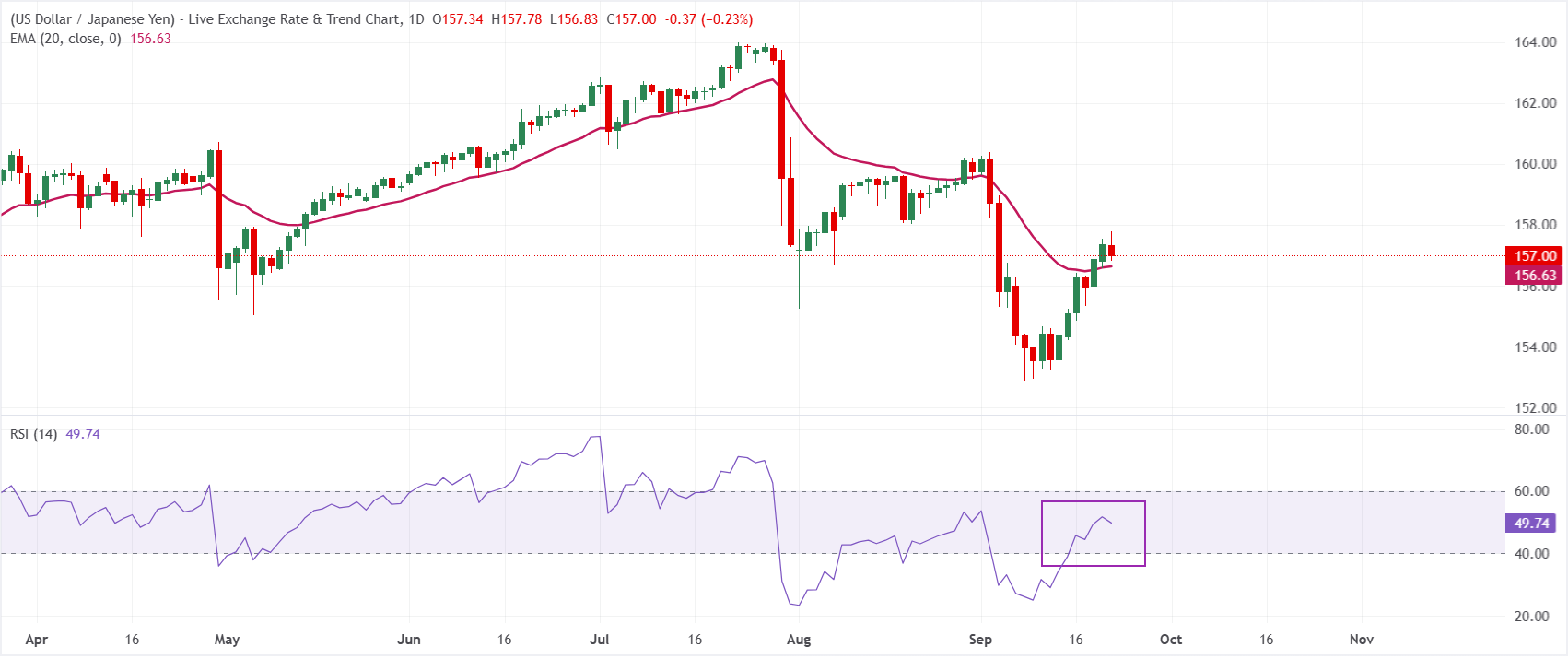
In the daily chart, USD/JPY trades at 156.96. The pair holds above the 20-period exponential moving average (EMA) at 156.63, suggesting a tentative bullish near-term bias as price stabilizes after the recent slide from the 160.00 region. The Relative Strength Index (RSI) at 49.57 sits near the neutral line, hinting at balanced momentum and leaving room for either an extension higher or further consolidation around current levels.
On the downside, immediate support is seen at the 20-day EMA at 156.63, with the current session’s low near 156.96 acting as a pivot zone for intraday participants. A sustained bounce from this area would keep the constructive tone in place, while a decisive break below the EMA would expose deeper retracement toward prior lows on the chart.
(The technical analysis of this story was written with the help of an AI tool. Know more.)
Economic Indicator
BoJ Interest Rate Decision
The Bank of Japan (BoJ) announces its interest rate decision after each of the Bank’s eight scheduled annual meetings. Generally, if the BoJ is hawkish about the inflationary outlook of the economy and raises interest rates it is bullish for the Japanese Yen (JPY). Likewise, if the BoJ has a dovish view on the Japanese economy and keeps interest rates unchanged, or cuts them, it is usually bearish for JPY.
Read more.Last release: Fri Sep 18, 2026 02:54
Frequency: Irregular
Actual: 1.25%
Consensus: 1.25%
Previous: 1%
Source: Bank of Japan
Artigos Recomendados


