


US Midterm Vote Count Triggers V-Shaped Turnaround in Japan, South Korea Stocks; Kospi Closes Up 0.6%, Nikkei Barely Holds 62,000 Mark, SK Hynix Flat
TradingKey - US midterm election vote counting sparks V-shaped reversal! South Korea's KOSPI surges against the trend, Nikkei rallies to recoup part of its losses, while SK Hynix, Samsung, and SoftBank narrow their declines.
During the Asian trading session on November 4, as vote-counting data from the US midterm elections unfolded and the Democratic Party showed strength in early Congressional results, political dynamics and foreign capital flows triggered intense volatility in Japanese and South Korean stock markets throughout the day, paving the way for a strong afternoon post-election stabilization and valuation recovery.
Both Japanese and South Korean stock markets staged V-shaped reversals on the day, with South Korea's KOSPI index mounting a strong rebound that fully erased its morning losses. The KOSPI closed up 0.62% at 5,683.67 points; Samsung Electronics narrowed its loss to 1.25%, closing at 217,000 won; SK Hynix nearly erased its morning fall, down just 0.36% to close at 1,393,000 won.
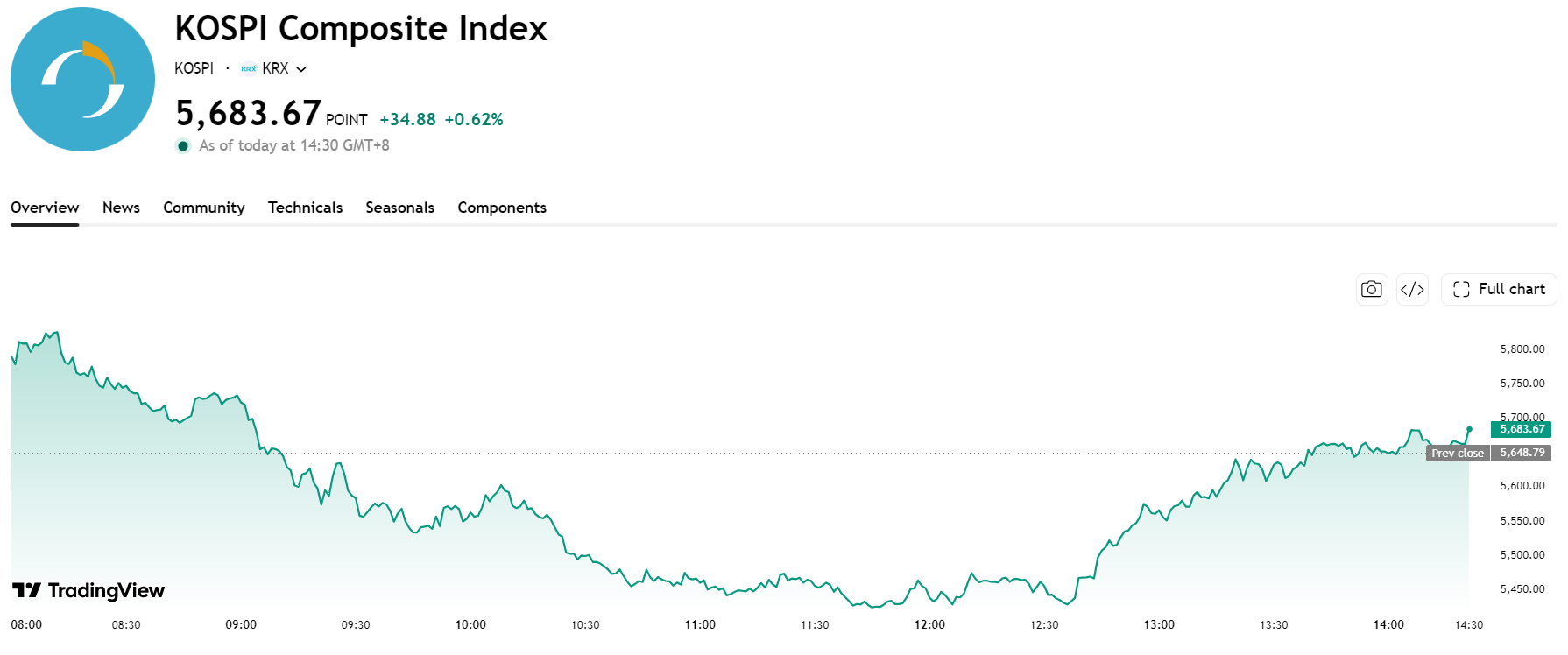 KOSPI index chart, Source: TradingView
After the opening bell, the Nikkei 225 Index dropped rapidly under selling pressure in semiconductor equipment, heavy industry, and defense stocks, plunging as much as 4.7% to 60,030.10 points in early afternoon trading. Toward the close, buoyed by a rebound in US stock futures and bargain hunting by Japanese domestic investors, the index narrowed its loss to 1.42%, closing at 62,188.41 points. Kioxia fell 5.38% but held the 10,000 yen level, closing at 10,735 yen; SoftBank closed down 3.2% at 4,269 yen.
As vote counting continues on the US West Coast and for mail-in ballots, if the seat distribution in Congress becomes clear and political uncertainty is fully eliminated, the short-term panic selling in Asian stocks will come to an end. Today's bottom V-shaped reversal in South Korean stocks demonstrates strong support from local capital, but whether the Japanese and South Korean markets can truly resume their upward momentum hinges on whether US semiconductor and AI sectors can rebound later today, and whether the pace of foreign net selling slows down.
Recommended Articles


