


Tesla and SpaceX Drop Over 4% in Overnight Trading: How Will Democratic Control of Congress Affect Musk's Companies?
TradingKey - The results of the 2026 U.S. midterm elections have shifted the balance of power in Congress. With Democrats winning control of both the House of Representatives and the Senate, the Trump administration's policy scope over the next two years will face greater constraints. The new Congress will take office in January 2027, and Musk's companies may face stricter scrutiny.
During the overnight trading session on November 4 ET, shares of Tesla (TSLA) and SpaceX (SPCX) both fell over 4% at one point, reflecting market concerns regarding future investigations, regulatory policies, and changes in government contracts. As of press time, Tesla was trading at $381.76, down 4.14%, while SpaceX was trading at $136.42, down 3.46%.
The impact of the election on Musk's businesses focuses primarily on three aspects: Tesla's autonomous driving business, SpaceX's government contracts, and the merger plans under discussion between the two companies.
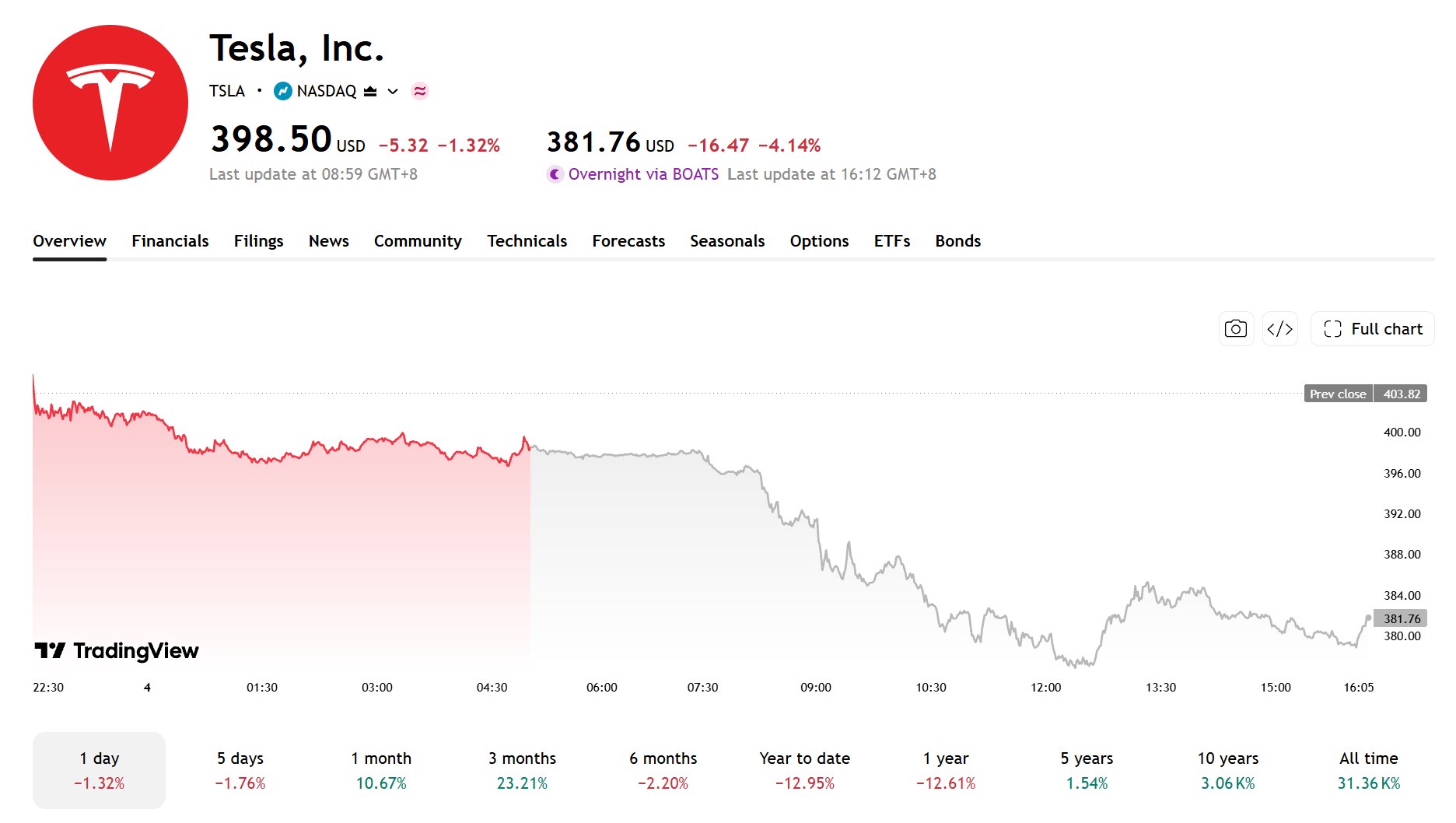
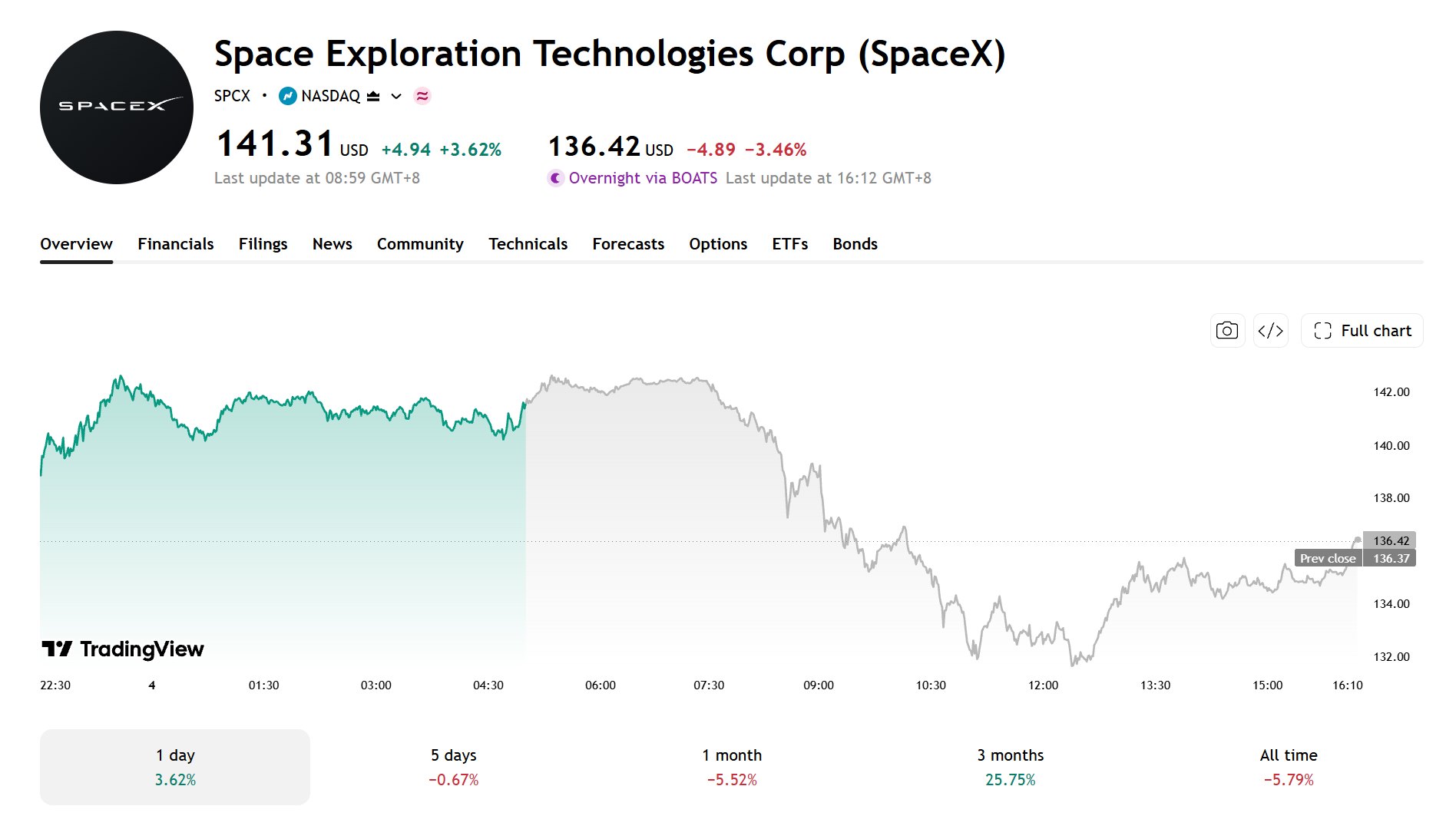
[Source: TradingView]
Musk's Companies Face More Scrutiny as Democrats Take Control of Congress
After the results of the US midterm elections were announced, Musk posted on the social platform X: "Guess my election-interfering space lasers didn’t work this time".
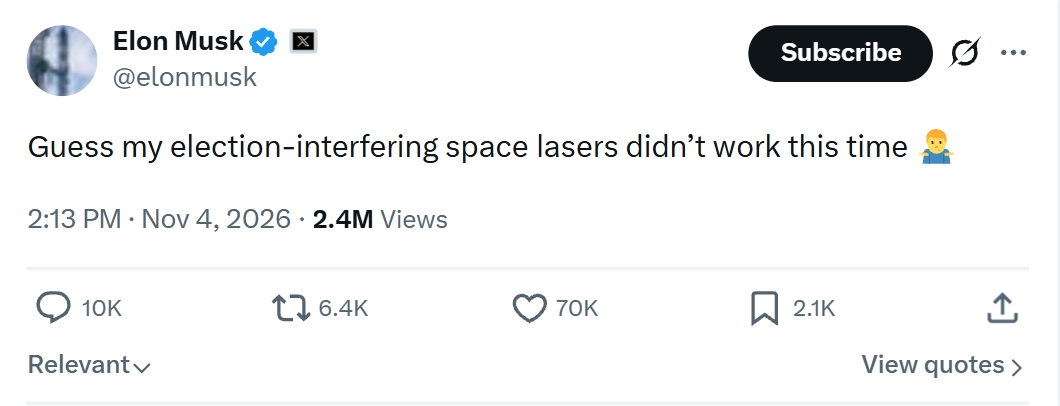
[Source: X]
Musk had previously publicly supported Trump and the Republican Party, donating at least $446 million to Republican-related political groups during the 2026 midterm elections.
Meanwhile, his companies have extensive business ties with the US government, including Tesla's autonomous driving business, as well as SpaceX's space launches, Starlink, and Starshield satellite communication services.
After the Democrats regain control of both houses of Congress, they may step up investigations and oversight of the Trump administration and related companies, focusing on government procurement, defense contracts, and corporate-government partnerships. This means Musk's companies may face increased congressional inquiries and scrutiny.
However, Democratic control of Congress does not mean existing government contracts will be canceled immediately. What is worth closer attention going forward is whether congressional investigations will prompt new policy adjustments, and whether the US government will alter its procurement and partnership arrangements with Tesla and SpaceX.
Tesla: Autonomous Driving Regulation and EV Policy in Focus
For Tesla, the autonomous driving business is a key area that could be impacted by the changes in the U.S. political landscape.
The company is advancing the commercialization of Robotaxi and has deployed a small number of driverless Cybercabs in Austin. Whether it can expand its scope of operations and achieve scaled deployment in the future will affect market expectations for the growth of its autonomous driving business.
On the regulatory front, the National Highway Traffic Safety Administration (NHTSA) has launched an investigation to review whether the Cybercab complies with Federal Motor Vehicle Safety Standards, focusing primarily on safety compliance issues arising from the absence of traditional steering wheels and brake pedals in the vehicles.
With Democrats controlling Congress, oversight regarding autonomous driving safety, accident liability, and regulatory enforcement may be tightened; however, Robotaxi operations will still need to meet federal and state regulatory requirements.
Regarding EV policies, the U.S. federal EV tax credit ceased to apply after September 30, 2025. This change predated the midterm elections and was not caused by Democrats taking control of Congress. Tesla's future sales performance will depend more on model competitiveness, pricing strategies, and market demand.
Going forward, investors need to monitor the progress of Cybercab mass production and Robotaxi expansion, as well as changes in Tesla's vehicle deliveries and gross margins. While the autonomous driving business impacts long-term growth expectations, automotive profitability remains an essential basis for evaluating the company's operating performance.
SpaceX: Government Contracts and Potential Merger Plans Face Scrutiny
SpaceX maintains close ties with the U.S. government, securing government contracts primarily through rocket launches, satellite communications, and military communications services, with NASA and the U.S. Department of Defense serving as key clients.
On October 22, Democratic Senator Richard Blumenthal announced an investigation into SpaceX's Starlink and Starshield, demanding that the company and the U.S. Department of Defense clarify the reasons for the restrictions on satellite communications services in Ukraine, the decision-making authority involved, and the extent of the U.S. government's reliance on SpaceX's communications systems.
If a Democratic-controlled Congress continues to push forward with the investigation, SpaceX's government contracts, service management, and military communications business could face heightened scrutiny.
However, a congressional investigation does not mean the government will immediately cancel existing contracts. Investors also need to monitor whether the U.S. Department of Defense introduces other suppliers to reduce its reliance on SpaceX.
Another focus of attention is the potential merger between Tesla and SpaceX. On October 20, the boards of directors of both companies established independent special committees to study the merger plan. Musk, citing a conflict of interest, is not participating in the committee discussions. Currently, no agreement has been reached between the two parties, and the transaction remains subject to board and shareholder approval.
If the merger moves forward, it could also involve issues such as company valuation, shareholder interests, and corporate governance. Given that SpaceX carries out U.S. space and defense missions, the transaction may also trigger reviews regarding national security and government contracts.
Democratic control of Congress does not mean the ability to directly veto the merger, but it could lead to strengthened oversight of related transactions and government contracts.
What Is the Outlook for Tesla and SpaceX?
In the short term, Tesla and SpaceX may be affected by congressional investigations, regulatory policies, and potential merger progress, but long-term performance will still depend on business growth and profitability.
For Tesla, investors should focus on vehicle deliveries, gross margins, Robotaxi operational scale, and Cybercab mass production progress. Whether autonomous driving services can scale up and generate stable revenue will impact the company's long-term growth expectations.
For SpaceX, Starlink user growth, AI infrastructure expansion, execution of NASA and Department of Defense contracts, and progress on the Starship project are all key indicators to monitor. In addition, whether government clients adjust procurement arrangements could also affect the company's related businesses.
Overall, Democratic control of Congress could increase political scrutiny facing Musk's enterprises, but it does not mean government contracts or existing policies will change immediately.
Investors also need to monitor whether congressional investigations result in concrete actions and whether a potential merger between Tesla and SpaceX can make substantive progress.
Recommended Articles


