


Brent Crude Tops $110 to Hit Near Five-Month High, Oil May Test $120


TradingKey - On October 20, international oil prices remained high, as Brent (UKOIL) crude oil broke through the $110 mark intraday to reach a nearly five-month high. Persistent market concern over Middle East energy facilities and shipping security risks supported crude oil prices staying above $100.
As of the Asian session, Brent crude rose by about 1.6% to $110.90, strongly breaking through the $110 level and reaching an intraday high of $111.05, its highest level since May 20.
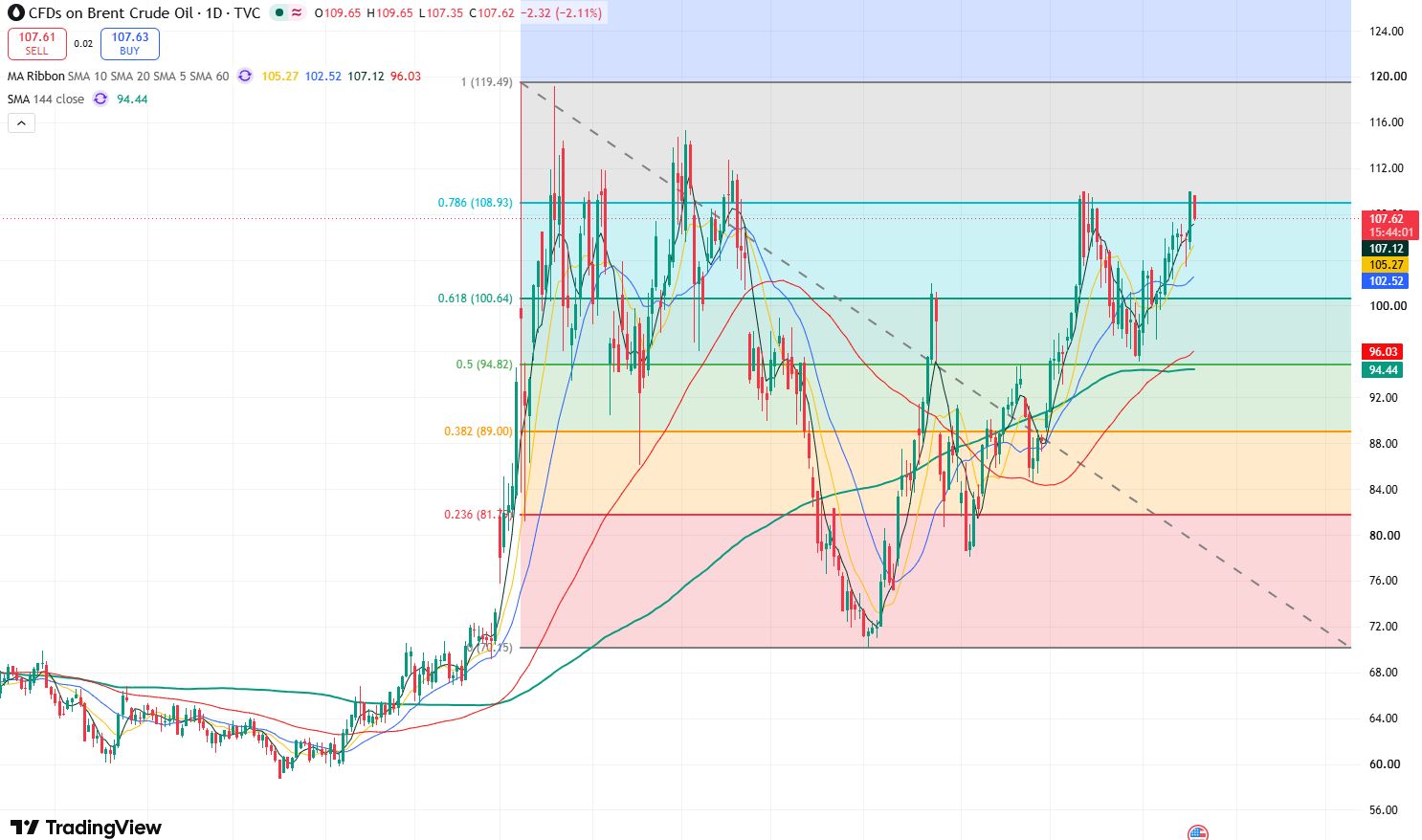
Daily chart of Brent crude oil prices, Source: TradingView
From a fundamental perspective, the main reason supporting this round of oil price gains remains Middle East supply risks. Yemen's Houthi rebels on Monday claimed responsibility for attacks on multiple energy, airport, and military targets in Saudi Arabia, including Saudi Aramco facilities in the Yanbu region and the Shaybah oil field. However, Saudi Arabia has not yet confirmed the attacks, and Reuters was unable to independently verify them. Meanwhile, Kpler data showed that at least 18 vessels were reported attacked in the Gulf region over the past two weeks, with shipping risks continuing to push up the risk premium in the crude oil market.
Beyond the supply side, U.S. inventory expectations also provided some support for oil prices. According to a Reuters survey, U.S. crude oil and refined product inventories both likely declined last week. On the other hand, the U.S. recently temporarily exempted some sanctions against Russian energy, providing a possibility for a recovery in Russian supply, but Russia's daily crude oil production in September remained about 870,000 barrels lower than the same period last year.
In the short term, $110 has become a new key price zone for Brent crude. If Middle East energy facilities or shipping continue to be affected, supply risks may still support oil prices remaining high, with the potential to further challenge $120; if Russian supply increases while crude oil transportation in the Gulf region remains stable, the current risk premium may pull back.
Read more
* The content presented above, whether from a third party or not, is considered as general advice only. This article should not be construed as containing investment advice, investment recommendations, an offer of or solicitation for any transactions in financial instruments.


