




If a Recession Is Coming, This Is the 1 ETF I'd Buy Without a Second Thought
Key Points
The Vanguard S&P 500 ETF won't shield you from losses, but it will help spread out your investments.
Owning the ETF can help you avoid investment mistakes caused by panic-selling during recessions.
Staying invested during recessions ensures you don't miss out on the economy's rebound.
- 10 stocks we like better than Vanguard S&P 500 ETF ›
Most economists aren't predicting that a recession is coming any time soon, and the latest economic data shows that the U.S. has added an average of 80,000 jobs every month this year.
However, that doesn't mean everything is rosy. The Federal Reserve is raising interest rates to fight inflation. Gas prices have surged higher, and a new report from McKinsey estimates 11 million U.S. workers could be forced into new careers by 2035 because of artificial intelligence.
Missed Nvidia in 2009? This Rare Signal Is Flashing Again. In 2009, a "Double Down" signal flashed for a little-known chipmaker called Nvidia. For the first time in years, that same "Total Conviction" signal is flashing for a company 1/100th the size of Nvidia. Continue »
That's not exactly comforting economic news.
If a recession is coming, one of the best investment moves you can make is to keep your money in the S&P 500 and ride out the turbulence. Here's why I'd buy the Vanguard S&P 500 ETF (NYSEMKT: VOO) without a second thought if a recession rears its ugly head soon.
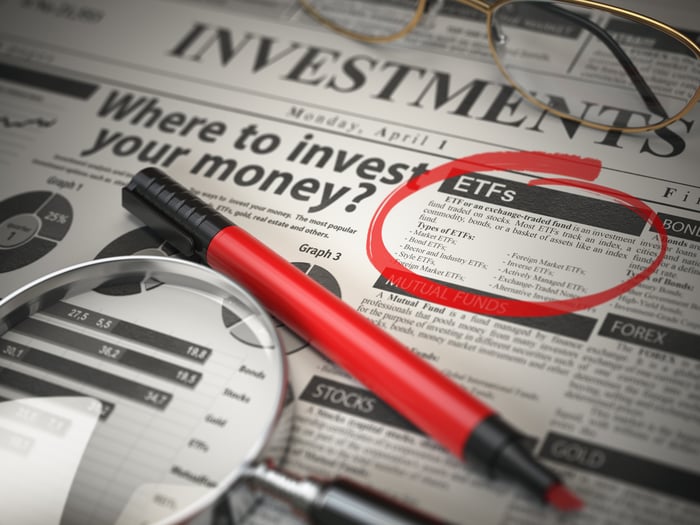
Image source: Getty Images.
This Vanguard ETF offers some stability during unpredictable recessions
Recessions are unpredictable on many levels: You never know when they'll start, why they're happening, when they will end, or which part of the economy will be especially affected. What is clear, however, is that recessions come along fairly frequently. Since World War II, recessions have occurred every 6.5 years on average.
So, if they're inevitable, one of the best things you can do is to prepare for them. The Vanguard S&P 500 ETF helps you do this by spreading your investments across all sectors of the economy. Since the ETF tracks the S&P 500, you'll own a piece of nearly 500 publicly traded companies, from the industrial sector to tech companies, energy utilities, and consumer staple producers.
Diversification is especially important during recessions for two reasons: You won't be overexposed in one sector if stocks fall during a downturn, and you won't miss out on an economic rebound when it comes. That doesn't mean this S&P 500 ETF will always have positive returns, but it will help to mitigate the downsides and maximize the upside when it comes.
This ETF can keep you from making panicked investing decisions
Investing, like most decisions, is emotional. When a recession comes along, it's easy to begin panicking and making drastic financial decisions that could affect your retirement portfolio for years to come. Consider these wise words from legendary investor Warren Buffett:
During such scary periods, you should never forget two things: First, widespread fear is your friend as an investor, because it serves up bargain purchases. Second, personal fear is your enemy. It will also be unwarranted.
Taking some of the emotional reactions to a recession out of your investment strategy may seem counterproductive to maximizing your returns. But most people have a hard time investing in the market when the economy is in the dumps. If a recession causes share prices to decline (or vice versa), it will feel natural to keep your money out of the market -- but that's exactly the opposite of what most people should do.
JPMorgan Chase data shows that over the last 30 years, seven of the best days in the S&P 500 came within roughly two weeks of the 10 worst days. Importantly, if you missed those seven best days, it would have cut your returns by more than half. Owning the Vanguard S&P 500 ETF and adding to your position during a recession ensures you won't miss out on those best market days.
Will a recession be unexpected, potentially difficult, and emotionally unsettling? Probably. But you can help keep your retirement portfolio on track by removing some of the emotion from the situation and continually staying invested in all sectors of the economy. Do that with this Vanguard ETF, and you'll be well-positioned to benefit when the economy eventually bounces back.
Should you buy stock in Vanguard S&P 500 ETF right now?
Before you buy stock in Vanguard S&P 500 ETF, consider this:
The Motley Fool Stock Advisor analyst team just identified what they believe are the 10 best stocks for investors to buy now… and Vanguard S&P 500 ETF wasn’t one of them. The 10 stocks that made the cut could produce monster returns in the coming years.
Consider when Netflix made this list on December 17, 2004... if you invested $1,000 at the time of our recommendation, you’d have $361,650!* Or when Nvidia made this list on April 15, 2005... if you invested $1,000 at the time of our recommendation, you’d have $1,437,517!*
Now, it’s worth noting Stock Advisor’s total average return is 936% — a market-crushing outperformance compared to 211% for the S&P 500. Don't miss the latest top 10 list, available with Stock Advisor, and join an investing community built by individual investors for individual investors.
See the 10 stocks »
*Stock Advisor returns as of October 3, 2026.
JPMorgan Chase is an advertising partner of Motley Fool Money. Chris Neiger has positions in Vanguard S&P 500 ETF. The Motley Fool has positions in and recommends JPMorgan Chase and Vanguard S&P 500 ETF. The Motley Fool has a disclosure policy.
Recommended Articles


