




Warren Buffett Has Always Said This 1 Thing About Bear Markets. History Shows He Has Never Been Wrong.
Key Points
There have been more than two dozen bear markets throughout history. The S&P 500 has eventually recovered from every one.
Historically, some of the biggest market returns occur right after a bear market bottom.
Buying shares at discounted prices can actually improve your long-term returns.
- These 10 stocks could mint the next wave of millionaires ›
Investors fear bear markets, and understandably so. After all, nobody likes to see the value of their portfolio drop by 20% or more.
Warren Buffett, on the other hand, takes a different view. He said in a 1990 letter to Berkshire Hathaway (NYSE: BRKA)(NYSE: BRKB) shareholders that he "welcomed" a 50% decline in Wells Fargo (NYSE: WFC) earlier that year. The reason was simple. He was happy to jump on the chance to buy more shares at a deeply discounted price.
Missed AI’s "Act 1"? Act 2 Could Be 15x Bigger. Most investors think they missed the AI boat because they didn't buy Nvidia in 2005. But according to our analysts, we’re only at the end of "Act 1"—the R&D phase. "Act 2" is the global rollout. Continue »
The former Berkshire CEO has always been about accumulating assets at attractive prices. It's been his strategy for every bear market he's been through. And it's one that's never let him down.
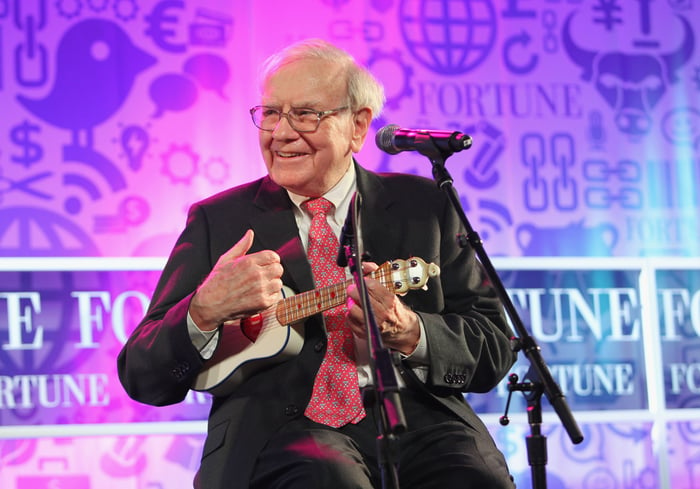
Source: Getty Images.
Every bear market has ended the same way
Bear markets are more common than a lot of people realize.
Over the past 150 years, the S&P 500 (SNPINDEX: ^GSPC) has fallen by 20% or more on average once every six years. The average decline is around 33%.
Those are the numbers that many investors focus on. But Buffett focuses on something else. The average bull market lasts roughly 2.7 years and averages a gain of around 112%. More importantly, every bear market in history so far has resulted in the S&P 500 eventually establishing a new all-time high.
That's the Buffett argument. The market rises far more often than it falls. If you continue investing steadily, even in declining markets, you give yourself more opportunities to capture gains when they happen.
The best opportunities arise when conditions look worst
If you look at history, Buffett's position on taking advantage of down markets is sound.
Since 1950, the S&P 500 has, on average, generated a 37% total return in the 12 months following a bear market low.
Of course, the only problem with this is that you need to ride out the bear market in order to capture the subsequent gains. No one knows when the market will bottom, so the only real solution is to maintain a long-term buy-and-hold view.
Plus, if you have the discipline to continue buying stocks even during down markets, you can actually improve your returns since those discounted purchases generate further gains during a recovery.
Throughout history, Warren Buffett has consistently said that investors should hold stocks for the long term, systematically invest regardless of market conditions, and avoid the temptation to time the market when it becomes volatile.
This strategy has proven over time to be one of the best ways to handle a bear market. It hasn't failed yet.
Where to invest $1,000 right now
When our analyst team has a stock tip, it can pay to listen. After all, Stock Advisor’s total average return is 932%* — a market-crushing outperformance compared to 211% for the S&P 500.
They just revealed what they believe are the 10 best stocks for investors to buy right now, available when you join Stock Advisor.
See the stocks »
*Stock Advisor returns as of September 22, 2026.
Wells Fargo is an advertising partner of Motley Fool Money. David Dierking has no position in any of the stocks mentioned. The Motley Fool has positions in and recommends Berkshire Hathaway. The Motley Fool has a disclosure policy.
Recommended Articles


