




'Black Friday' Sweeps Korean Stocks, SK Hynix Plunges Nearly 10%, Samsung Electronics Drops Over 6%
TradingKey - During the Asian trading session on June 5, affected by Broadcom's ( AVGO) AI business earnings guidance falling short of expectations, global AI and semiconductor sectors faced selling pressure, with panic sentiment quickly spreading to Asia-Pacific markets, causing both Japanese and South Korean stocks to fall.
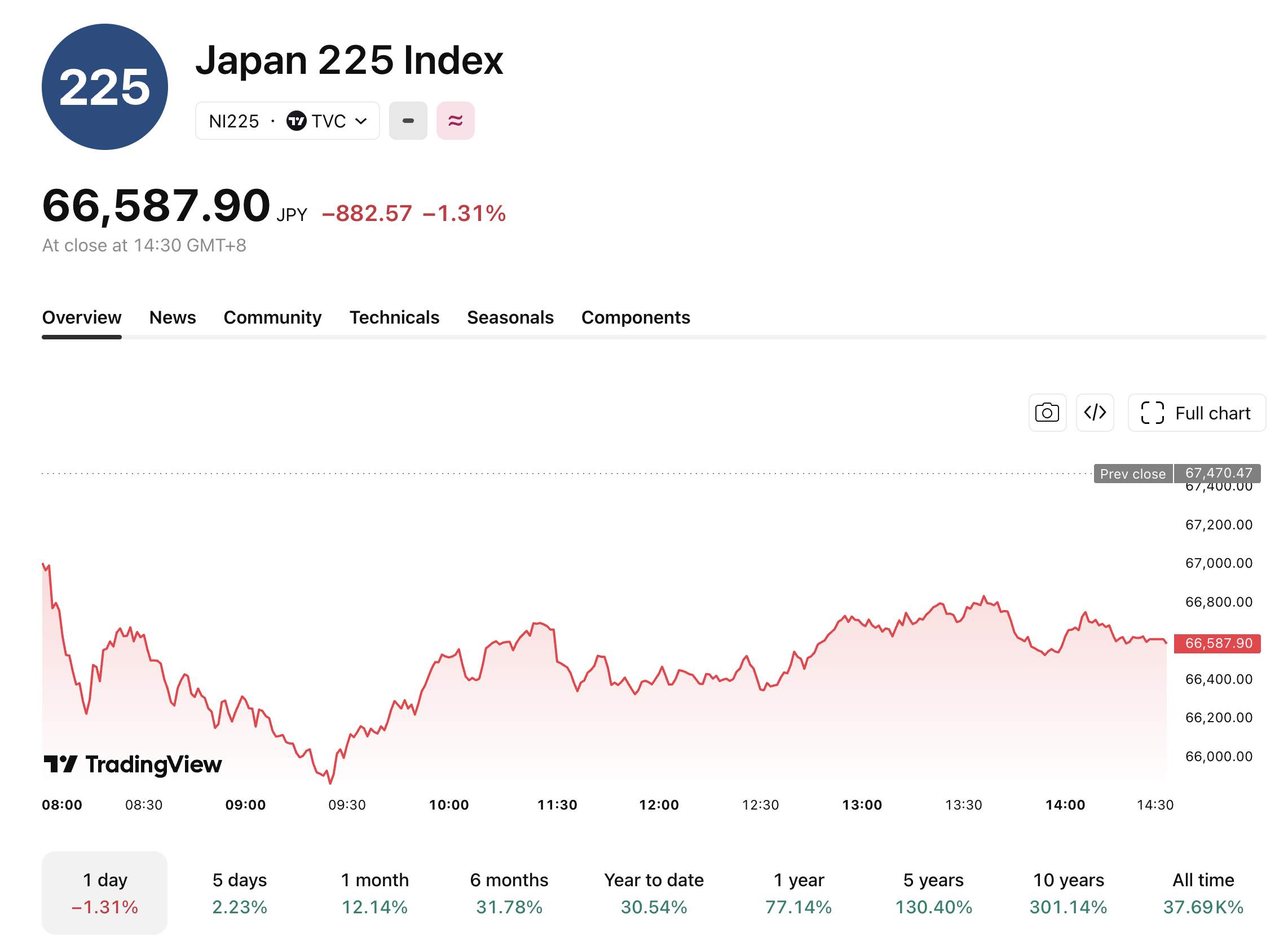
[Source: TradingView]
The Nikkei 225 Index closed down 1.31% at approximately 66,587.9 points, while the TOPIX edged down 0.07%. A clear divergence emerged as capital rotated out of mega-cap tech stocks and into defensive sectors.
Semiconductor stocks were the biggest laggards, with Tokyo Electron falling over 6%, Renesas Electronics dropping more than 5%, and Shin-Etsu Chemical and Advantest both sliding over 3%.
However, the market did not enter a state of total panic; the banking sector resisted the decline, with Sumitomo Mitsui Financial up 1.65% and Mitsubishi UFJ gaining 1.58%. Defensive sectors such as pharmaceuticals and marine transportation also attracted capital inflows.
Regarding exchange rates, the yen hovered near the 159-160 intervention "red line," with Japan's Finance Minister reiterating readiness to act. Meanwhile, rising expectations for a Bank of Japan rate hike in mid-June placed additional pressure on high-valuation growth stocks.
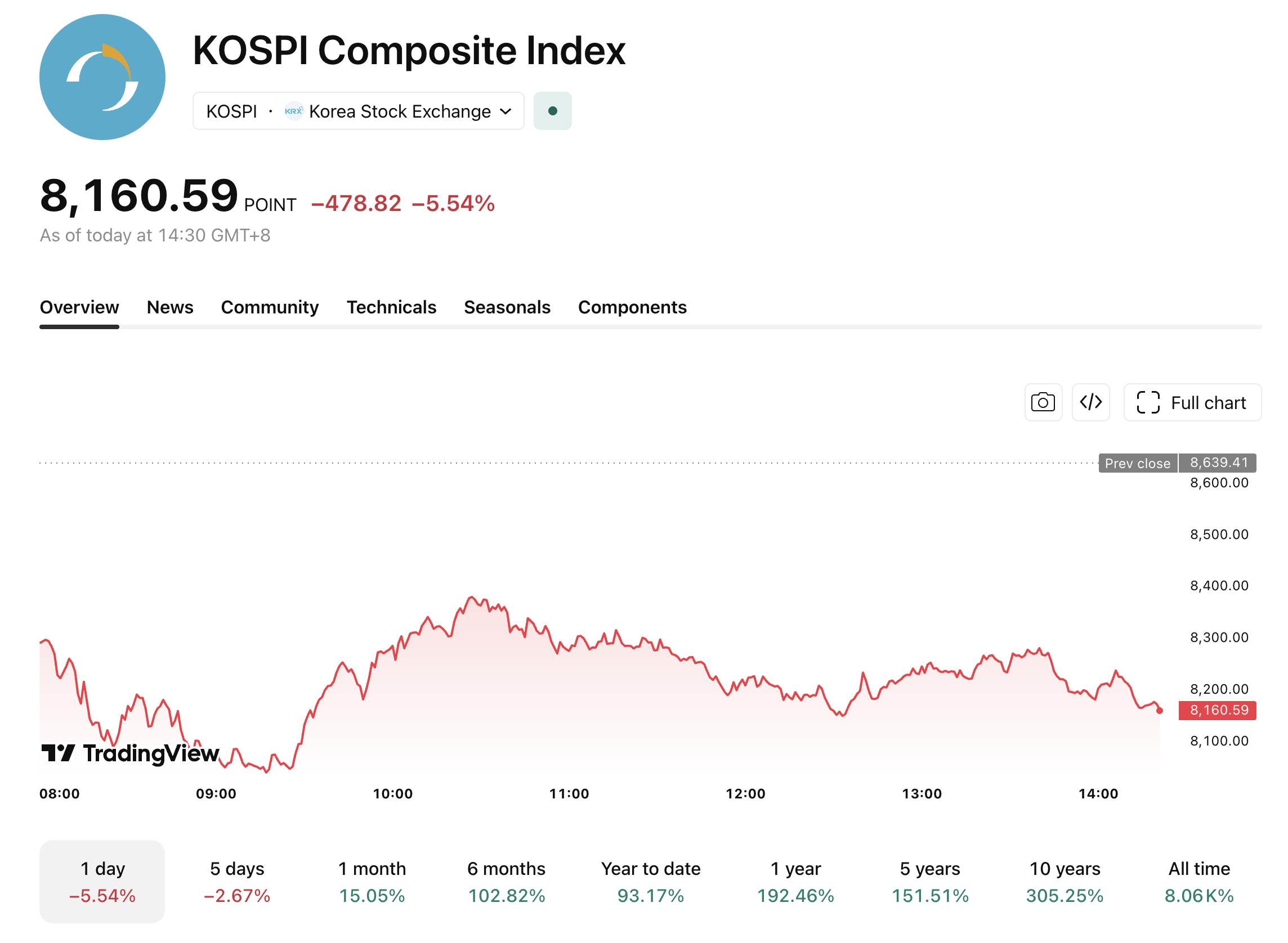
[Source: TradingView]
The South Korean market saw even sharper declines, with the KOSPI index at one point plunging over 6%. A 5% drop in the KOSPI 200 futures index triggered a circuit breaker, suspending programmed trading for five minutes. By the close, the KOSPI was down 5.54% at 8,160.59 points.
At the close, Samsung Electronics stood at 329,000 won, down 6.4%, while SK Hynix closed at 2.07 million won, falling 9.92%. Together, these two stocks account for over 50% of the KOSPI's weight and contributed the bulk of the index's decline. This year, nearly three-quarters of the KOSPI's gains came from these two companies, highlighting a concentration risk that had long been building.
Tonight, the U.S. will release the May non-farm payrolls report, with markets expecting approximately 105,000 new jobs. For Japan and South Korea, the key variables differ: Japan is focused on the pace of the central bank's rate hikes and the actual intensity of yen intervention, while South Korea watches whether the semiconductor sector can bottom out before HBM orders materialize.
Recommended Articles


