




Geopolitical Crises Have Rocked the S&P 500 Before. Every Single Time, Patient Investors Came Out Ahead.
Key Points
Despite previous recessions, wars, and geopolitical instability, long-term investors have always come out ahead.
In every previous recession, the S&P 500's and Nasdaq Composite's losses have been temporary.
In some cases, they have fully recovered even before the recession or war comes to an end.
- 10 stocks we like better than S&P 500 Index ›
The war in Iran is taking a toll on the U.S. economy.
Gas prices, one of the few bright spots when it came to the inflationary picture, have surged 17% since the conflict began. Meanwhile, crude oil prices have surged above $100/barrel for the first time since 2022 and may rise further as the war continues to disrupt oil exports from the Middle East.
Will AI create the world's first trillionaire? Our team just released a report on the one little-known company, called an "Indispensable Monopoly" providing the critical technology Nvidia and Intel both need. Continue »
After getting a brief bump after President Trump didn't announce a strike on Iran during his State of the Union address, the S&P 500 (SNPINDEX: ^GSPC) is down 3.1% over the past month and down 3.8% from its January high. Lots of people were already worried the U.S. could be tipping into a recession, which would pull it down even further. In February, an economic model by the New York Fed showed an 18.7% chance of a recession by January 2027, and that was before the war even began.
But smart investors should resist the temptation to pull money out of the market. Every time a geopolitical crisis has rocked the S&P 500, patient investors have come out on top. Here's why.
The drops have been short-lived
According to research by The Motley Fool, which tracked the S&P 500's performance through every recession since 1980, stocks have always suffered during the early part of a recession. However, in most cases, the stock market at least partially recovers before the recession is even over. In some cases, it has even finished the recession at a higher level than it began.
And in all cases, it went on to reach even greater heights.
Take the most recent recession: the COVID-19 recession of February to April 2020. Both the S&P 500 and the Nasdaq Composite (NASDAQINDEX: ^IXIC) dropped sharply during February and March 2020, with the S&P eventually tumbling 33.9% from its pre-recession high and the Nasdaq falling 30.3%.
But the panic was short-lived. By the end of April, not only had both indexes begun to recover, but also the Nasdaq was less than 4% off its pre-recession level and the S&P 500 was down less than 10%. By the end of July, both indexes had fully recovered. Investors who sold early and waited until the recession was over would have missed out on much of those gains.
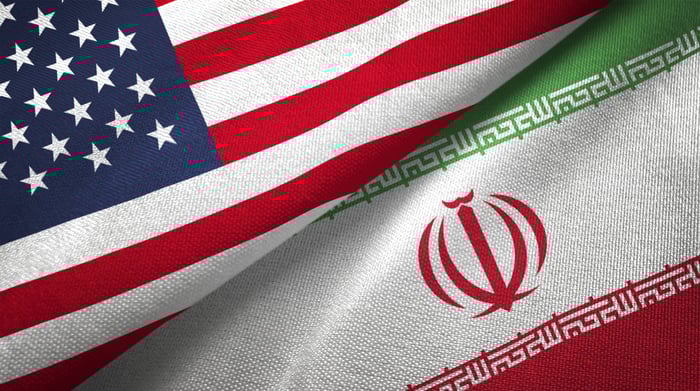
Image source: Getty Images.
Wars are no different
Perhaps the most consequential geopolitical events of this century were triggered by the 9/11 terrorist attacks of September 2001 and their aftermath. However, it's easy to forget that the U.S. had already been in a recession since March 2001, and stock indices had been heading downward since 2000's dot-com bust.
Although the 9/11 attacks immediately sent stocks even lower, they had rebounded somewhat by November, when the recession officially ended. Unlike the COVID-19 recession, though, both the Nasdaq and the S&P 500 sank lower in the days after the recession: The Nasdaq bottomed out in 2002, while the S&P didn't hit its lows until early 2023.
But even though it took the Nasdaq more than a year to recover to its pre-recession level and the S&P 500 more than two years, both went on to long-term success, in spite of the ongoing wars in Iraq and Afghanistan that followed 9/11.

Image source: Getty Images.
Long-term investors win
One thing that became clear when the Motley Fool research team looked at all the recessions since 1980 is that the time to a full recovery varies. Some full market recoveries occur even before the recession actually ends, like during the 1981-1982 recession and the 1990-1991 recession. In others, like the Great Recession, the S&P 500 took years to fully recover.
But in all cases, the markets did recover. Not only did they recover, but they also continued to grow in subsequent years and decades. If you'd invested just $100 in an S&P 500 index fund on Dec. 31, 1979, and then weathered all six recessions, that $100 would be worth more than $4,000 today on a total-return basis.
So even if the current geopolitical situation looks dire, investors shouldn't panic sell. No matter what has happened in the world, long-term buy-and-hold investors have always come out ahead.
Should you buy stock in S&P 500 Index right now?
Before you buy stock in S&P 500 Index, consider this:
The Motley Fool Stock Advisor analyst team just identified what they believe are the 10 best stocks for investors to buy now… and S&P 500 Index wasn’t one of them. The 10 stocks that made the cut could produce monster returns in the coming years.
Consider when Netflix made this list on December 17, 2004... if you invested $1,000 at the time of our recommendation, you’d have $514,000!* Or when Nvidia made this list on April 15, 2005... if you invested $1,000 at the time of our recommendation, you’d have $1,105,029!*
Now, it’s worth noting Stock Advisor’s total average return is 930% — a market-crushing outperformance compared to 187% for the S&P 500. Don't miss the latest top 10 list, available with Stock Advisor, and join an investing community built by individual investors for individual investors.
See the 10 stocks »
*Stock Advisor returns as of March 15, 2026.
John Bromels has no position in any of the stocks mentioned. The Motley Fool has no position in any of the stocks mentioned. The Motley Fool has a disclosure policy.
Recommended Articles


