




Did Cardano Whales Bet $35 Million on a Token Listing Event Despite Bearish ADA Charts?


Cardano price remains under pressure in 2026, falling roughly 22% year-to-date. Technical indicators still suggest the broader downtrend may not be over.
Yet large Cardano whales have quietly accumulated about $35 million worth of ADA in recent days. The buying coincides with a new token listing event tied to the Cardano ecosystem, raising an important question: are whales positioning early despite bearish chart signals?
Hidden Bearish Divergence Keeps ADA Downtrend Risk Alive
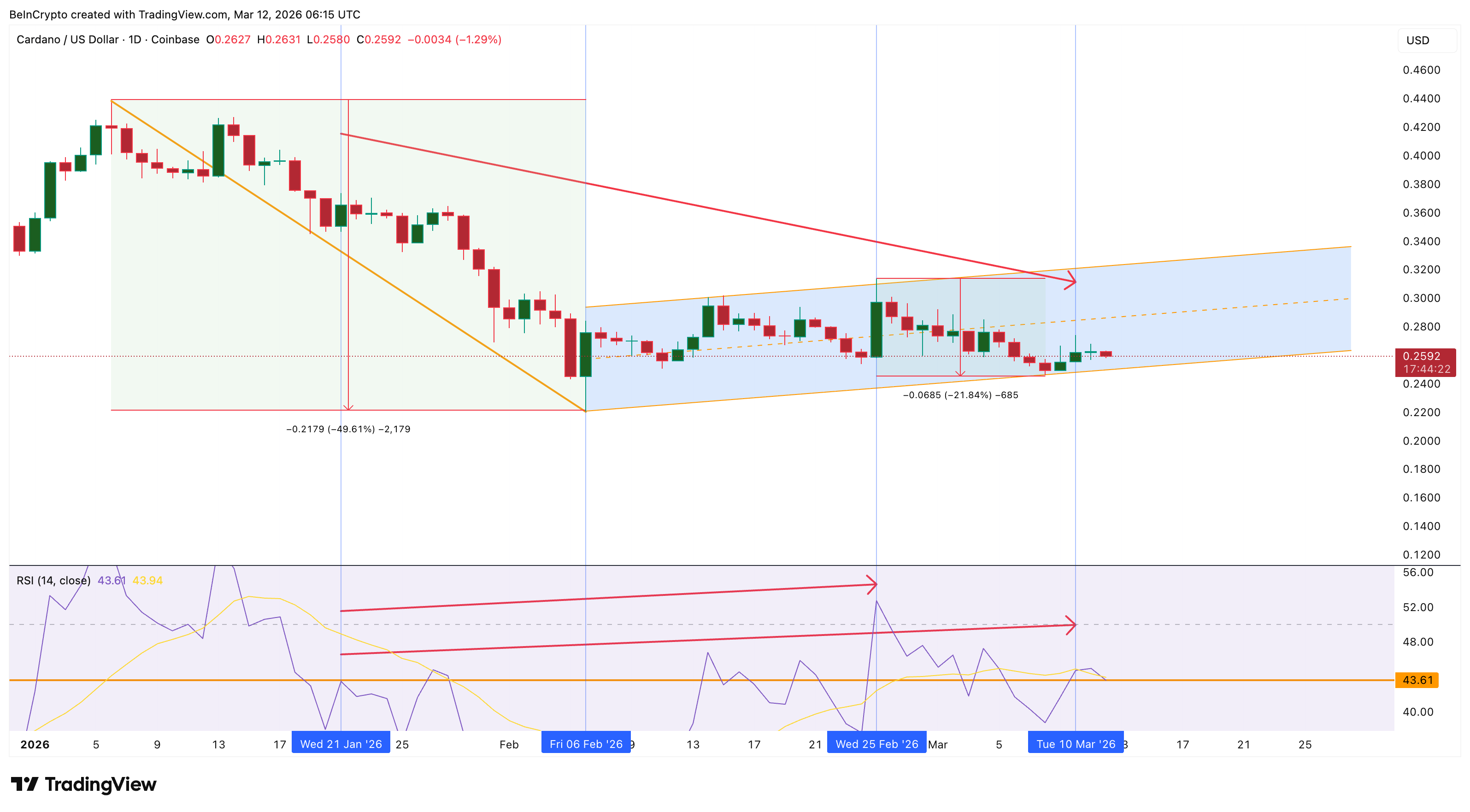
Cardano price has been trading inside an ascending channel since February 6. At first glance, this structure can appear bullish because prices gradually move higher between two parallel trend lines. However, the broader context suggests caution.
Before the channel formed, Cardano dropped nearly 50% between Jan. 6 and Feb. 6, meaning the current rising structure may simply represent a recovery phase rather than a full trend reversal. More like a continuation pattern
Momentum indicators reinforce this risk.
Between January 21 and March 10, Cardano’s price formed a lower high, while the Relative Strength Index (RSI) created a higher high. RSI measures price momentum and helps identify shifts in buying and selling pressure.
Want more token insights like this? Sign up for Editor Harsh Notariya’s Daily Crypto Newsletter here.
This mismatch forms a hidden bearish divergence, which usually signals that the broader downtrend may continue even if prices temporarily stabilize. The same divergence appeared earlier between January 21 and February 25, after which Cardano dropped more than 21%. The signal appearing again suggests another pullback could still develop.
Yet despite these warning signs, large investors have started accumulating ADA.
Cardano Whales Add About $35 Million ADA Ahead of Ecosystem Event
Blockchain data shows that two major whale cohorts have increased their exposure.
Wallets holding 100 million to 1 billion ADA increased their holdings from 2.57 billion ADA on March 9 to about 2.68 billion ADA, adding roughly 110 million coins.
Meanwhile, the next whale category, wallets holding 10 million to 100 million ADA, initially reduced holdings but began accumulating again around March 11, increasing their balance from 13.54 billion ADA to roughly 13.57 billion ADA, adding about 30 million coins.
Combined, these groups accumulated approximately 140 million ADA, worth close to $35 million at current prices. The timing is notable.
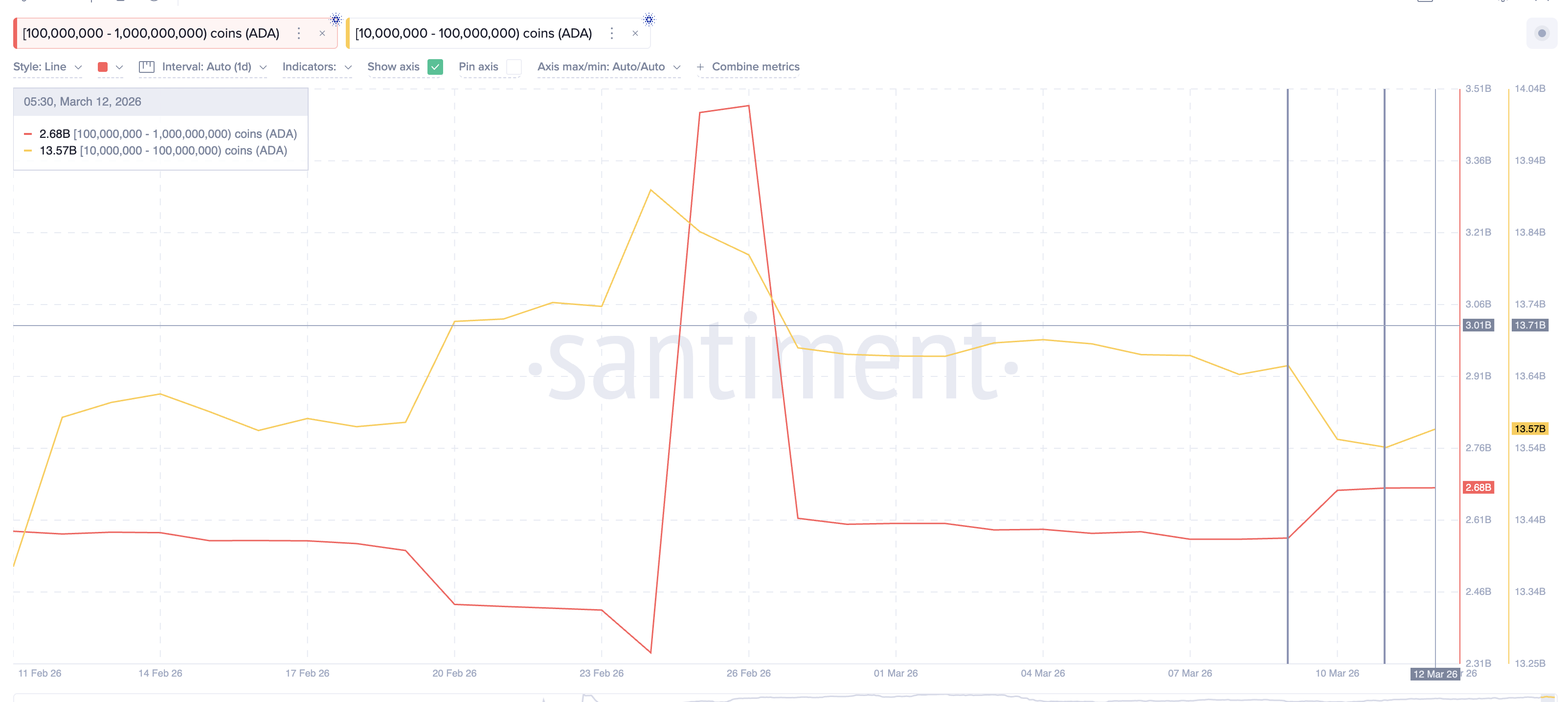
The first wave of accumulation began around March 9, while the second whale cohort resumed buying around March 11, the same period when a new token connected to the Cardano ecosystem received a full spot listing on Binance.
The token NIGHT is tied to Midnight, a privacy-focused sidechain being developed alongside the Cardano network. Midnight is designed to introduce privacy-enabled smart contracts while remaining interoperable with Cardano. The timing suggests some large investors may be positioning around broader ecosystem developments rather than reacting only to short-term price movements.
Network fundamentals have also shown modest improvement, hinting that whales are now eyeing ecosystem developments over price moves.
Cardano’s total value locked (TVL) in decentralized finance has climbed from roughly $115 million to about $140 million, representing nearly 22% growth in recent weeks.
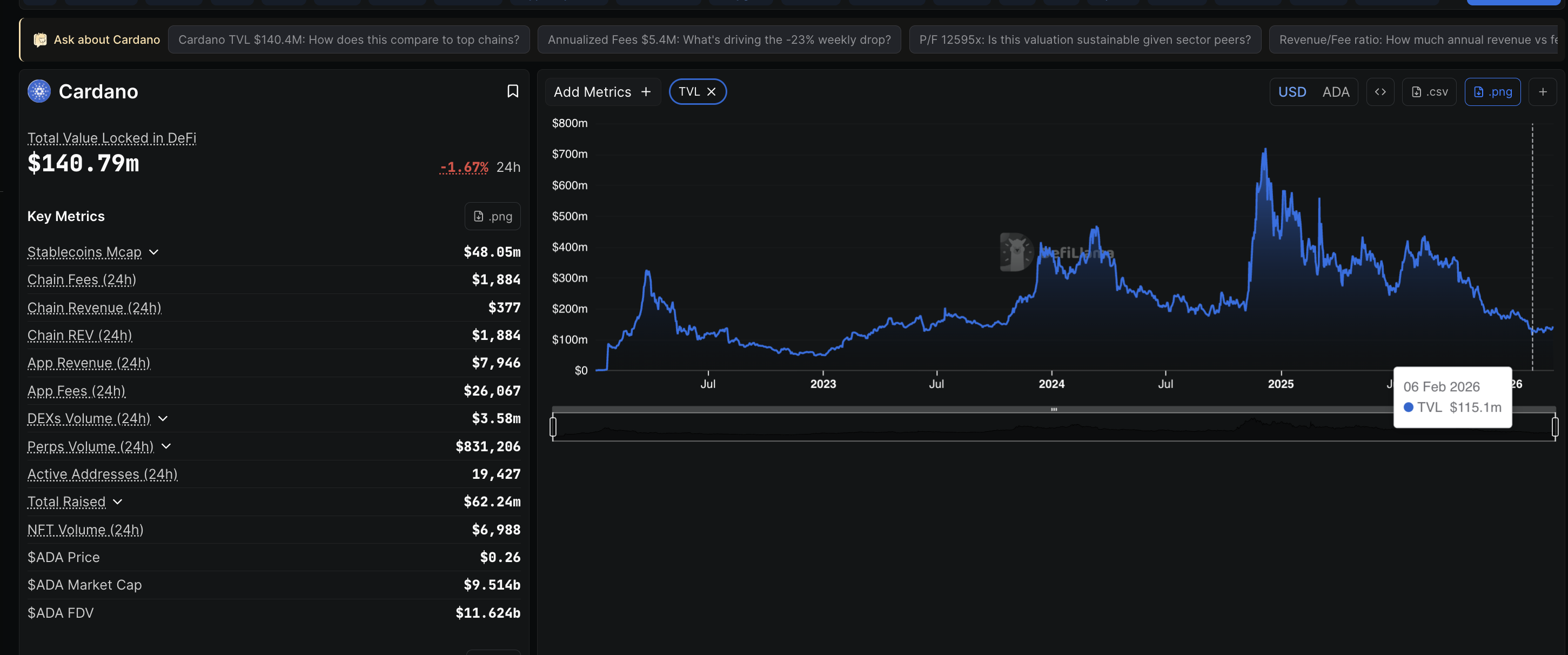
TVL measures the amount of capital deposited into DeFi applications and often signals increasing activity across a blockchain network. However, the rest of the market still appears cautious.
Traders Remain on the Sidelines as Leverage Drops
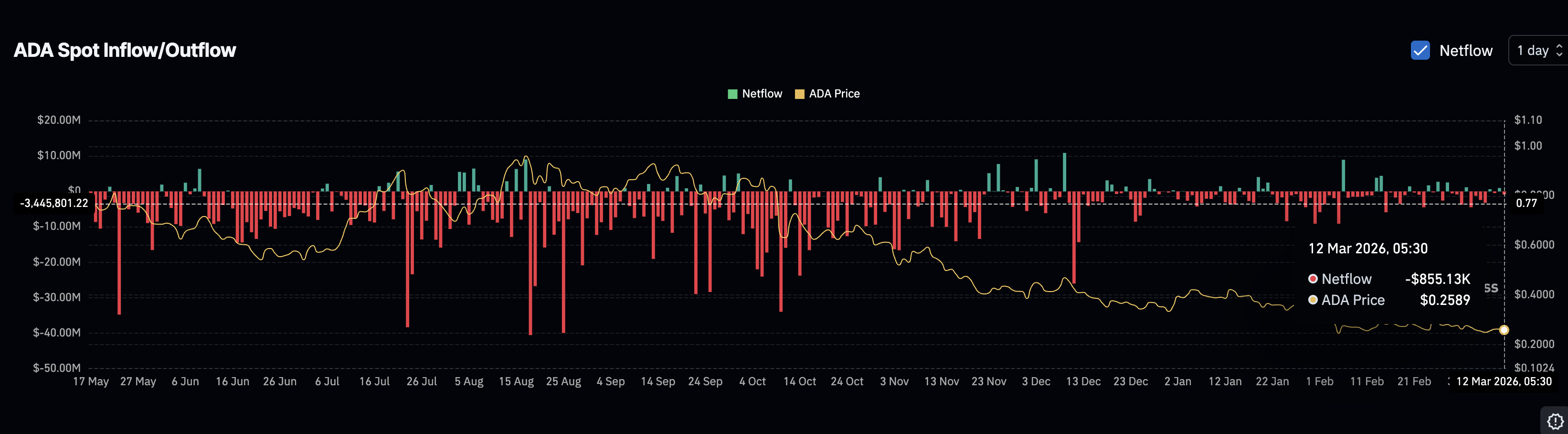
Despite whale accumulation, broader market participation remains limited. Spot exchange flows show very little movement. Daily inflows and outflows have mostly stayed below $1 million, indicating that many traders are still waiting for clearer signals.
The derivatives market tells a similar story. Cardano open interest, which tracks the total value of outstanding futures contracts, has declined from roughly $550 million in late February to about $440 million now, representing a drop of around 20%.
Open interest tends to fall when leveraged traders close positions and reduce exposure. Lower leverage can make markets more stable because fewer forced liquidations occur during price swings. This steady environment may also explain whale optimism.
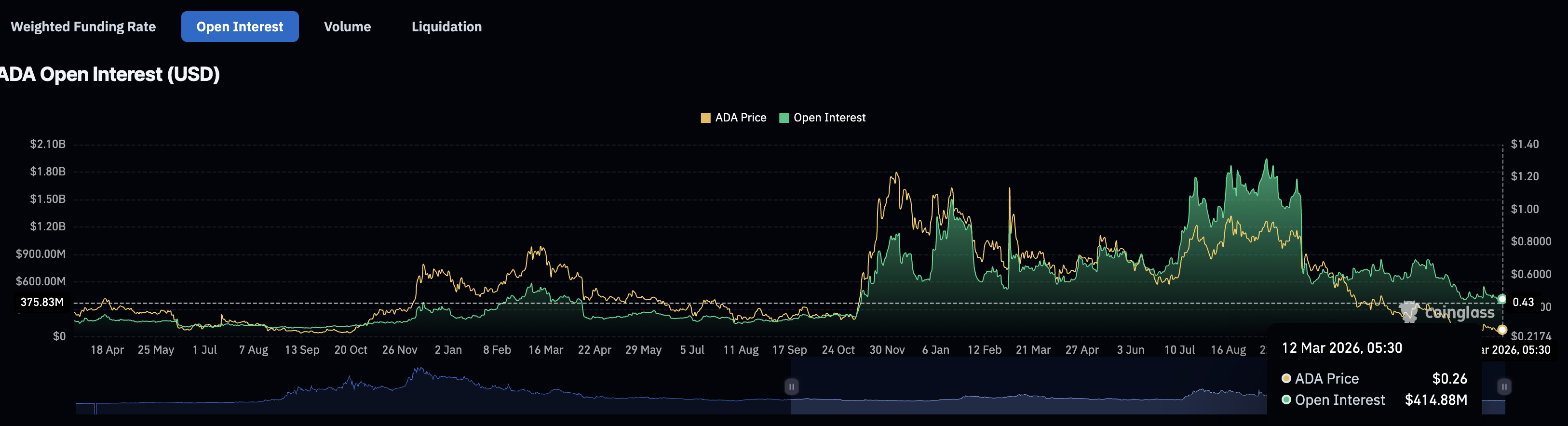
With fewer leveraged positions active in the system, whales may believe the risk of a sudden liquidation cascade is lower even if prices temporarily decline.
Still, the ADA price structure itself continues to show potential downside risk.
ADA Chart Pattern Shows How a 20% Drop Could Still Happen
Short-term charts reveal a more concerning technical structure. The weakness goes beyond the daily chart we discussed earlier.
On the 8-hour timeframe, Cardano price appears to be forming a head-and-shoulders pattern, a classic bearish formation that often signals continuation of a downward trend.
The key support level in this pattern is the neckline, which currently sits slightly above $0.240. If Cardano breaks below this level on the 8-hour chart, the bearish structure could activate.
The first downside target sits near $0.206, while the full measured move points toward roughly $0.195, representing close to 20% downside risk.
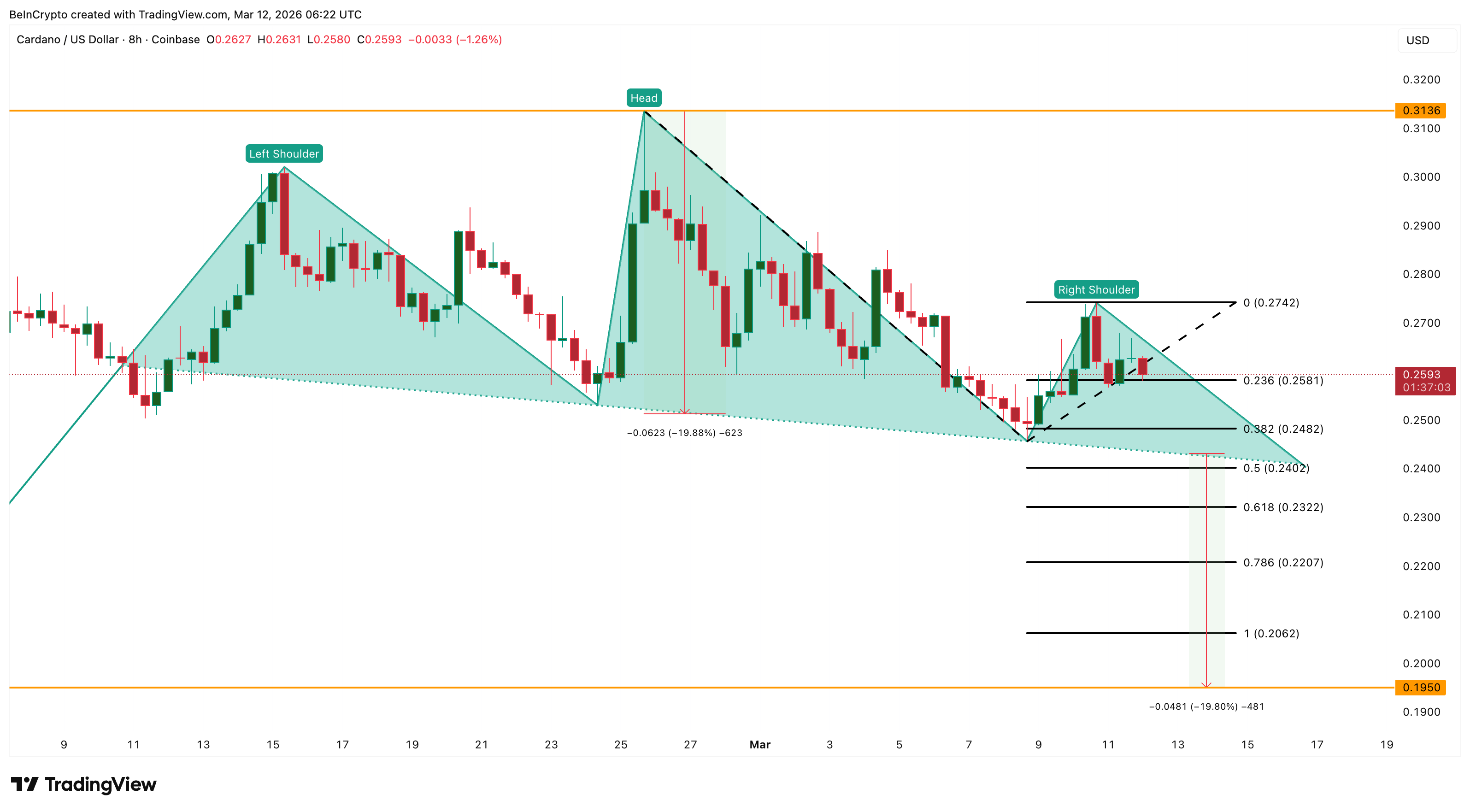
However, the bearish pattern can still be invalidated. A move above $0.274 would weaken the structure, while a stronger breakout above $0.313 would invalidate the head-and-shoulders formation entirely.
Until those levels are reclaimed, Cardano remains caught between improving ecosystem signals and a chart structure that still leans bearish.
* The content presented above, whether from a third party or not, is considered as general advice only. This article should not be construed as containing investment advice, investment recommendations, an offer of or solicitation for any transactions in financial instruments.


