




Billionaire Warren Buffett Offers 184 Billion Reasons for Investors to Be Fearful in the New Year
Key Points
Berkshire Hathaway's consolidated cash flow statements show the Oracle of Omaha has overseen net stock selling activity for three straight years.
A stock market valuation tool that Warren Buffett once proclaimed is "probably the best single measure of where valuations stand at any given moment" is sounding a warning to Wall Street.
Although Buffett's actions and touted investment philosophies don't always align, he'd never bet against the American economy or stocks over the long run.
- 10 stocks we like better than Berkshire Hathaway ›
In roughly three weeks, one of Wall Street's most revered investors will hang up his work coat and ride off into the proverbial sunset. Billionaire CEO Warren Buffett, who's spent the last 60 years at the helm of Berkshire Hathaway (NYSE: BRK.A)(NYSE: BRK.B), has overseen a greater than 6,107,000% cumulative return in his company's Class A shares (BRK.A), as of the closing bell on Dec. 5.
What investors might miss even more than the Oracle of Omaha's outsize returns is his candidness when discussing his investment philosophy, the U.S. economy, and, on rare occasions, some of the individual companies Berkshire has positions in. Buffett's name has become practically synonymous with long-term investing.
Where to invest $1,000 right now? Our analyst team just revealed what they believe are the 10 best stocks to buy right now, when you join Stock Advisor. See the stocks »
However, the actions of Berkshire Hathaway's billionaire boss and the investment philosophies he's stood behind for decades aren't always in alignment. Despite having one foot out the door, it's almost impossible to ignore the 184 billion reasons Buffett has given investors to be fearful in the new year.
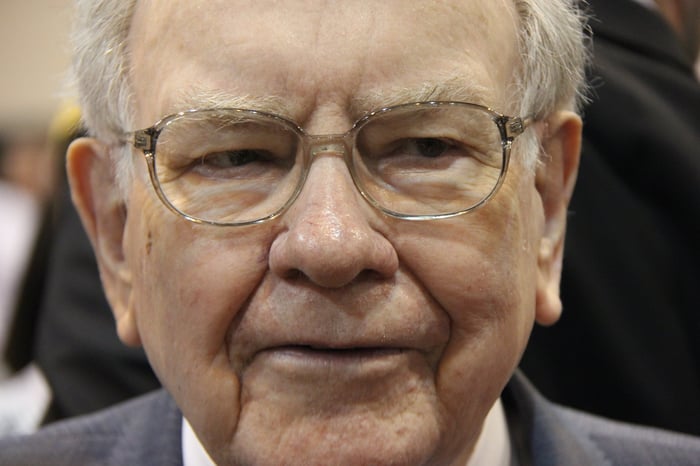
Berkshire Hathaway CEO Warren Buffett. Image source: The Motley Fool.
The time to be fearful when others are greedy has arrived
Lengthy books have been written detailing the quotes and nuggets of wisdom for which Warren Buffett is famous. But there may not be a quote that sums up his investing style better than, "be fearful when others are greedy, and greedy when others are fearful."
To be abundantly clear, this quote by Buffett doesn't signal he'd be pessimistic on the U.S. economy or stocks in instances when "others are greedy." The Oracle of Omaha has repeatedly opined that he wouldn't bet against America (or its stock market). However, this doesn't mean he has to be a buyer of stocks when valuations no longer make sense.
According to Berkshire Hathaway's consolidated cash flow statements, Warren Buffett has sold more stocks than he's purchased for 12 consecutive quarters (Oct. 1, 2022 – Sept. 30, 2025):
- Q4 2022: $14.64 billion in net-equity sales
- Q1 2023: $10.41 billion
- Q2 2023: $7.981 billion
- Q3 2023: $5.253 billion
- Q4 2023: $0.525 billion
- Q1 2024: $17.281 billion
- Q2 2024: $75.536 billion
- Q3 2024: $34.592 billion
- Q4 2024: $6.713 billion
- Q1 2025: $1.494 billion
- Q2 2025: $3.006 billion
- Q3 2025: $6.099 billion
In aggregate, $183.53 billion more in stocks have been sold than purchased under Buffett's watch over the last three years. It's as direct a message as you'll get from Berkshire's billionaire chief that the time to be fearful when others are greedy has arrived.
Finding value is becoming increasingly difficult amid a historically pricey stock market
To be transparent, not all of this $184 billion in net selling activity is necessarily nefarious.
During Berkshire Hathaway's 2024 annual shareholder meeting, Buffett spoke of the possibility of corporate income tax rates rising in the future. He intimated that selling shares of Apple (NASDAQ: AAPL) when corporate income tax rates are advantageously low would, in hindsight, be beneficial to Berkshire and its shareholders. Therefore, some of the selling activity overseen by Berkshire's CEO might, genuinely, be nothing more than strategic profit-taking.
But there's also the strong likelihood that there's more behind this selling activity.
Warren Buffett Indicator hits a new all-time high of 223%, the most expensive stock market valuation in history 🚨🚨 pic.twitter.com/p14CI3VXGu
-- Barchart (@Barchart) October 26, 2025
In an interview with Fortune magazine in 2001, Buffett referred to the market-cap-to-GDP ratio as "probably the best single measure of where valuations stand at any given moment." This valuation tool, which adds up the market value of all publicly traded companies and divides it by U.S. gross domestic product (GDP), has come to be known as the Buffett indicator.
When back-tested to 1970, the Buffett indicator has averaged a reading of approximately 85%. This is to say that the cumulative value of all public companies equates to 85% of U.S. GDP in a given year. As of the closing bell on Dec. 5, the Buffett indicator clocked in at nearly 225%!
In addition to the stock market being historically pricey, certain stocks are no longer the bargains they once were.
When Buffett initiated a position in Apple during the first quarter of 2016, shares were trading at a forward earnings multiple of 10 to 15. Currently, Apple's trailing-12-month price-to-earnings (P/E) ratio is north of 37! This is an especially aggressive valuation, considering that Apple's physical device growth engine, including the iPhone, completely stalled for three years.
Finding value on Wall Street has become challenging, which is why we've witnessed Buffett's actions (i.e., his persistent selling activity) speak louder than his words.
Image source: Getty Images.
The Oracle of Omaha's track record demonstrates the value of patience when investing
Although Buffett's actions give investors reason to be fearful of a potentially sizable stock market correction in the new year, there's also cause for hope.
As noted earlier, Berkshire Hathaway's outgoing boss has overseen a cumulative gain in his company's Class A shares of more than 6,107,000% and nearly doubled the average annual total return, including dividends, of the S&P 500 over 60 years. While investors might not be thrilled with his decision to sit on his hands and wait for price dislocations, this strategy has worked wonders for decades. In other words, corrections, bear markets, and even crashes can be generational opportunities for Berkshire and its shareholders to make money.
One of the best examples of the Oracle of Omaha being patient and letting valuations come into his wheelhouse occurred shortly after the trough of the financial crisis. In August 2011, Buffett helped shore up Bank of America's (NYSE: BAC) balance sheet by supplying the company with $5 billion in capital. In return, Berkshire netted $5 billion of preferred stock in BofA that was yielding 6% annually.
However, the real treasure of this deal was the warrants to purchase 700 million shares of Bank of America stock at $7.14 per share. Buffett exercised these warrants in full during the summer of 2017 for an instant profit windfall of $12 billion. Shares of BofA have gone on to more than double since the summer of 2017.
While price dislocations can be few and far between on Wall Street, the nearly $382 billion in combined cash, cash equivalents, and U.S. Treasuries Berkshire Hathaway has on its balance sheet (as of Sept. 30) will allow Warren Buffett's successor, Greg Abel, and his team, to pounce when the opportunity is right, and valuations make sense.
Should you invest $1,000 in Berkshire Hathaway right now?
Before you buy stock in Berkshire Hathaway, consider this:
The Motley Fool Stock Advisor analyst team just identified what they believe are the 10 best stocks for investors to buy now… and Berkshire Hathaway wasn’t one of them. The 10 stocks that made the cut could produce monster returns in the coming years.
Consider when Netflix made this list on December 17, 2004... if you invested $1,000 at the time of our recommendation, you’d have $521,982!* Or when Nvidia made this list on April 15, 2005... if you invested $1,000 at the time of our recommendation, you’d have $1,137,459!*
Now, it’s worth noting Stock Advisor’s total average return is 981% — a market-crushing outperformance compared to 194% for the S&P 500. Don’t miss out on the latest top 10 list, available when you join Stock Advisor.
See the 10 stocks »
*Stock Advisor returns as of December 8, 2025
Bank of America is an advertising partner of Motley Fool Money. Sean Williams has positions in Bank of America. The Motley Fool has positions in and recommends Apple and Berkshire Hathaway. The Motley Fool has a disclosure policy.
Recommended Articles


