




Texas Instruments Inc Stock (TXN) Moved Down by 8.53% on Jun 23: What Signal Does It Send?
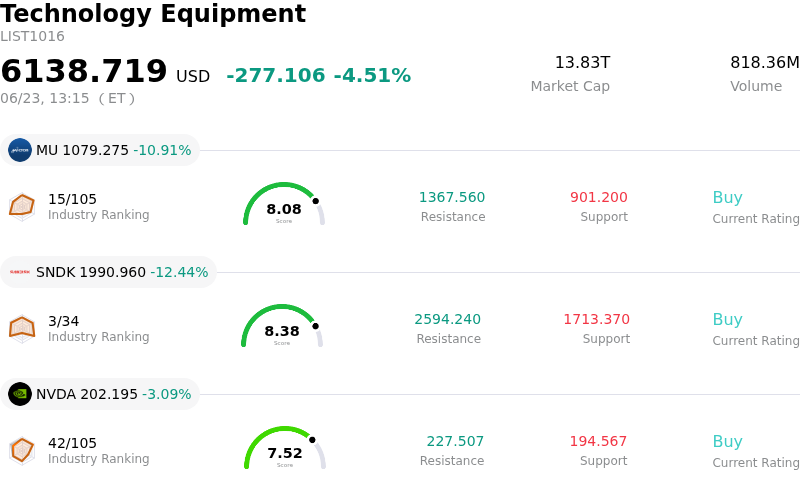
Texas Instruments Inc (TXN) moved down by 8.53%. The Technology Equipment sector is down by 4.51%. The company underperformed the industry. Top 3 stocks by turnover in the sector: Micron Technology Inc (MU) down 10.91%; SanDisk Corporation (SNDK) down 12.44%; NVIDIA Corp (NVDA) down 3.09%.
What is driving Texas Instruments Inc (TXN)’s stock price down today?
On June 23, 2026, Texas Instruments faced a significant downward correction, primarily driven by a massive, synchronized global selloff in the semiconductor and technology sectors. The risk-off wave originated overnight in Asian markets—specifically in South Korea, where memory chip giants suffered double-digit losses—before spreading rapidly to Wall Street. High-flying chipmakers, which had enjoyed a relentless rally driven by artificial intelligence euphoria, faced intensive profit-taking. This sector-wide retreat was further exacerbated by macroeconomic headwinds, as sticky inflation data prompted investors to brace for hawkish, higher-for-longer interest rate policies from the Federal Reserve, driving a broad capital rotation out of growth-oriented tech stocks and into defensive sectors.
Texas Instruments' own sharp year-to-date rally, which re-rated the stock from a cyclical analog laggard to an essential beneficiary of the artificial intelligence data center buildout, left it highly vulnerable. This rapid appreciation pushed the company's valuation to a premium that sat significantly above historic averages and consensus Wall Street price targets. With the stock priced for perfection, the broader market correction triggered a reassessment of valuation sustainability. Analysts have recently cautioned that the spectacular growth in the company's data center revenue might have been boosted by temporary pull-forward demand stemming from competitor foundry bottlenecks. As supply chains normalize across the industry, investors are increasingly concerned about a potential deceleration in near-term demand.
Compounding these valuation worries is the heavy financial pressure of Texas Instruments’ ongoing internal manufacturing expansion. The company’s multiyear capital expenditure program, centered on building out its advanced 300mm wafer capacity at its domestic fabs, demands significant capital intensity. This capital sink is projected to step up depreciation expenses, threatening to compress gross margins and restrict free cash flow if top-line growth begins to moderate. While this strategy bolsters long-term cost efficiencies and supply resilience, the short-term margin drag makes the stock highly sensitive to any shift in market sentiment.
Finally, institutional sentiment has been tempered by notable insider selling ahead of a pivotal leadership transition. Over the preceding quarter, regulatory filings revealed significant executive stock liquidations, including a substantial position reduction by the retiring Chief Financial Officer. With the transition to a new financial leader scheduled for later in the summer, this aggressive insider divestment has injected a layer of strategic uncertainty, encouraging market participants to secure profits and reduce exposure during a period of heightened industry volatility.
Technical Analysis of Texas Instruments Inc (TXN)
Technically, Texas Instruments Inc (TXN) shows a MACD (12,26,9) value of 2.617, indicating a buy signal. The RSI at 65.005 suggests neutral condition and the Williams %R at 2.909 suggests overbought condition. Please monitor closely.
Media Coverage of Texas Instruments Inc (TXN)
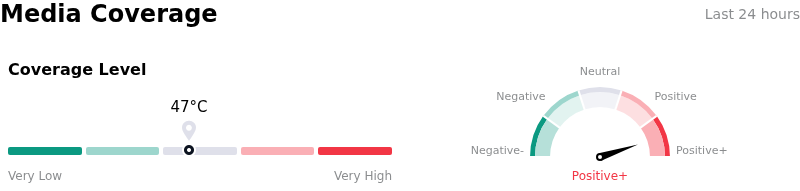
In terms of media coverage, Texas Instruments Inc (TXN) shows a coverage score of 47, indicating a moderate level of media attention. The overall market sentiment index is currently in extremely bullish zone.
Fundamental Analysis of Texas Instruments Inc (TXN)
Texas Instruments Inc (TXN) is in the Technology Equipment industry. Its latest annual revenue is $17.68B, ranking 13 in the industry. The net profit is $4.97B, ranking 9 in the industry. Company Profile
Over the past month, multiple analysts have rated the company as Hold, with an average price target of $283.79, a high of $400.00, and a low of $184.59.
More details about Texas Instruments Inc (TXN)
Company Specific Risks:
- Severe Valuation Premium and Multiple Expansion Risk: Following a rapid year-to-date rally of over 75% pushing the stock past $320, current discounted cash flow (DCF) models put the stock's intrinsic fair value between $213 and $217 per share. Trading at an elevated forward P/E of roughly 39x to 51x against a 10-year revenue CAGR of just 3.1%, the stock carries an unsustainable premium that leaves no margin for error if cyclical industry momentum slows.
- Reversal of Artificial Pull-Forward Data Center Demand: Analysts warn that the company's recent 90% year-over-year explosion in data center revenue was heavily driven by temporary "pull-forward" orders as competitors faced third-party foundry bottlenecks. As rival analog and mixed-signal chipmakers resolve these capacity constraints in the second half of 2026, the company faces immediate risks of losing these temporary market share gains.
- Capital Intensity and Depreciation Headwinds: Elevated capital expenditures alongside an inflexible dividend payout ratio of 97.26% threaten to compress gross margins and heavily restrict future free cash flow. In addition, a projected step-up of roughly $350 million in depreciation expenses in 2026 poses structural profitability risks if cyclical revenue momentum decelerates.
- Heavy Insider Divestment Ahead of CFO Transition: Institutional investor confidence is pressured by recent SEC filings detailing over $85.6 million in executive stock liquidations over the last 90 days, including a 35.8% position reduction by retiring CFO Rafael Lizardi and a 49% reduction by VP Mohammad Yunus. This aggressive insider selling creates strategic uncertainty ahead of the transition to new CFO Julie Knecht in August 2026.
Recommended Articles


