




TradingKey Daily Market Briefing: US-Iran Ceasefire Talks Uncertain, US Stocks Edge Higher, China Concept Stocks Shine, SpaceX Eyes June Listing
TradingKey - The outlook for U.S.-Iran ceasefire negotiations dominated market movements on Wednesday. As Iran's stance hardened, oil prices rebounded from their daily lows and eventually turned positive. U.S. stocks and Treasuries did not follow the reversal in oil prices; both closed slightly higher, showing a temporary divergence in their correlation.
News that the U.S. submitted a 15-point ceasefire proposal to Iran triggered a strong market reaction, with Brent crude falling as much as 3% at one point. As Iran rejected the U.S. truce plan, stating it would not allow Trump to dictate the timing of the ceasefire, and the Iranian Foreign Minister noted that information exchange does not constitute negotiation, Brent and WTI crude recovered all intraday losses. WTI rose over 3% and Brent gained more than 2%.
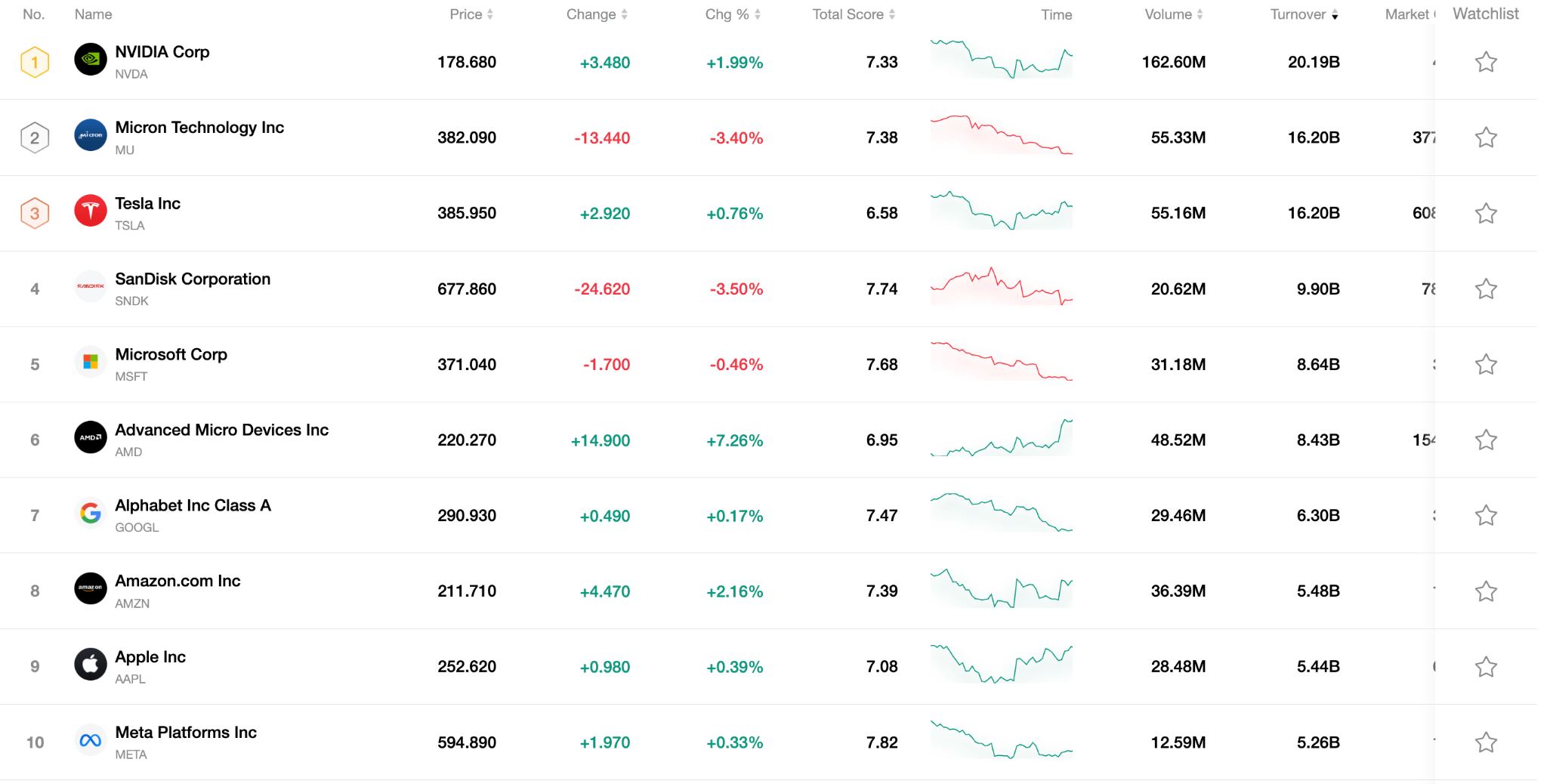
At the individual stock level, policy signals from the Greater China region drove a sentiment recovery in the platform economy sector. Following the statement that "food delivery competition should return to rationality," Meituan surged 14.43%, JD.com rose 8.3%, and Alibaba rose 3.5%. Google released KV cache compression technology, causing storage stocks to fall broadly; SanDisk and Micron were among the top decliners, with SanDisk closing down 3.5% and Micron down 3.4%.
Most of the Magnificent Seven (MG7) closed higher: Nvidia closed up 1.99%, Amazon rose 2.16%, Tesla rose 0.76%, Apple rose 0.39%, Meta rose 0.33%, and Google rose 0.17%, while Microsoft closed down 0.46%.
Market Headlines:
Significant gaps remain in communications between the U.S. and Iran, leaving the path toward a ceasefire unclear. Iran has rejected a U.S. ceasefire proposal, emphasizing that it will not accept externally imposed timelines, while the White House described the communications as "productive." Iran proposed five conditions, including recognition of its sovereignty over the Strait of Hormuz, and dismissed the U.S. proposal as "detached from reality." It also warned that regional nations supporting its adversaries risk seeing their infrastructure targeted. Iran’s Foreign Minister reiterated that current efforts are limited to information exchanges via "friendly nations" and have not reached the formal negotiation stage.
Lagarde says interest rates could be adjusted at any meeting if necessary. The European Central Bank President stated that the bank will act swiftly if energy price shocks spill over further into inflation. While no rash decisions will be made before the scale and duration of the shocks are fully assessed, she emphasized that the commitment to the 2% medium-term inflation target is "unconditional" and policy tools remain highly flexible.
Evolution of AI technology disrupts storage logic, leading to short-term market repricing. Google introduced TurboQuant technology, which compresses large model KV cache to 3 bits, achieving roughly 6x memory compression and up to 8x inference acceleration, sparking market concerns regarding storage demand. However, Morgan Stanley noted that the technology primarily impacts the inference stage and may eventually drive the expansion of AI applications by reducing costs.
SpaceX IPO process could accelerate. Market sources indicate SpaceX may file for an IPO as early as this week, aiming for a June listing with an expected fundraising size exceeding $75 billion, surpassing previous market expectations of $50 billion. The company's latest valuation has reached approximately $1.25 trillion. In this offering, the retail allocation may exceed 20%, and the traditional six-month lock-up period might be waived.
Top 10 Most Actively Traded Stocks
The chart below lists the ten most actively traded stocks in the market today. Driven by massive trading volume and high liquidity, these assets have become key benchmarks for tracking global market dynamics.
Recommended Articles


