


Oracle Drops Below $200 Ahead of Earnings, Did Wall Street Bet Wrong Amid AI Ebb?
TradingKey - Oracle breaks below the $200 mark as the market focuses on upcoming earnings; Wall Street investment banks remain optimistic.
Before the market opened on June 10, Eastern Time, Oracle ( ORCL) continued its recent downward trend, breaking below the $200 mark. As of the time of writing, Oracle's stock price has plunged more than 3% during the day to around $198, hitting a new two-week low. With Oracle set to report its latest quarterly earnings after the bell today, can this move reverse the recent decline?
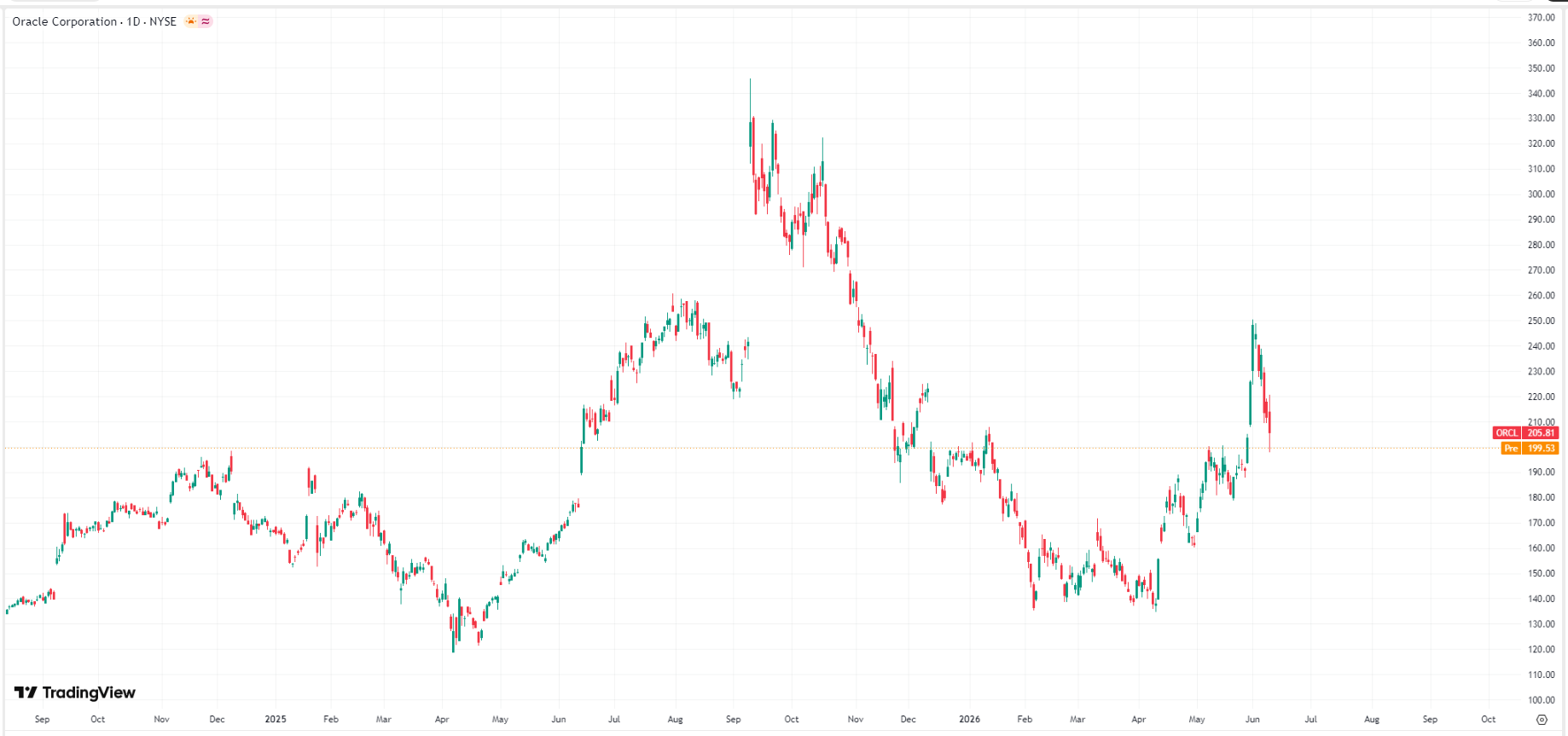 Oracle stock price chart, source: TradingView
On June 1, Oracle announced it would release earnings on June 10, boosting its stock price to near $250. However, Broadcom ( AVGO )'s financial forecast released on June 3 disappointed, triggering a collective correction in chip and AI-related stocks, with Oracle plunging over 7% that day. Subsequently, talk of an AI bubble continued to heat up, and the market began to worry about the massive capital expenditures of AI companies. The stock price followed the AI sector's ongoing pullback, falling approximately 20% to date.
According to data, Oracle's capital expenditures in just the first nine months of fiscal year 2026 reached a staggering $39.2 billion, far exceeding the $12.1 billion in the same period of fiscal year 2025. Such aggressive investment will inevitably squeeze the company's balance sheet and free cash flow in the short term and could even increase its debt burden.
Despite investors' heavy selling of AI-related stocks, many Wall Street institutions remain optimistic about Oracle's stock price. Among them, Bank of America ( BAC) is bullish up to $240, while UBS ( UBS) raised its price target from $250 to $285, and Citigroup ( C) is even more optimistic, believing Oracle's stock price will rise to near the all-time high of $330 set last year.
Furthermore, Oracle's Remaining Performance Obligations (RPO) remain at record highs, meaning corporate demand for Oracle's AI cloud services is not fabricated but backed by solid contracts. It also shows that the "cloud transformation and AI infrastructure leader" logic Wall Street is betting on remains solid, rather than being baseless hype.
However, if Oracle's profit margins are indeed severely dragged down by capital expenditures, Wall Street may see a larger-scale AI valuation correction. Conversely, if Oracle can demonstrate that its Oracle Cloud Infrastructure (OCI) data center business is maintaining high growth of over 45% and prove that its backlog is accelerating into actual revenue, this plunge will prove to be a "golden opportunity," validating the optimistic outlook held by Wall Street investment banks.
Recommended Articles


